The Historical Development of Museum Practices in the United States: From Private Collections to Contemporary Public Cultural Institutions
Research Topic
The development of museology in the United States is closely linked to the nation’s history, socio-economic development, science and technology, artistic culture, and processes of social democratization. Unlike many European museums, which trace their origins to royal and aristocratic collections and religious institutions, U.S. museology is characterized to a greater extent by pronounced features of public engagement and private philanthropic support. In the United States, museums not only serve the function of collecting and preserving works of art, historical artifacts, and scientific specimens but are also gradually becoming an important space for public education, the transmission of national culture, the preservation of social memory, and the interaction among diverse cultural groups.
Key Concepts
The development of museum practices in the United States can be summarized in five main stages:
- The Stage of Private Collections and Early Public Museums (late 18th — early 19th century): Museums emerge under the influence of private collecting and Enlightenment ideals, beginning to open to the public.
- The Stage of Forming a State Museum System (mid — late 19th century): The Smithsonian Institution is established; federal-level museums and research institutions gradually take shape.
- The Stage of Museum Professionalization and Mass Education (late 19th — early 20th century): Specialized museums in the fields of art, natural sciences, and history rapidly develop; a modern system of management and a museum education system begin to form.
- The Stage of Modernization and Socio-Cultural Transformation (mid — late 20th century): Museums transition from mere collecting and exhibiting to encompassing historical narrative, social education, and public cultural services.
- The Stage of Diversification and Digitalization (21st century — present): The focus shifts to cultural diversity, equitable representation of history, community involvement, heritage preservation, and digital dissemination.
The Emergence of Early Museums in the United States (Late 18th — Early 19th Century)
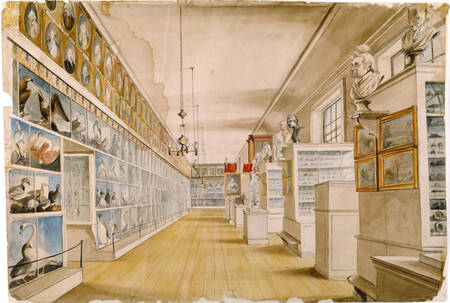
In the late eighteenth century, the United States had only recently become an independent nation, and its society was in the process of forging its own political, cultural, and educational systems. Influenced by the European Enlightenment, America at that time was gradually recognizing the importance of scientific knowledge, artistic education, and public culture for societal development. Under these circumstances, individual artists, scholars, and private collectors began creating their own collections and opening them to the public.
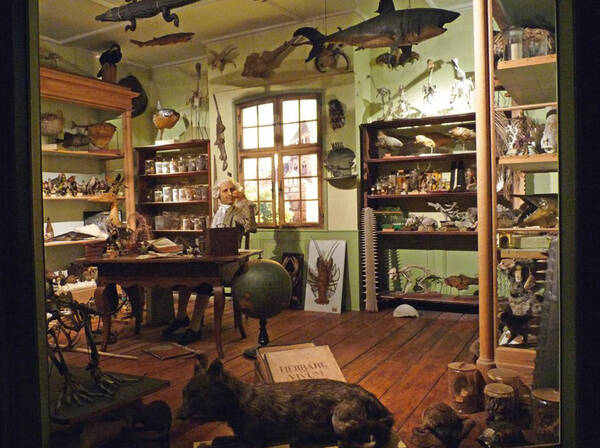
Early American museums differed from traditional European museums in several ways: • Traditional European museums largely stemmed from royal, aristocratic, and church collections; • Early American museums placed a greater emphasis on private collecting, scientific research, and public education; • Collections included not only painting and sculpture but also natural science specimens, animal skeletons, minerals, ancient artifacts, and scientific inventions. In early American museums, a comprehensive model of exhibition gradually developed, integrating art, science, and education.
Peale’s Museum
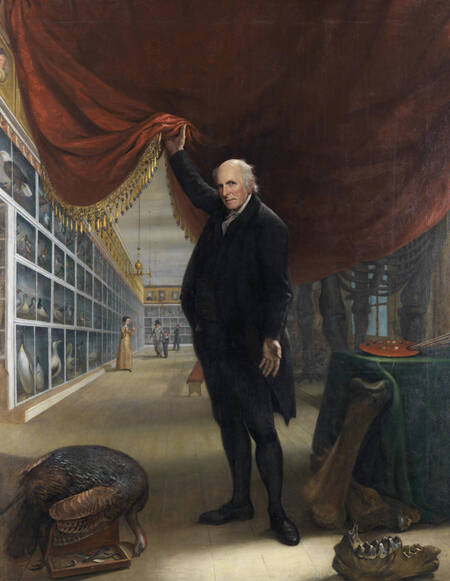
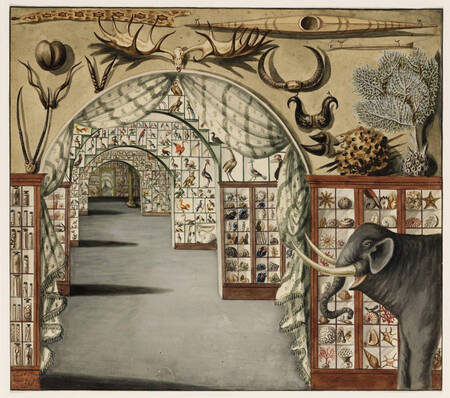
Institution Name: Peale’s Museum Founder: Charles Willson Peale Location: Philadelphia, USA Key Year: 1786 Peale’s Museum is one of the quintessential examples of early American public museums. Founded by the artist Peale, its collection encompassed portraiture, animal taxidermy, natural history specimens, and various inventions. Peale believed that a museum should be a place where the general public could engage with art and scientific knowledge, rather than merely a private space for a select group of collectors.
Philosophical Hall
Opening its doors to visitors, the museum provided people from different social strata the opportunity to engage with knowledge. This idea became a crucial foundation for the development of early public museums in the United States. Pilar’s painting, «The Artist in His Museum,» depicts a scene in which he lifts a curtain to show the collection to the visitors. The canvas features numerous neatly arranged glass display cases.
Charles Willson Peale
Smithsonian American Art Museum, Peale’s Mastodon
From this painting, several characteristic traits of early museums can be observed:
- Exhibits are predominantly displayed in glass cases.
- Objects of various categories are concentrated in one area, emphasizing the quantity and scope of the collection.
- The exhibition is situated within the interior of a traditional architectural structure; modern, professional exhibition spaces had not yet been established.
- Works of art and natural science specimens are exhibited together, reflecting the comprehensive nature of early museums. The main purpose of this mode of exhibition was to allow the viewer to see as many items as possible and to learn about the world through the observation of real exhibits.
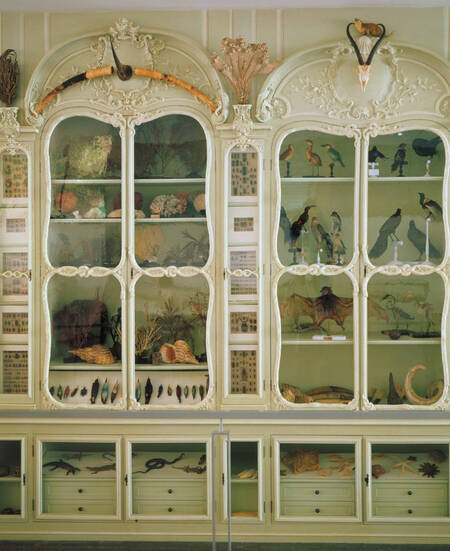
In museums of this period, a clear system of professional classification had not yet been established: artistic, scientific, and historical collections were often exhibited in the same space. Their main functions were: • Collecting and preserving valuable items; • Disseminating scientific knowledge and knowledge in the field of art to the public; • Showcasing the natural wealth and historical-cultural heritage of the New World; • Shaping the cultural identity of the new nation through the spread of knowledge. The historical significance of this stage lies in the museum beginning to transform from a space of private collection into a space for public knowledge dissemination.
The Creation of the Smithsonian Institution and the Formation of the State Museum System (Mid-to-Late 19th Century)
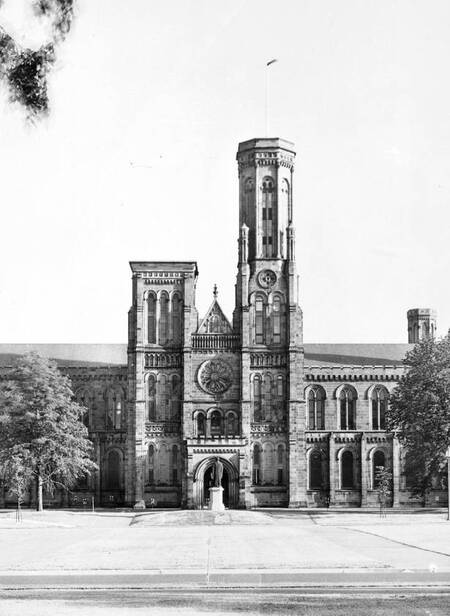
The Founding of the Smithsonian Institution The establishment of the Smithsonian Institution in 1846 served as vital proof of the American museum movement’s transition to institutional development. The creation of the Smithsonian Institution is directly linked to the British scholar James Smithson. In 1829, following Smithson’s death, his estate was ultimately bequeathed to the United States to create an institution in Washington dedicated to augmenting and disseminating knowledge. The U.S. Congress accepted this testamentary gift in 1836, and on August 10, 1846, after years of discussion, it officially passed the act establishing the Smithsonian Institution. Its founding principle: Increase and Diffusion of Knowledge Significance: the augmentation and dissemination of knowledge. This principle not only defined the creation of the Smithsonian Institution but also became a crucial ideological foundation for the development of American national museums.
Smithsonian Institution Building
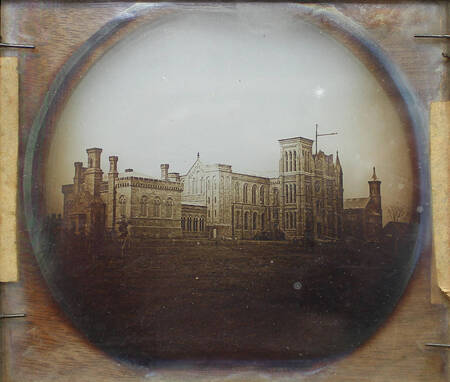
Core Functions of the Smithsonian Institution The Smithsonian Institution is not merely an art museum; it is a comprehensive museum, educational, and research institution.
Its functions include: • Collecting and preserving the nation’s historical artifacts; • Conducting research in the fields of natural sciences and humanities; • Creating national public exhibition spaces; • Promoting the dissemination of scientific knowledge and artistic culture; • Providing the public with educational and cultural services. Its establishment marked the beginning of the formation in the United States of a system of nationally supported museums and research institutions.
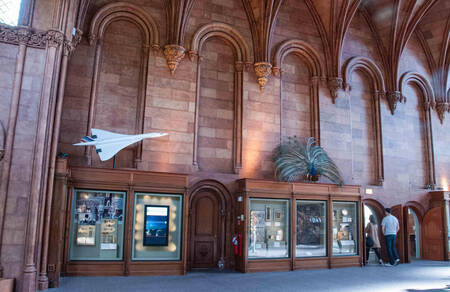
Smithsonian Institution Archives, Great Hall of the Smithsonian Castle
Showcasing the vaulted corridors inside the castle
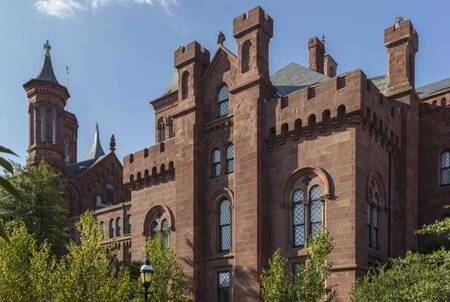
Exterior of the Smithsonian Castle
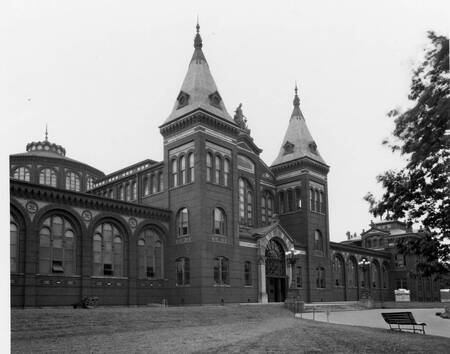
The Creation of the National Museum of the United States In 1881, the Arts and Industries Building of the Smithsonian Institution opened as the United States National Museum. Its establishment reflected the trend in museum development in the U.S.—a shift from early collecting and exhibition to a comprehensive national museum institution.
The museum began systematically exhibiting collections in natural history, industrial technology, art, and culture, reflecting not only the achievements of national science but also the social development of the industrialization era. The most significant change during this period was that the museum ceased to be merely a repository for objects gathered out of personal interest and gradually transformed into an important public institution demonstrating national history, scientific achievements, and social progress.
North Exhibition Hall of the National Museum of the United States
19th-century steam machinery exhibits
Exhibition Halls of History and Natural Science at the National Museum of the United States
Professionalization and Diversification of Museum Practices in the United States (Late 19th — Early 20th Century)