00 Introduction
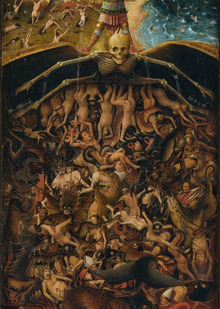
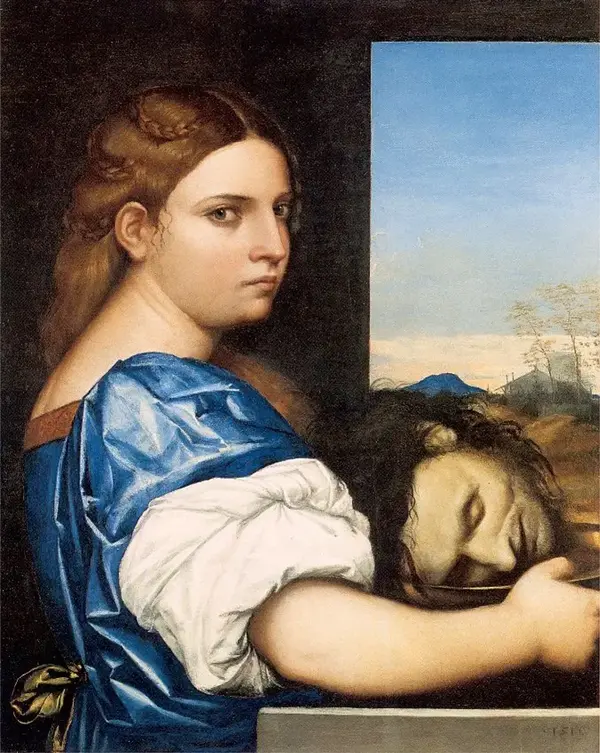
Images of Judith and Salome in European painting are sometimes difficult to distinguish. On canvases, both are depicted as luxuriously dressed women, standing with a severed head in their hands or nearby. An unprepared viewer might easily assume the artists are referencing the same subject. However, anyone who has studied the Bible knows that behind the surface resemblance lie two completely different stories. Judith kills the general Holofernes to save her people, while Salome, at her mother’s request, demands the head of John the Baptist in exchange for a dance. Here lies a clear demarcation between different meanings. In the first case, we read about a noble act on behalf of one’s people. In the second, it concerns the outcome of an insistent demand.
As viewers, we encounter a discrepancy between even familiar biblical texts and the painted image, and we risk confusing the two heroines. For example, Judith’s sword or Salome’s dish, and the setting of the paintings, certainly help identify the subject, but artists do not always employ these clues. Sometimes the action itself yields to the depiction of one of the women, and the similarity becomes more noticeable. In such cases, an understanding is required of precisely which details allow one to clearly differentiate the heroines—or to understand the nature of their similarity. It becomes important to determine the causes and boundaries of the resemblance between the two heroines in European fine art of the 15th–16th centuries.
To understand the reasons for the similarities, it is worthwhile not only to deeply analyze the biblical narratives but also to step into the artist’s perspective. How might they have envisioned the heroines in that era—what influenced their vision? It is possible that people’s perspectives were shaped by the political ideologies of the age, as well as prevailing notions of beauty and the ideal woman. Perhaps this is precisely why, despite the vastly different actions of the heroines, Judith and Salome acquired similar portrayals in the artists' paintings. To uncover this, one must pay close attention to the specific details of the canvases—the poses, the facial expressions, the clothing.
It is particularly interesting to examine works from the 15th and 16th centuries, a period when artists in European art frequently depicted Biblical characters wearing clothing reflective of contemporary fashion.This visual exploration features works by Italian and German masters, chosen not only for the 15th–16th-century time frame but also because this selection allows us to see how the same narratives were interpreted differently across various artistic traditions. However, before proceeding to the image analysis, we must first familiarize ourselves with the Biblical stories and define the specific characteristics of the textual narrative. We will begin with this.
01 Two Protagonists—Two Different Stories
Judith’s History
Judith is a devout and affluent widow. The Jewish city of Bethulia, where she lives, finds itself besieged by the Assyrian commander Holofernes during his military campaign. The noble young woman decides to save her city. She sheds her widow’s garments, dresses up, and travels to the enemy camp with her maidservant. Holofernes is, of course, captivated by Judith’s beauty and persuasive eloquence, and she successfully wins his trust. The commander invites her to a feast, during which he becomes intoxicated and ends up alone with her. Nothing happens between them because he falls asleep. Afterward, Judith takes his sword and beheads him. The maidservant assists her mistress, conceals the conqueror’s head in a sack, and then the two women return to Bethulia. Thanks to this act, the heroine saves her city. Because Holofernes' death comes as a surprise to his troops, they descend into confusion and suffer defeat, unable to continue the siege.
In the biblical narrative, Judith becomes a heroine who saves her people through faith, courage, and cunning. Faith plays a central role here—the young woman prays to God, asking for His help. She jeopardizes not only her own life but also her honor. What drives her is not personal revenge or resentment, but the desire to save the residents of the besieged city.
Salome’s Story
Salome was the daughter of Herodias, who was married to the ruler of Galilee, Herod Antipas. This was not her first marriage; previously, she had been married to Herod’s brother. This fact was openly condemned by John the Baptist. Herod imprisoned the prophet but did not dare to kill him.
During Herod’s birthday celebration, Salome danced before the guests. Her performance delighted Herod so much that he swore to grant her any wish, even if she asked for half of his kingdom. She consulted her mother, who advised her to demand the head of John the Baptist. Returning to Herod, Salome demanded the prophet’s head on a platter.
Herod was saddened by the request. He considered John a righteous man and respected him. However, he did not want to break the oath he had made before all the guests. By his order, John was beheaded in prison. The executioner brought the head, and Salome gave it to her mother.
Salome’s story is not about the girl herself, but about hatred and the fear of breaking a public promise, even if a request contradicts a person’s internal beliefs. Salome is merely an intermediary here. Interestingly, the Gospel does not mention the girl’s name. Salome’s name is known through Josephus Flavius («Jewish Antiquities,» Book 18, Chapter 5, Section 4). The Gospel narrative gives no indication of the girl’s personal beliefs or her attitude toward the prophet. I would argue that it is Herodias, not Salome, who orchestrates the man’s «beheading»; she exploits her husband’s public oath and her influence over her daughter.
The contrast makes it perfectly clear that the two biblical texts are entirely different. Judith is a noble woman who believes in God and acts from the best of motives; she is the central figure of the story. In Salome’s story, she is endowed with no narrative through which we could learn her beliefs. In that text, she is drawn into someone else’s conflict, and thus, a terrible murder takes place that cannot be justified.
02 How to distinguish Judith from Salome in painting?
In the previous section, we examined two biblical stories and determined how diverse the heroines' roles were. Now, we will move directly to analyzing the paintings and try to understand how artists conveyed to the viewer precisely what narrative they were depicting. We will move from the most recognizable details to cases where those details prove insufficient.
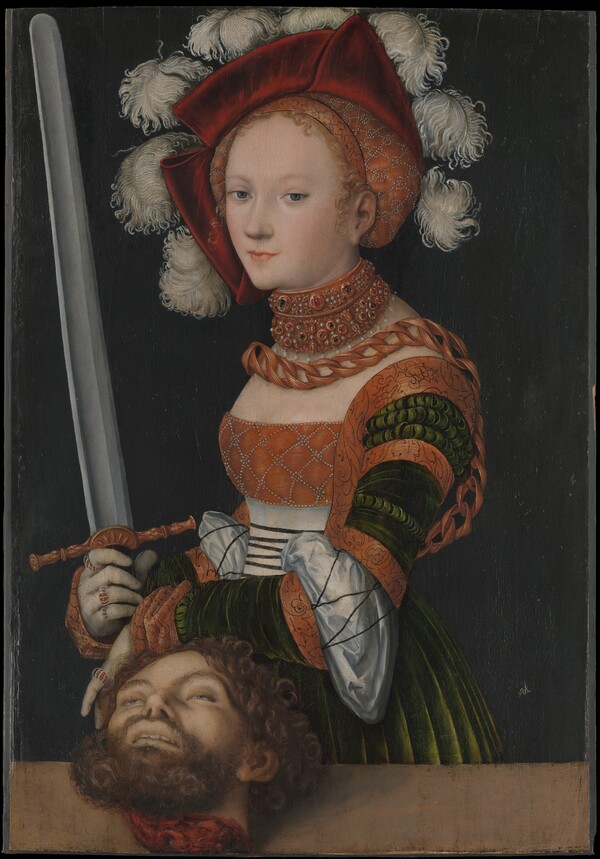
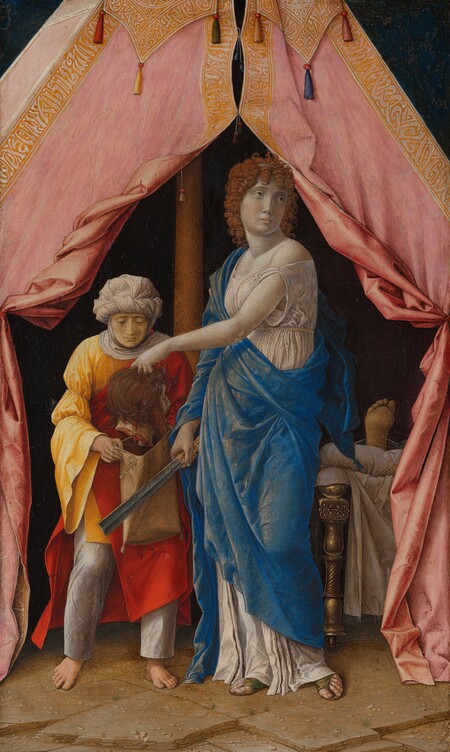
1. Lucas Cranach the Elder. «Judith Beheading Holofernes.» c. 1530 2. Andrea Mantegna and Giulio Campagnola. «Judith Beheading Holofernes.» c. 1495–1500
The clear and primary indicator that helps identify Judith is the sword with which she decapitated Holofernes. Beside the heroine is her assistant—her maid—who helps conceal the head in a sack. This is a direct quotation of a biblical narrative, even if the murder itself is not depicted in the painting.In Andrea Mantegna’s painting, Judith stands next to her maid. The action takes place after the murder, and we understand that the artist is conveying the moment of the maid’s assistance. Lucas Cranach the Elder’s canvas features a different composition: Judith is the central and sole heroine. She is richly dressed and proudly holds the head of the slain. We do not see the enemy camp or the circumstances of the murder. However, the sword remains an important detail that connects us to Judith’s story.
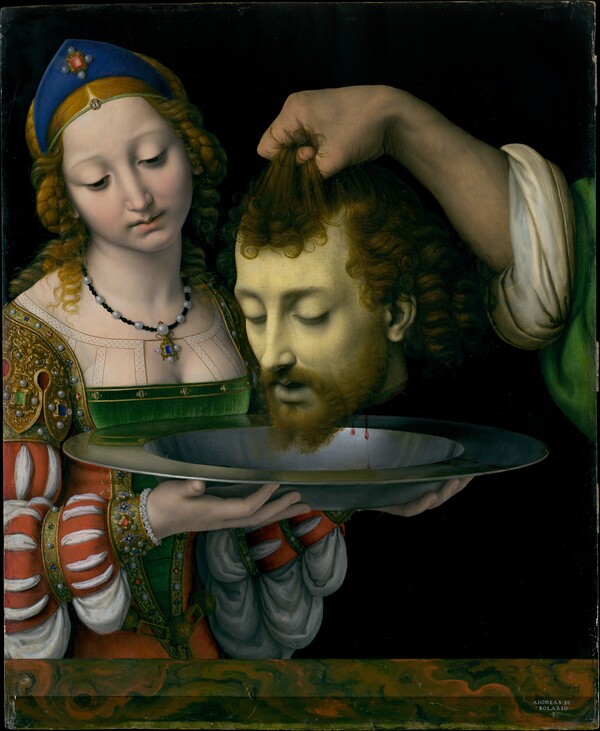
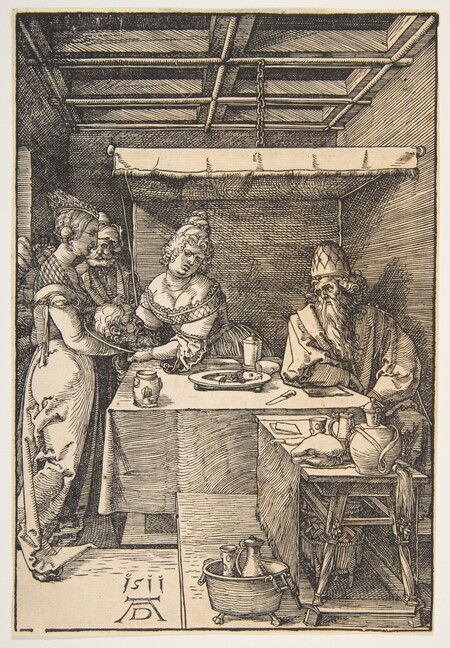
1. Andrea Salaiolo. «Salome with the Head of John the Baptist.» c. 1507–1509 2. Albrecht Dürer. «Salome Receiving the Head of John the Baptist.» Late 15th — early 16th century
If Judith has a sword, Salome has a platter. Upon this platter is presented the head of John the Baptist. Unlike the first heroine, she does not commit the act of murder herself; therefore, artists can depict the executioner alongside her, handing over the head.
In the first example, Andrea Solario’s painting, we see precisely this moment. A hand emerges from the darkness, placing the head onto the platter. Salome dominates the composition, relegating all other figures into the background. In Albrecht Dürer’s work, the narrative unfolds through all the participants, emphasizing that the young woman is far from being the sole orchestrator of the prophet’s fate. The artist strives to convey the entirety of the biblical story as completely as possible.
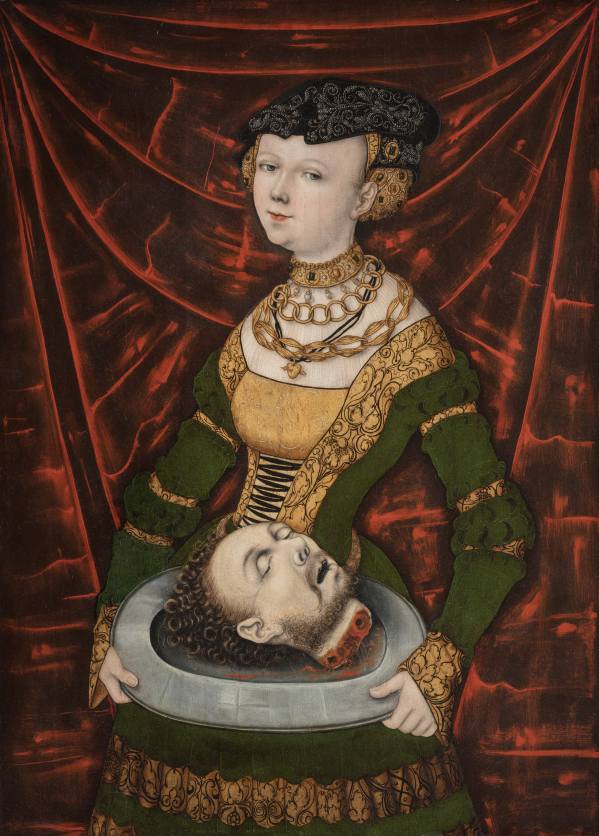
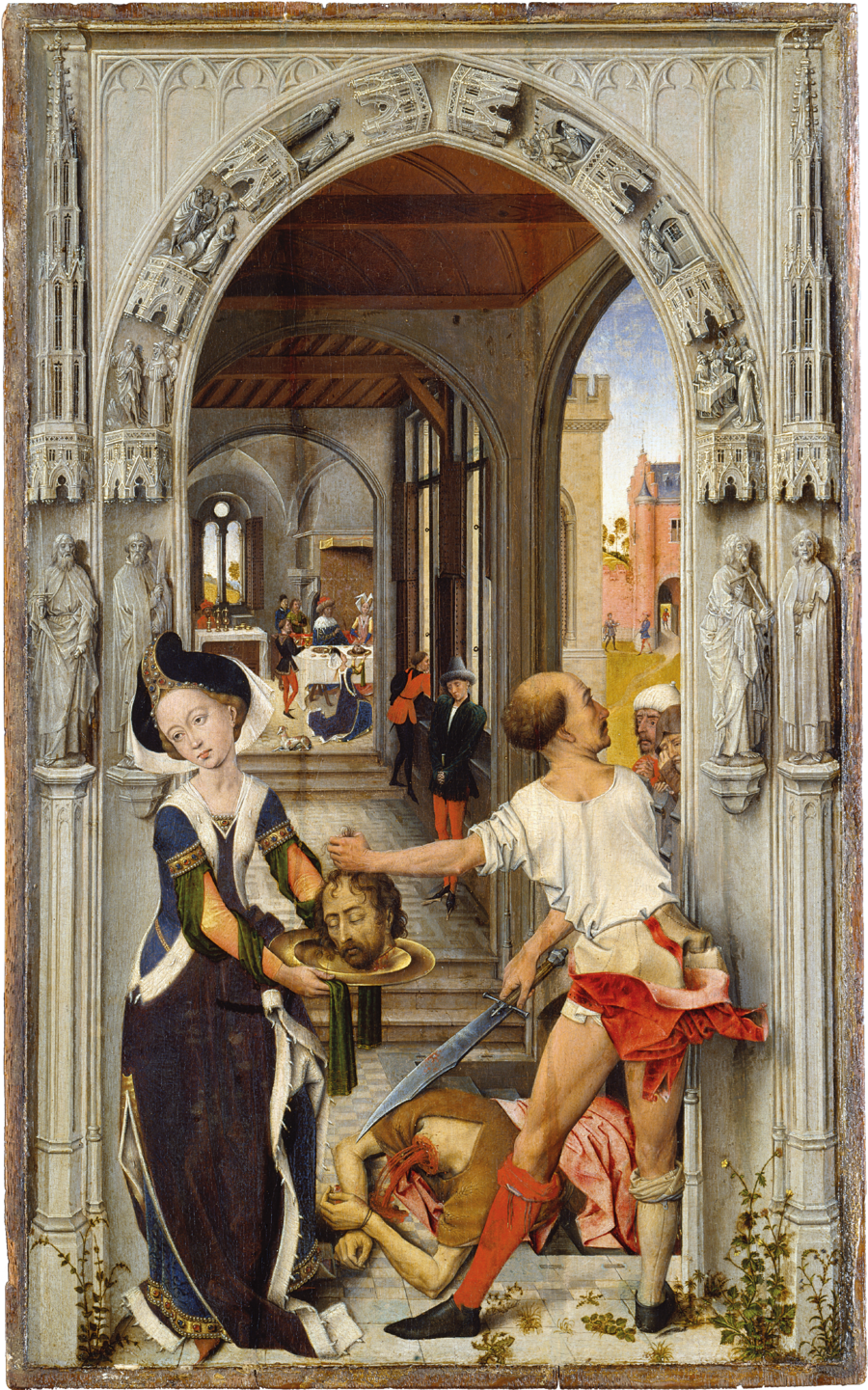
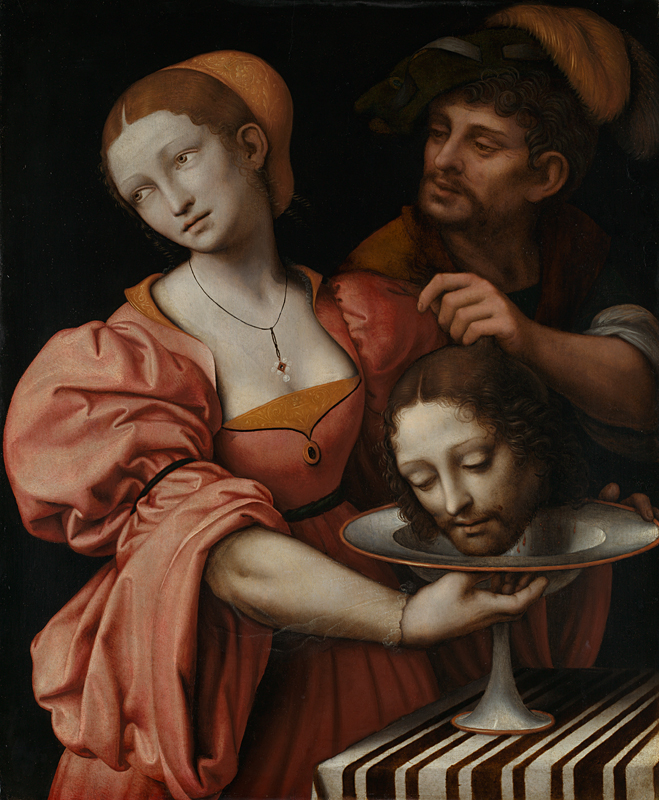
1. Dutch Master — «Beheading of John the Baptist,» circa 1510 2. Giambattista da Gamba — «Salome,» circa 1510–1530 3. Master IW — «Salome with the Head of John the Baptist,» circa 1525
03 From Biblical Event to the Image of Woman
The canvas captures the moment Judith presents Holofernes’ head to the people. The crowd celebrates the victory of good over evil. In this instance, we see the climax of the story. The heroine’s complex and risky action did not appear in vain. It is important that Judith is depicted in the distance—she is not rendered in detail, nor is the general’s head. The people occupy the foreground; they are the key subject of the composition. This compositional device emphasizes that the woman’s primary motivation was the salvation of the city and its people, not personal motives.
Abraham Bloemaert — «Judith Decapitating Holofernes, ” c. 1593
04 Judith and Salome by Lucas Cranach the Elder
05 Beauty and Power: How the Perception of Heroines Changes
06 Judith or Salome? When it is difficult to define the subject
07 Conclusion and Research Findings