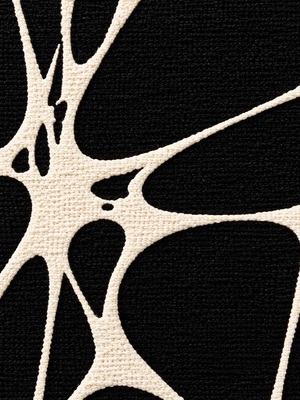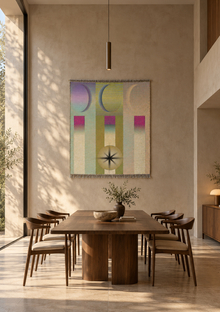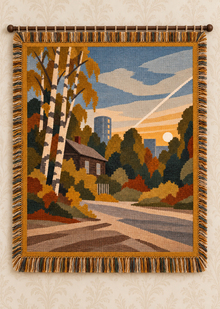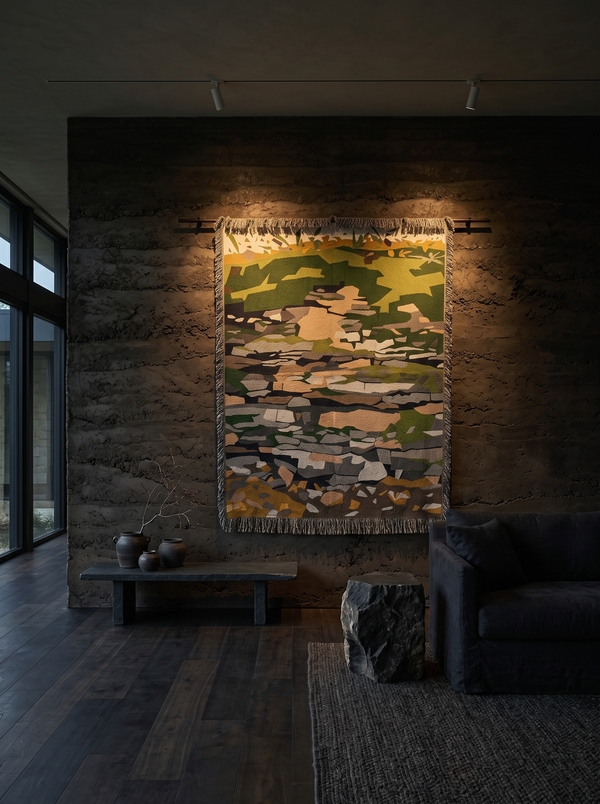
The project is a Jacquard tapestry based on a photograph of a limestone outcrop on the Pluss River banks in Slantsy. The image is simplified into large color blocks: gray stone slabs, ochre representing the rock and moss growing on top. The tapestry was created for the entrance area of the museum and the Geological Research Institute: against a dark, earth-like wall, the stone appears to rise to the surface, much like the ancient sea sediments emerge on the line of the Baltic-Ladoga clay.
Concept
The tapestry continues the final project, «The Geological Research Institute and Museum of Slantsy.» During the site visit, I photographed the outcrop of flinty limestone on the riverbank: the stone layers, moss, and plant roots pushing through from above. This photograph became the foundation of the tapestry.
The image was translated into vector graphics: small details were eliminated, leaving the large slabs, color patches, and the horizontal rhythm of the layers. Thus, the photograph was transformed into an independent textile object that is legible both from a distance and up close, where the texture of the woven threads appears—resembling the roughness of stone.
Inside the museum, the tapestry is displayed in the entrance area against a dark wall resembling a cross-section of the earth. Lit from above, it looks like a rock fragment that has emerged onto the surface. It is the first thing a visitor sees, offering a brief explanation of the entire museum—here, they tell the story of what is hidden beneath the ground.
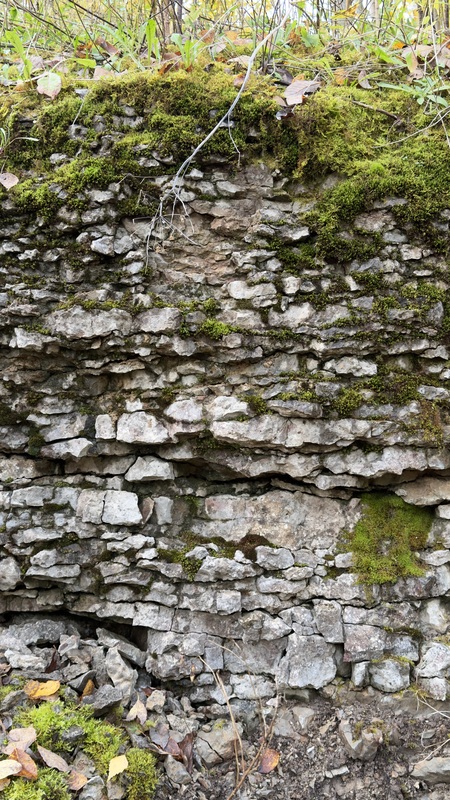
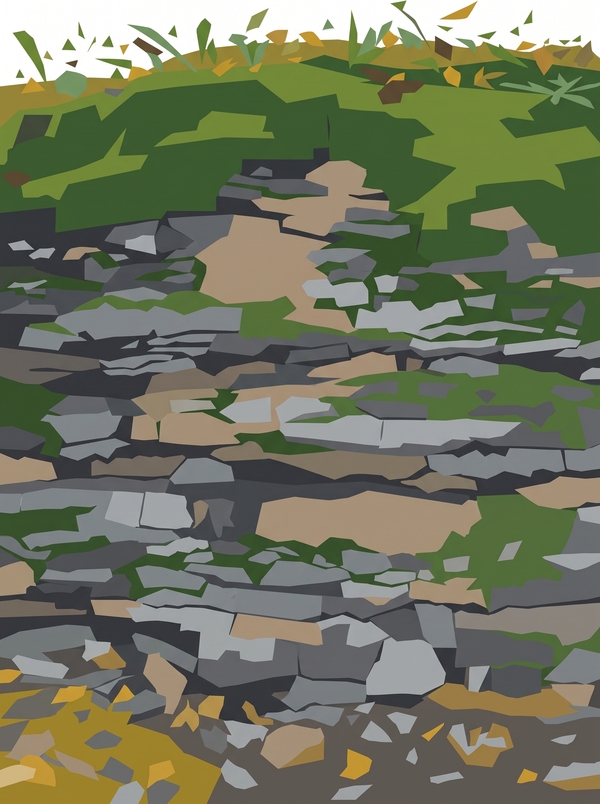
photo-based work; it is important to preserve the spirit of the place
Step 3. Show the complete project
A general overview helps others understand what your work looks like: a tote bag with an image, a pair of socks, a vinyl record with a sleeve, or a 3D object. Photos, visualizations, or mockups that clearly showcase the form, proportions, and design are appropriate.
Step 4. Let the most interesting details shineAdditional images reveal what is lost in the overall view: the print’s graphics, the book’s spreads, the sculpture’s texture, the toy’s mechanism, or the assembly of parts.Showing the object in a hand, on a person, or within an interior helps convey its scale and explain its use. Short videos or animations can demonstrate the image change on a lenticular postcard or the assembly of an object from individual parts. The number of images depends on the project—each frame must add something to the narrative.
Step 5. Document the Parameters
So that the long-form content clearly communicates the intended outcome, compile the characteristics into a concise list or overlay them onto the image. Depending on the medium, these characteristics might include:
- Product format and dimensions;
- Image size and placement;
- Selected colors, materials, and finishes;
- Set or series composition;
- Design features, mounting, and assembly details.