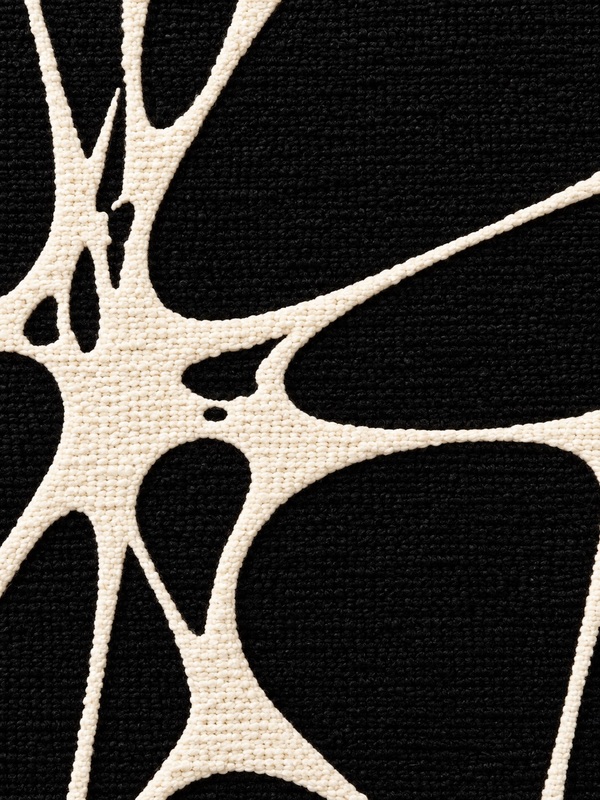
A series of three tapestries is built around the concept of a unified biomorphic DNA—a visual language in which form grows according to the laws of life.
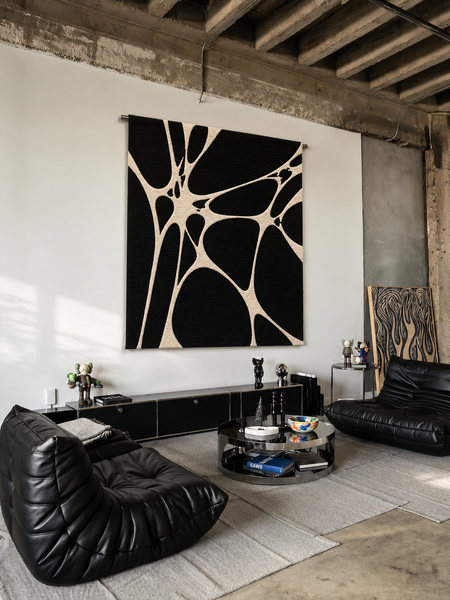
I was interested in working with this language on an interior scale to see how biomorphic graphics could live not just on an object, but on a wall.
Tapestry format—123 × 142 cm
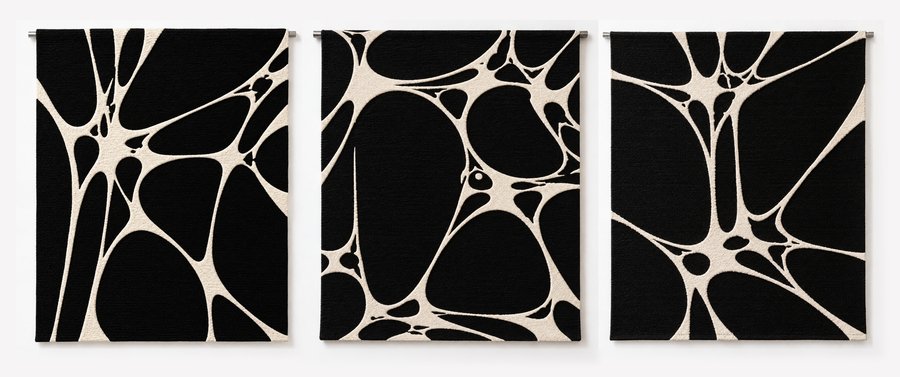
a series of 3 tapestries
White branching forms sprout through the black field. The form of one tapestry continues into the next, and together they read as fragments of a single, living organism.
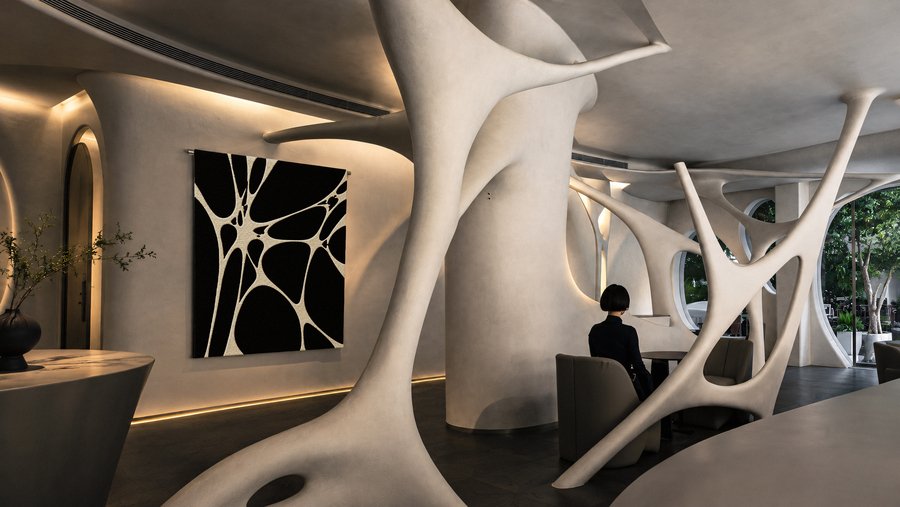
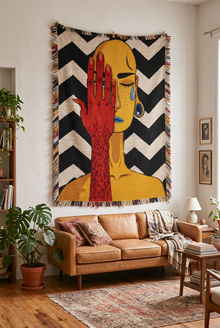
Tapestries can be hung together to create a continuous biomorphic landscape. Alternatively, they can be distributed across different walls, with each piece remaining a standalone object carrying a distinct brand language.
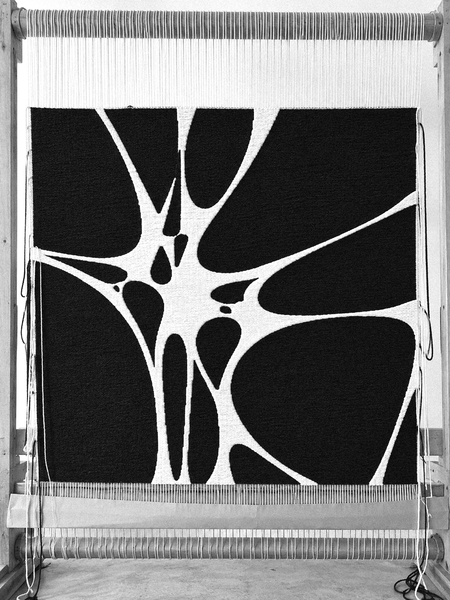
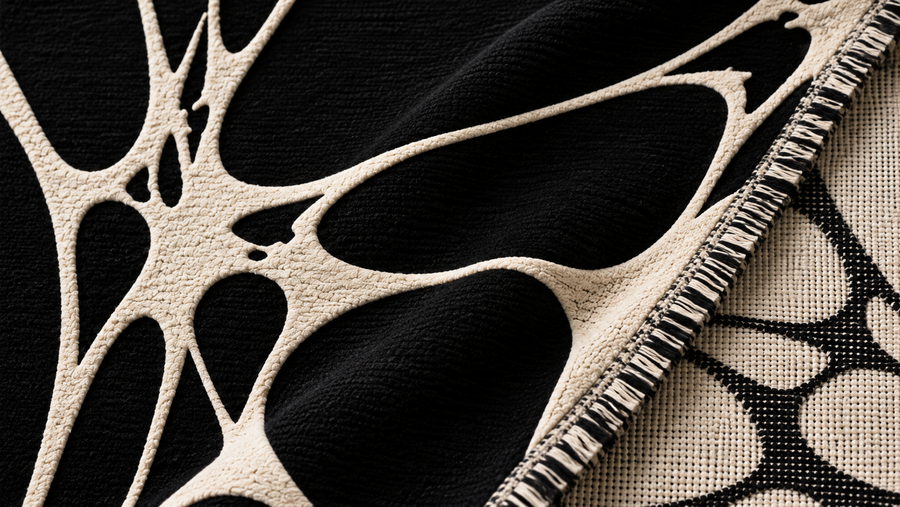
tapestry weaving process
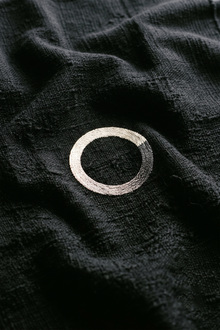
The weaving technology here serves the concept. The image is not printed onto the fabric; rather, it emerges from the interlacing of threads. Essentially, it operates on the same principle as 3D printing: form is created through structure, layer by layer, thread by thread. The cotton gives the contours a life and softness that they lack on screen. The black field, due to the density of the weave, becomes almost velvety and profound. This tactile quality of the material is impossible to convey in a digital mockup.
The contrasting black-and-white pair was selected for its graphic form: the composition is readable from any distance and settles comfortably into various interiors without clashing with them.
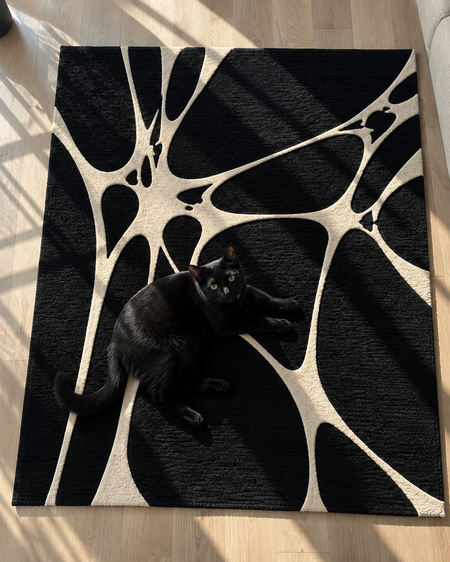
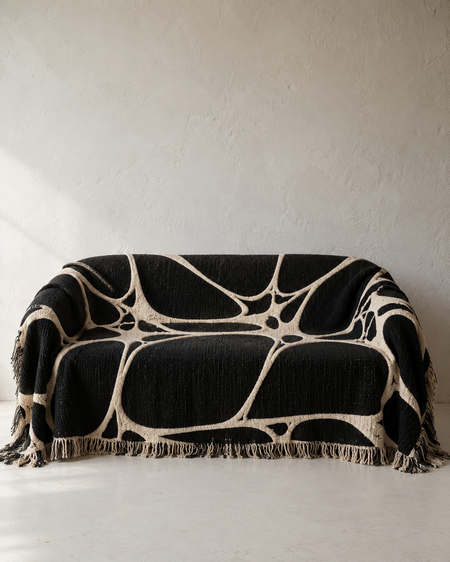
Alternative Use of a Tapestry
ChatGPT — image generation