Navigation Menu
- Concept
- Main Body: 2.1 Alexandre Benois 2.2 Nikolai Roerich 2.3 Mikhail Larionov 2.4 Natalia Goncharova 2.5 From Painting to Fashion
- Conclusion
- Bibliography
- Information Sources
Concept

«The Russian Seasons» by Sergei Diaghilev became a major artistic project of the early 20th century. It introduced a new interpretation of Russian art to European audiences, integrating ballet, music, painting, costume, and scenography. In the Diaghilev productions, the visual design became an independent participant in the action. Color, ornamentation, silhouette, and composition conveyed the character of the performers, the atmosphere, and the meaning of the performance.

In the early 20th century, Russian artists actively turned to national heritage: folklore, lubok prints, icon painting, traditional costume, Old Russian architecture, and ritual culture. At the same time, traditional motifs were not simply reproduced but were transformed under the influence of Modernism and Avant-Garde. The «Ballets Russes» became a space where the Russian style manifested not as a unified set of decorative elements, but as numerous original interpretations.
Objective of the Visual Study — to trace how the Russian style manifested in the artistic design of «Ballets Russes,» how traditional national motifs were transformed in the works of various artists, and what influence these artistic decisions had on the development of theater and fashion.
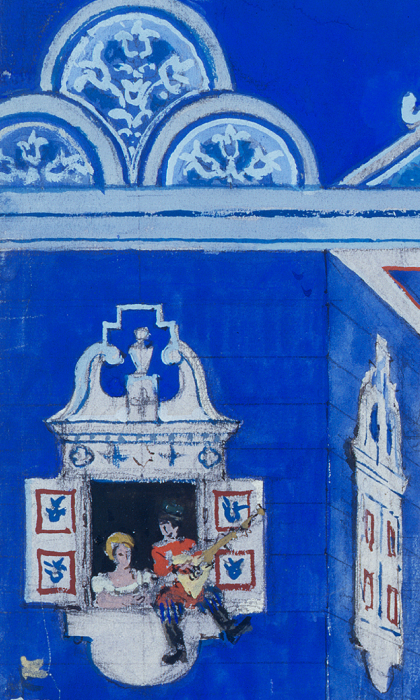
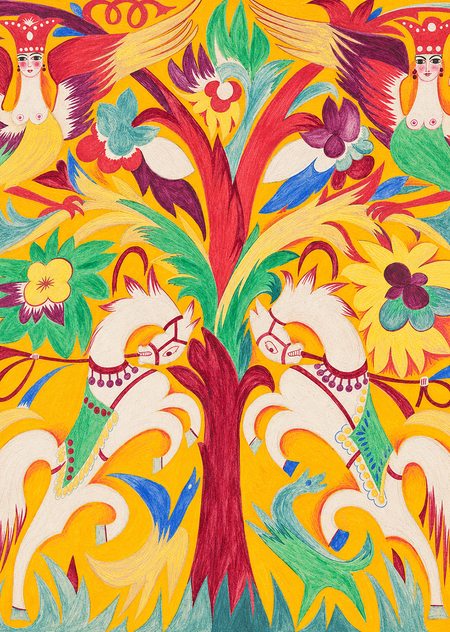
Special attention in the research is given to the work of Alexander Benois, Nikolai Relikh, Mikhail Larionov, and Natalia Goncharova, each of whom interpreted the Russian style in theatrical art in their own way. By drawing upon national traditions, folklore, historical figures, and folk culture, the artists created original stage designs, blending traditional motifs with contemporary artistic directions. In their work, the Russian style is revealed through a diversity of color combinations, ornaments, silhouettes, decorative elements, and compositional techniques.
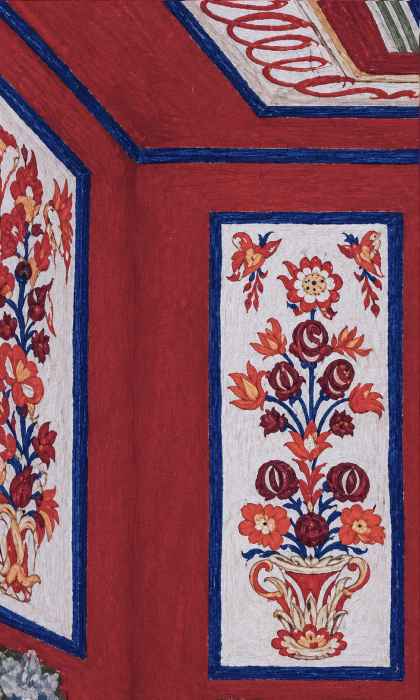
Special attention is paid to the influence of the «Ballets Russes» on early 20th-century European fashion. Artistic ideas, initially embodied in theatrical costumes and sets, gradually transcended the stage, finding reflection in clothing and decorative arts. This allows us to view the «Ballets Russes» as a significant phase in the formation of new aesthetic concepts within European culture.
Research Hypothesis posits that the «Ballets Russes» did not merely reproduce national artistic heritage, but transformed it, forging a new visual language where tradition intersected with contemporary artistic inquiry. The Russian style, within Diaghilev’s productions, appears not as a singular system of fixed decorative characteristics, but as a multifaceted artistic phenomenon capable of shifting based on the director’s intent, the nature of the performance, and the prevailing aesthetics of the era.
Alexander Benois
«Petrushka, ” 1911
Fair
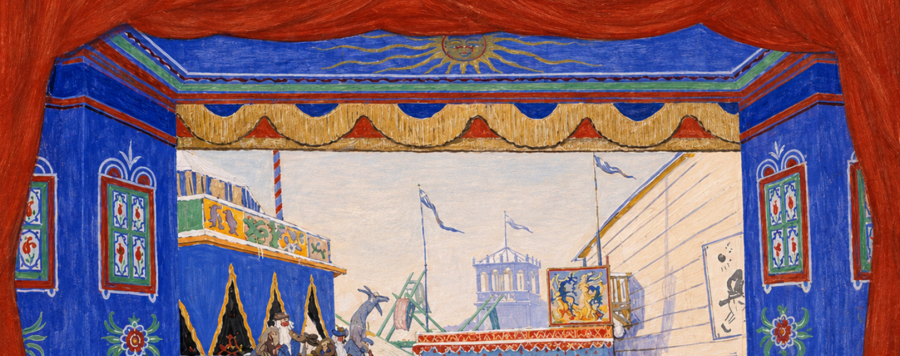
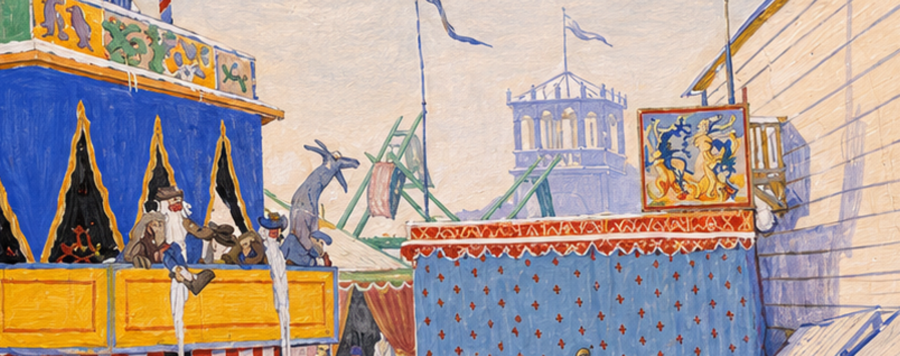
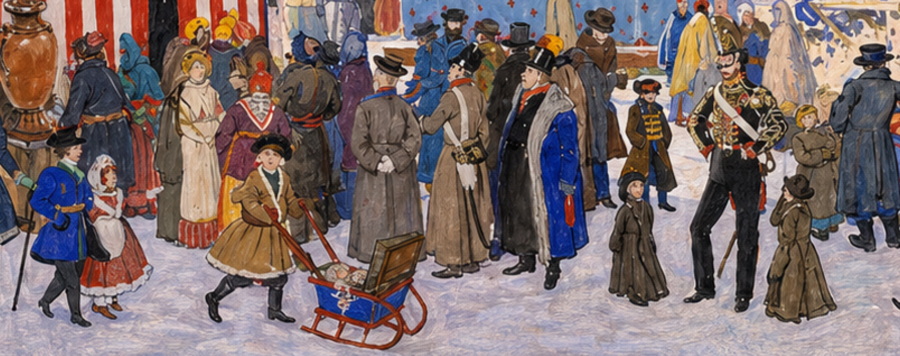
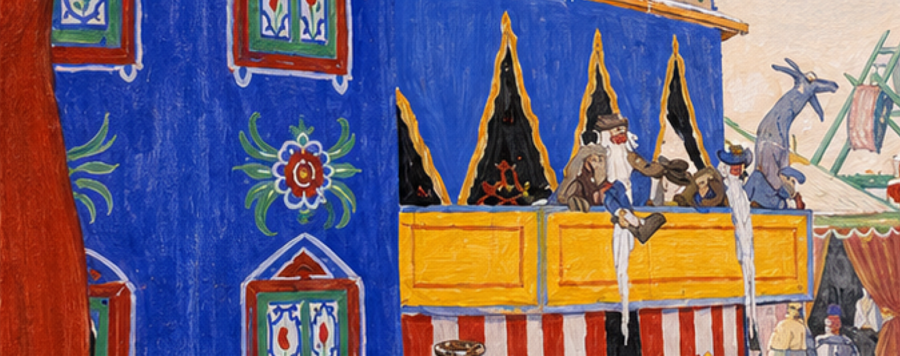
Sketch Details.
The theatrical set design evokes a real-life city square, yet it magnifies the most recognizable details: market stalls, signs, and ornate facades. Special attention is given to the horizontal organization of space, which creates a sense of expanse and the bustle of a public festival. The placement of market rows, stalls, and architectural elements forms a clear compositional structure, while vibrant color accents highlight key details and guide the viewer’s gaze. Thanks to contrasting color combinations, expressive silhouettes, and large decorative forms, the scenic design retains its expressiveness and is easily perceived even from a distance.
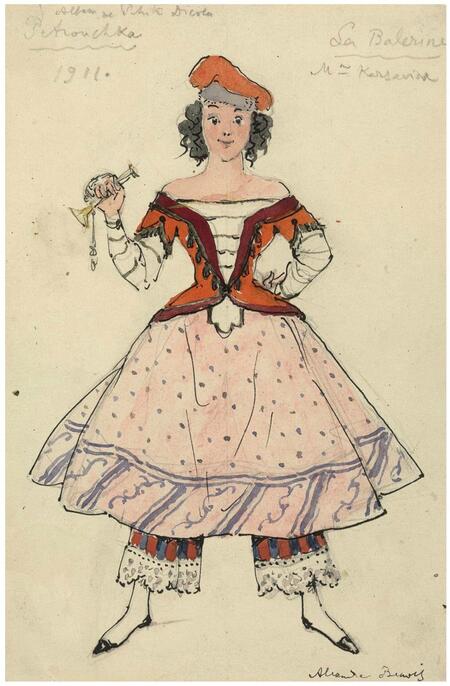
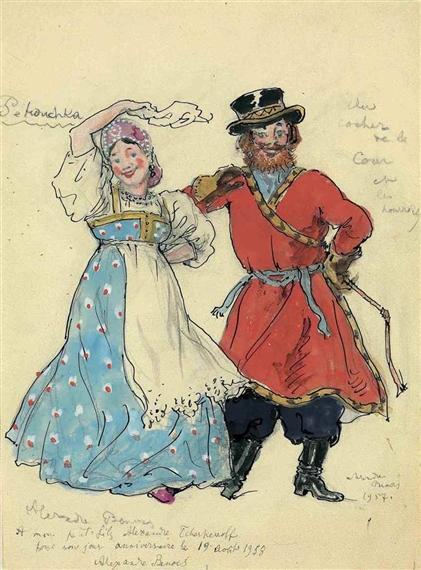
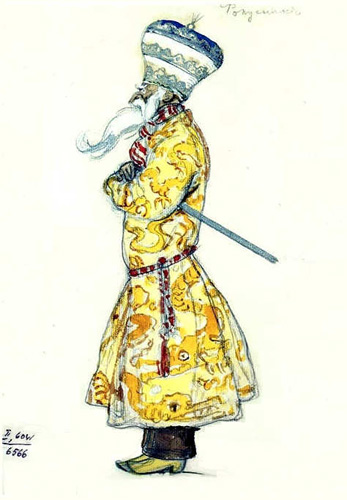
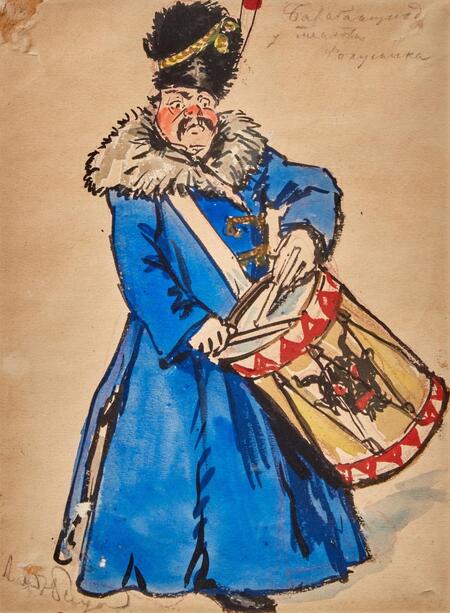
In the ballet «Petrushka,» Alexandre Benois crafts a vibrant tableau of St. Petersburg Maslenitsa, populated with diverse characters: merchants, coachmen, wet nurses, street dancers, musicians, and city dwellers. Their portrayals convey the atmosphere of a folk festival and the variety of life in the nineteenth-century city.The artist pays special attention to the costumes, which accentuate the characters' personalities and social standing. Bright kaftans, voluminous skirts, headwear, and contrasting color combinations create expressive silhouettes. By merging historical detail with theatrical convention, Benois transforms the fairground crowd into a unified decorative composition that captures the scene’s dynamic energy and celebratory mood.
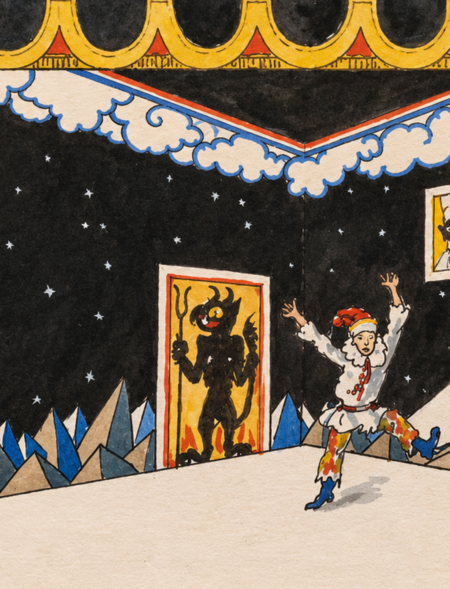
Petrushka
Relocating the action from the noisy square into Petrushka’s room sharply alters the perception of space. Instead of the horizontal expanse of the fair, a contained interior emerges, emphasizing the protagonist’s solitude. The visual contrast between the public, festive world and the intimate personal environment helps build drama without words. The set elements may appear deliberately stylized and even toy-like—it is this theatricality that reminds the viewer that the character exists within a space that he does not control. Thus, the interior becomes a psychological characteristic of the character for Benoit.
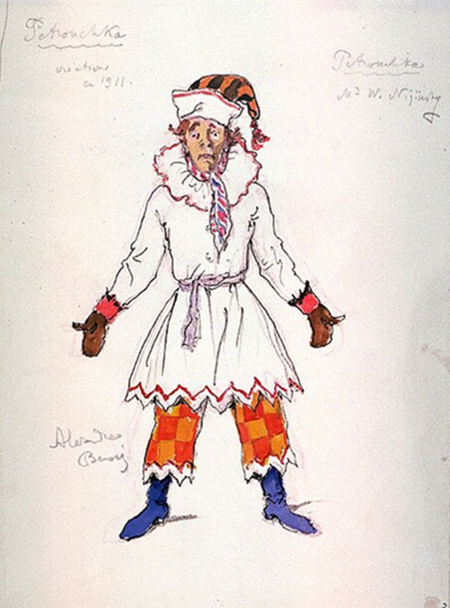
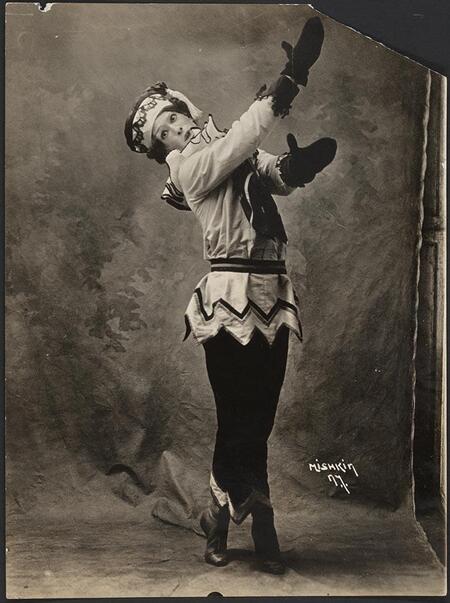
The image of Petrushka in Alexander Benois’ ballet combines features of a traditional folk puppet character with tragic expressiveness. The artist creates a recognizable silhouette using a loose white shirt with large red buttons, checkered pants, a soft head covering, and contrasting details. The simplicity of the forms and the vivid color combinations emphasize the character’s connection to the popular street theater.
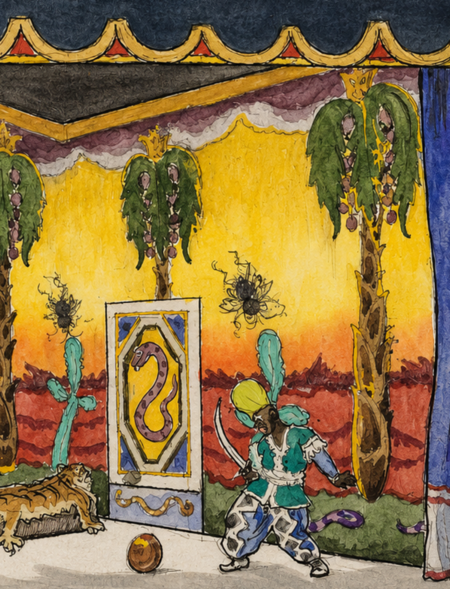
Arap
In decorating the room, Arap Alexander Benoit employs saturated colors and an abundance of decorative elements, crafting a vibrant, deliberately exotic space. The composition is anchored by a red backdrop embellished with large botanical motifs, flowers, and hanging clusters of fruit. Deep blue hues on the side curtains contrast with the red background, while the golden draping at the top enhances the sense of decorative richness.

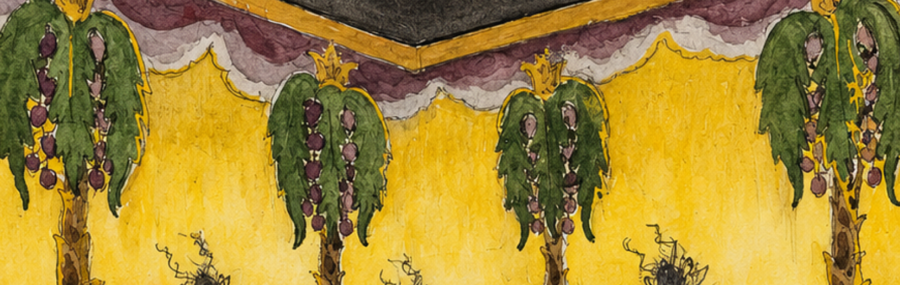
Special attention is paid to the ornamental organization of space. Repeating botanical motifs form a unified rhythm, while the stylized depiction of objects and the flat background design emphasize the theatrical nature of the set. The interior does not strive for realism but rather creates a fanciful image of Eastern luxury, characteristic of early 20th-century stage aesthetics.