Introduction
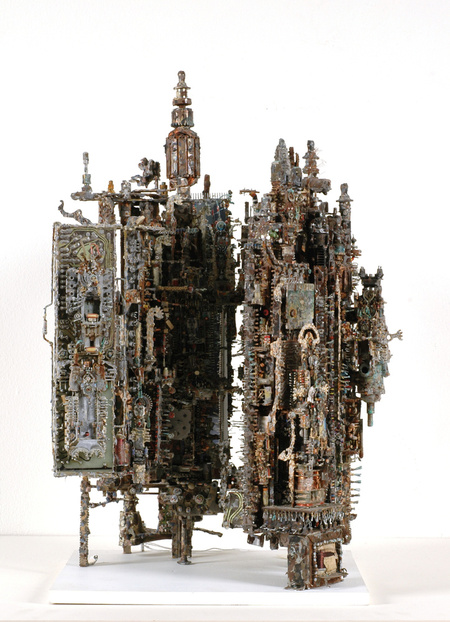
In this visual study, I aim to explore how A.C.M. transforms the details of obsolete technology into sculptural constructions that evoke architecture. His work utilizes found objects and mechanical fragments, which the artist deforms, oxidizes, and joins into complex spatial forms. I am interested in the moment when individual components cease to be perceived as parts of a mechanism and begin to coalesce into something resembling a building. What enables the viewer to perceive a structure within a small construction, and the trace of its long existence upon a damaged surface?
I chose this topic because of the contradiction between the material’s origin and the image that can emerge when it is viewed. The old technical component genuinely has a past: previously, it was part of another object and served a specific function. However, the structure assembled from such parts lacks the history of a building. It was never inhabitable, nor did it undergo renovation or decay over time. This makes it more interesting to explore how it can still evoke the remnant of a structure—as if we are looking at a preserved fragment of something larger. This gives rise to the central research question: how can A.C.M. constructions create a sense of architectural history that they have never possessed? I want to investigate which characteristics of form, material, and assembly make such an interpretation possible. Therefore, the research will rely on a careful examination of the works rather than an attempt to establish a universal viewer response.
My hypothesis is that this imagined past may arise at the intersection of two things: the architectural structure of the construction and the condition of its material. Repetitions, supports, tiers, and voids can suggest the image of the structure, while corrosion, deformations, and ruptures can create an assumption about its age and decay. In this reading, the real history of individual parts seems to be transferred to the entire object. It begins to look not merely assembled from old things, but preserved after some unknown event.
For this investigation, I will select works possessing distinct architectural features and traces of material change. Overall views will allow for an examination of structural organization, while close-ups will reveal surface texture and component joints. Comparing more cohesive and fragmented objects will enable me to track how form can evoke a structure or a ruin. The analysis will proceed from architectural elements to the marks of time, and further—to the potential of representing a past that never existed. I will examine rhythm, void, corrosion, and deformation, separating the visible properties of the works from my own interpretation. My textual foundation will consist of museum and exhibition publications regarding A.C.M.'s practice, including abcd Art Brut and the Outsider Art Fair. I will select theoretical texts on ruins and fragments based on how effectively they illuminate specific visual observations.
From Technique to Architecture
Untitled, 1990, Mixed media
Behind the name A.C.M. is the French artist Alfred Marié (1951–2023). In 1968, he enrolled at an art school in Tourcoing, but he left after five years and destroyed the works he created during his studies. Therefore, the beginning of his artistic journey cannot be viewed as a continuous sequence of preserved works: there is a gap between his formal education and his subsequent practice. In 1974, Marié met Corinne, who would become his partner. Her name became part of the artist’s pseudonym: Alfred Corinne Marié. Later, they settled in Alfred’s abandoned family home, where he set up his studio in his father’s former weaving room.
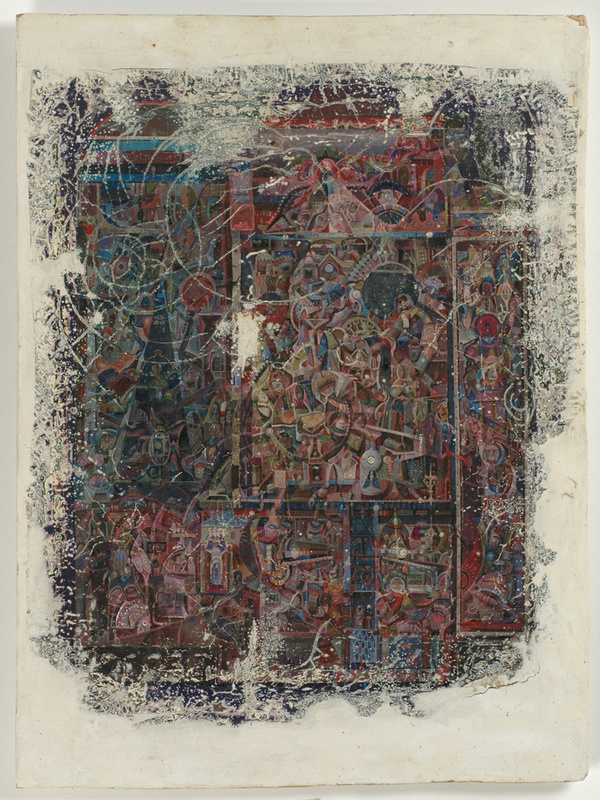
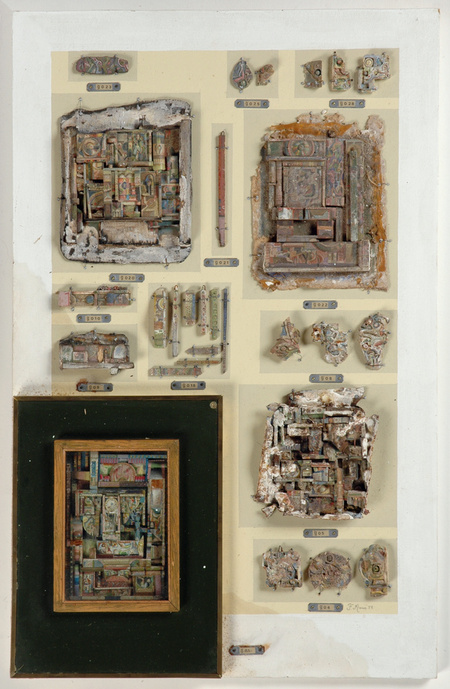
A.C.M 1968 — 1985 (Untitled) Sculpture 2003 / A.C.M c. 1968 — c. 1985 Sculpture 2003
For this investigation, the following stage is particularly crucial: collecting old objects forms the basis for creating new ones. Typewriters, alarm clocks, transistors, electronic components, and wires are transformed into a supply of material for assembly. Before connecting the found fragments, the artist cleans and processes them, using acid and oxidation among other techniques. This is where the transition I find fascinating begins. A detail is extracted from a device where its position was dictated by function, and it ends up in a different system of relationships. Now, it can be considered through its form: as a vertical element, a plate, a joint, or a repeating motif. The question is no longer what it did before, but rather what spatial role it can assume now.
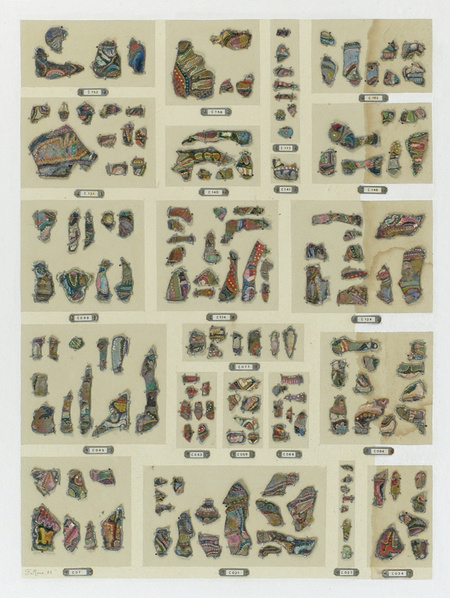
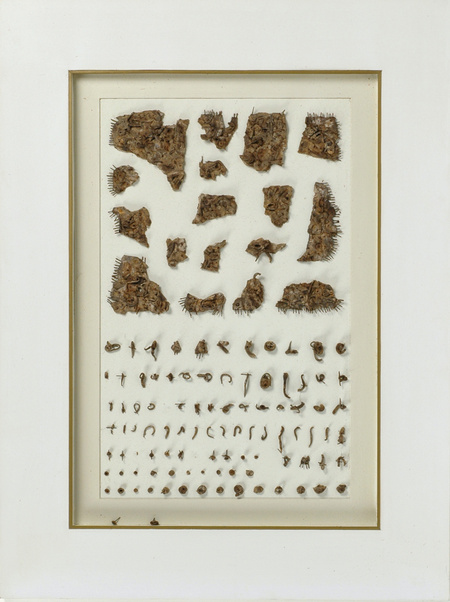
A.C.M c. 1985 Poliécaille Sculpture 2003 Donation Painted metal sculpture, metal wire, paper, ink on painted and adhesive-covered wood panel 64.9×50,1×2 cm / A.C.M c. 1970 Sculpture 2003 Donation Wood paste sculpture, metal, stain, chalk dust, and brass wire on painted wood panel 80×60×2.5 cm
Between the mechanism and the structure
To begin, it is important not to draw too rigid a boundary between «machine» and «architecture.» The LaM museum collection includes both sets of names: Machine and Architecture inachevée. This allows the research to be framed not as a history of the definitive rejection of technology, but as a comparison of two ways of interpreting structure.
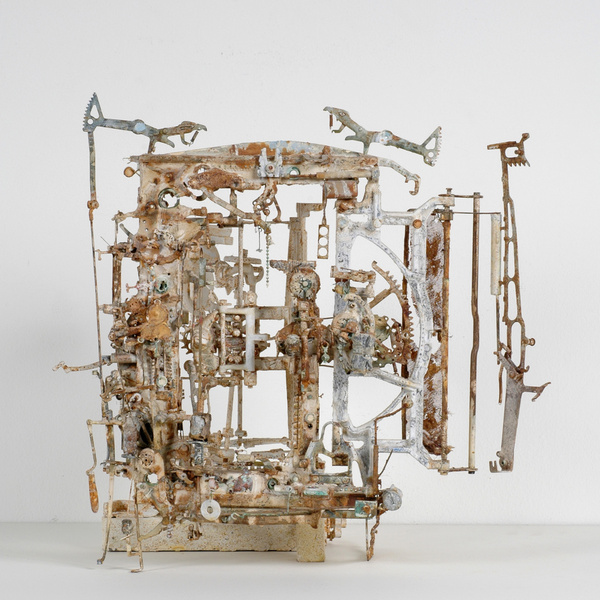
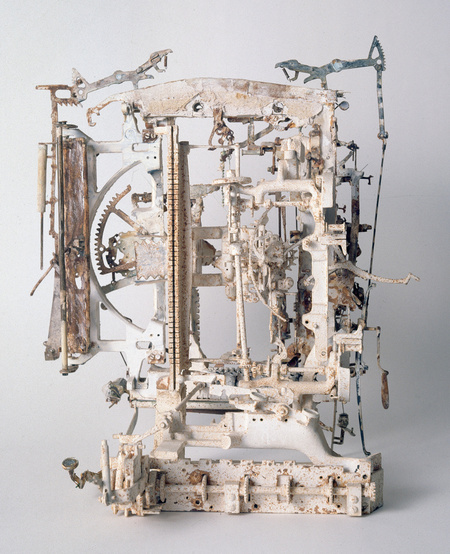
A.C.M. Machine. Mixed-media sculpture. 1999/ 43×38×36
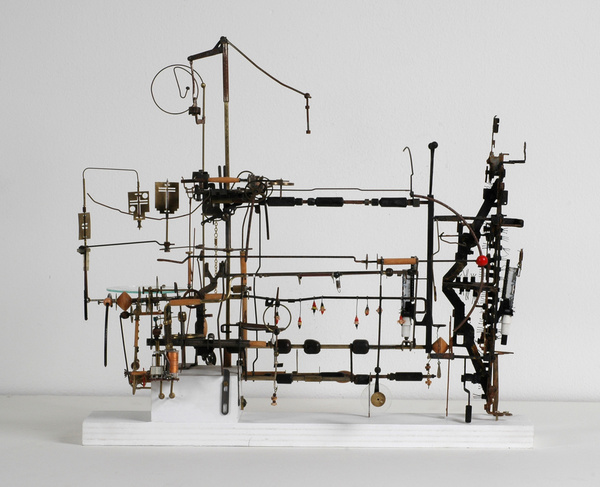
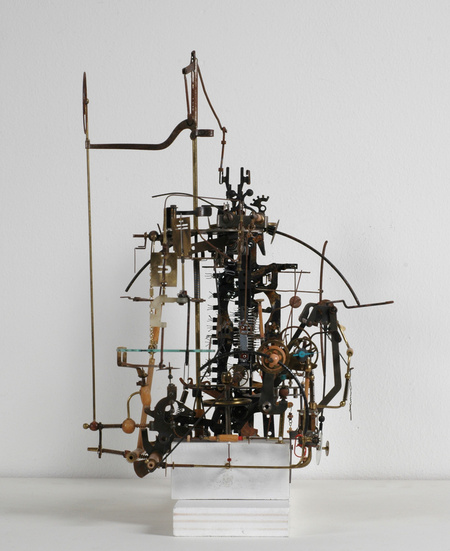
A.C.M. before 2003 Machine 1 Sculpture 2003 Don Sculpture Rondelle de verre Perles de bois peintes Bois Composants électroniques Métal (rouages, chaînes…) Technique mixte sur socle 40×44×27 cm
The title «Machine» maintains a connection to the material’s technical origins; the museum defines the work as an assemblage of electronic components. However, for the purpose of this study, I propose temporarily setting aside the question of mechanism and exploring an alternative reading: which parts can be considered the base, which are vertical supports, and which connect distinct sections? This distinction is fundamental. In a mechanical context, a joint implies the transmission of motion or the execution of an operation. In an architectural reading, the same node can be viewed as a point of support, transition, or spatial division. Shifting the question this way allows us to seek architecture not only in a silhouette resembling a building, but also in the relationships between the details.
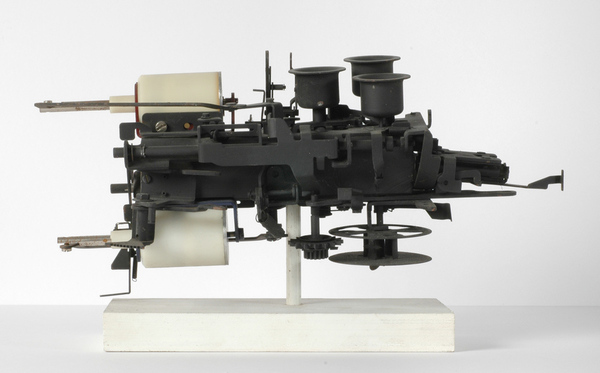
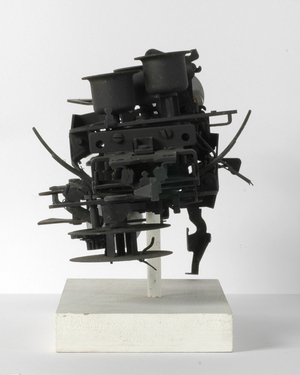
A.C.M. Machine 2 (The Human Beast) 2003 17.5×31×14.5 cm
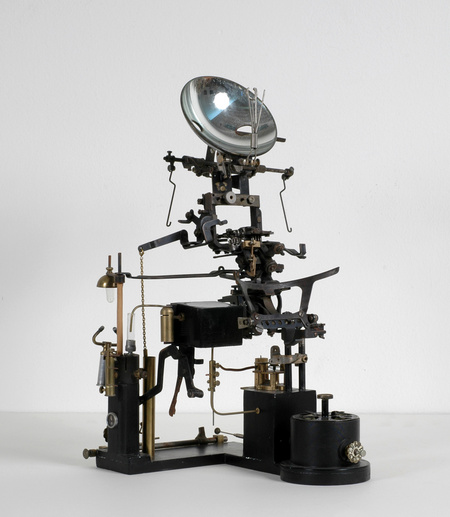
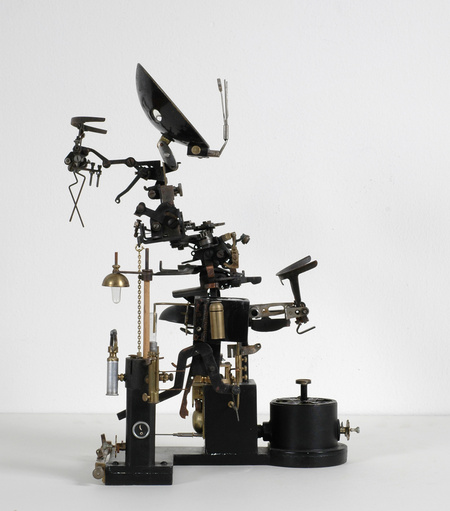
A.C.M Machine 3 (L’observatoire) Sculpture 2003 36.2×19,5×30 cm
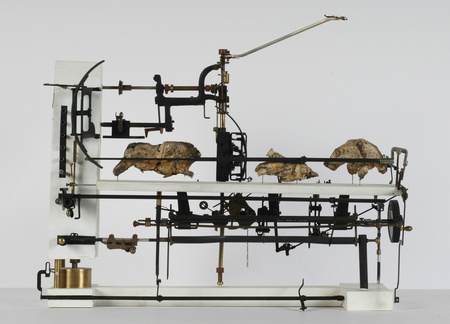
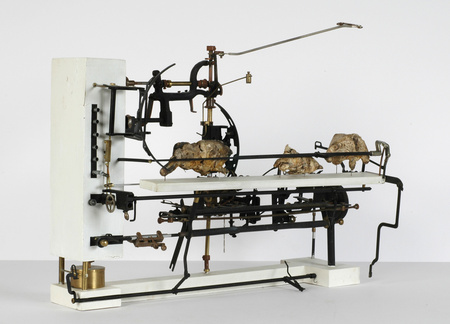
A.C.M Machine 4 2003 34.5×46,2×22.5 cm
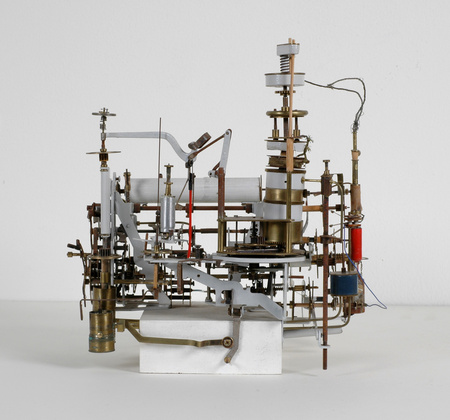
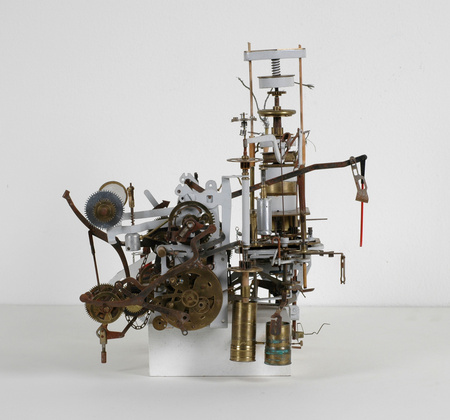
A.C.M. Machine 5. Mixed Media Sculpture. 2003/28.5×28,5×28.5
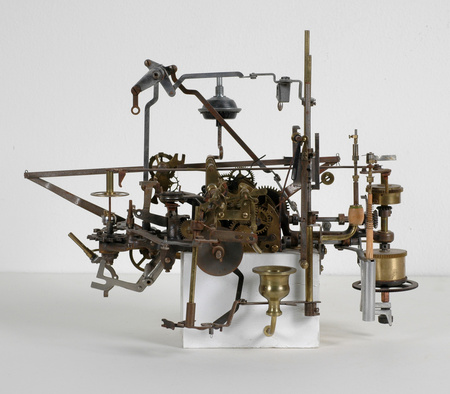
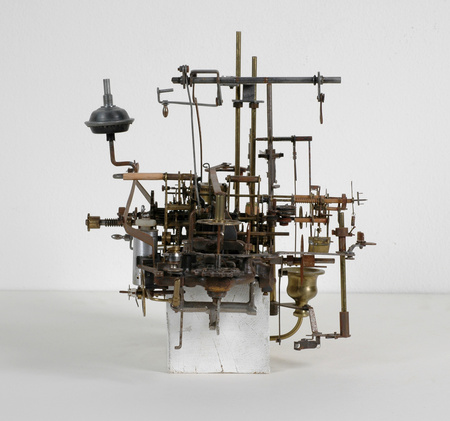
A.C.M. before 2003 Machine 6 Sculpture 2003 Don Sculpture, mixed media on base 25.8×22×34.5 cm
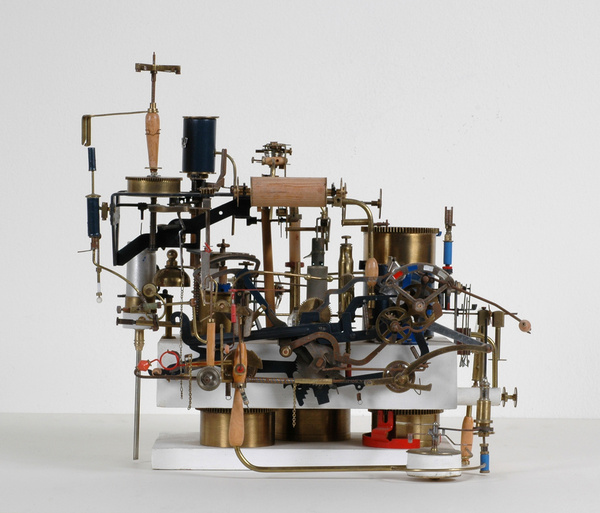
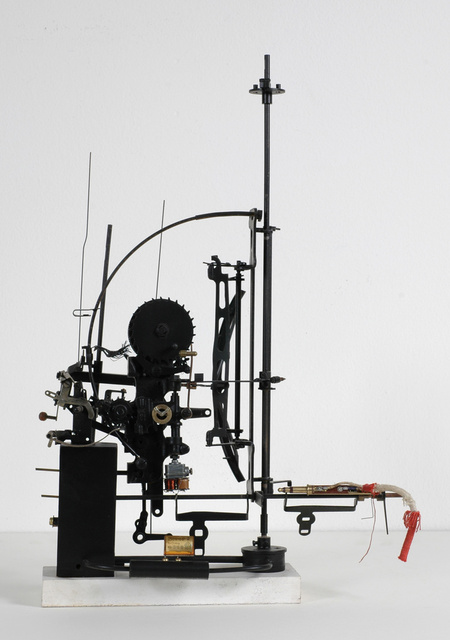
A.C.M before 2003 Machine 7 (Bayard) Sculpture 2003 Don Mixed-media sculpture on a base 29.5×21×33 cm/ A.C.M before 2003 Machine 8 Sculpture 2003 Don Mixed-media sculpture on a base 45×32×22 cm
From Object to Urban Fabric
Architectural interpretation doesn’t necessarily end with a single imagined building. The following example prompts us to consider a more complex organization—a group of structures or a section of a city.
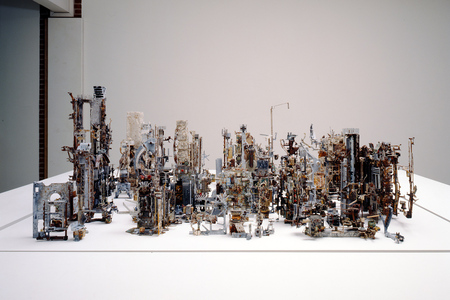
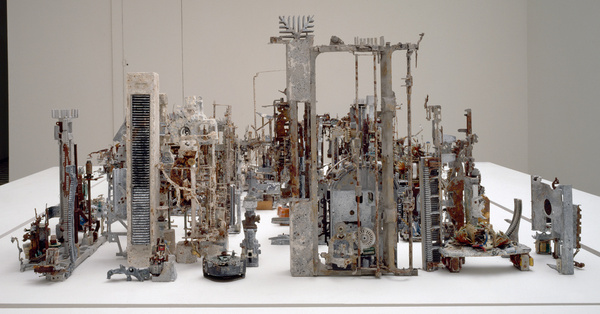
A.C.M Completed Architectures Sculpture 2003
Untitled, n.d. | Mixed media installation, 145×186×91 cm
This approach allows for the careful integration of an urbanistic tool—a scheme of filled and open space. A separate analytical diagram can reduce the image to two types of areas: dense masses and the spaces in between. This is not a reconstruction of the actual plan, nor is it a statement about the influence of urban planning on the artist, but rather a way to test one’s own reading: does a spatial connection truly emerge between the parts?
A.C.M. (1951–2023) La grande table, circa 2000
Between the structure and the ruins
In the works of A.C.M., the feeling of ruin emerges not only from the overall form but also from the surface. The material’s heterogeneity—the combination of dark, light, and colored fragments, the traces of oxidation, and artificial aging—prevents the structure from being perceived as neutral or freshly assembled. It looks as if it has already endured a long existence, although much of that history is constructed by the artist themselves during the material’s treatment.