Concept
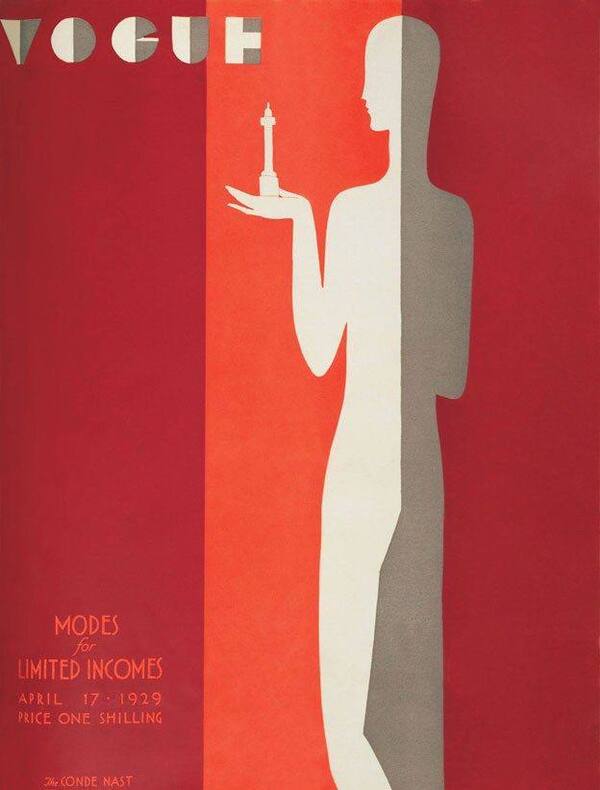
The evolution of fashion magazines in the first third of the 20th century reflects not only changes within the fashion industry but also broader cultural and political processes that shaped the era’s visual language. It was on the covers of publications—Vogue, Harper’s Bazaar, La Gazette du Bon Ton, and others—that artistic innovations became most visible and accessible to a wide audience. The covers of these fashion magazines stood at the intersection of art, advertising, and mass culture. They showcased new ideals of modernity, conceptions of contemporary womanhood, the dynamism of urban life, and the aesthetics of the future. Art Deco style played a particular role in this development, spreading during the 1910s–1930s and merging decorative flair, geometry, and a pursuit of visual opulence. Fashion magazines became one of the primary platforms where this style was most vividly expressed—in illustrations, typography, and compositional design. The covers transformed into symbols of the time—they set the tone for the visual culture of an entire era.
In my visual research, I would like to examine the development and trends of fashion magazine covers from the Art Deco era (1920–1930), using Vogue as a case study.
I have always been drawn to this area of art for its sophistication and glamour. My particular interest was sparked after watching the film «The Great Gatsby»; in it, I saw the luxury, the brilliance of the fashions, the zeitgeist of the era, and the social atmosphere. The next point of inspiration was visiting the exhibition «Packaged Dreams» at the State Hermitage Museum, which showcased numerous dresses and accessories from women’s wardrobes of that period, as well as magazine illustrations.
All texts and photographs were sourced from relevant materials, primarily articles and online resources. The comparative analysis section reflects my personal perspective, developed based on my knowledge and experience. The research will examine the most striking covers from the 1920s and 1930s in chronological order to trace the changes within this decade. Furthermore, I will discuss the characteristics of this style and the factors that contributed to its emergence. The study will conclude with a summary of findings and a list of sources.
Art Deco (from French art déco — «decorative art»)
Another phase in the evolution of the Art Nouveau style, spurred by the rapid industrial revolution of the early 20th century. Although the style originated in France around 1910–1912, it reached its peak popularity in the 1920s and 1930s. It became particularly popular in the United States, manifesting in architecture, interiors, industrial design, and graphic design. The Art Deco style ultimately received its name from the Exposition Internationale des Arts Décoratifs et Industriels Modernes—the International Exhibition of Decorative and Industrial Arts—held in Paris in 1925. Following this exhibition, Art Deco began to be recognized as a distinct movement.
What was happening in the world?
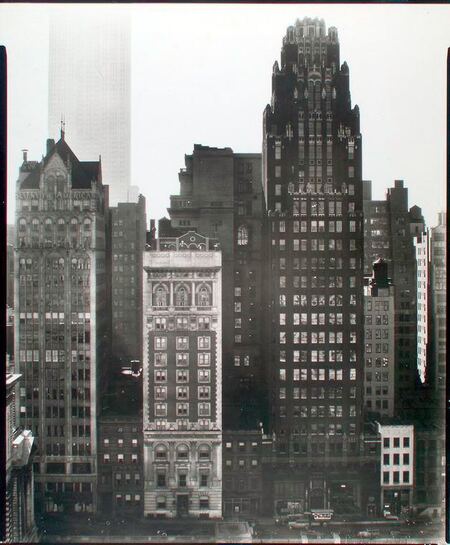
Art Deco is not merely an aesthetic; it is a symbol of the interwar era—a testament to technological progress and the pursuit of a new way of life. Following the First World War (1914–1918), society experienced profound upheaval. War, economic hardship, and the collapse of old empires and orders marked the time. People lived day-to-day, searching for beauty, luxury, and hope for the future. The style was intended to beautify the lives of people exhausted by the wars and revolutions of the early century. It was also an age of technological advancement, industrialization, and the growth of cities and urbanization. Consumerism was rising, and new materials and technologies were emerging. Industrial production made it possible to mass-produce new forms.
Art Deco embodied the shift from craft and decorative arts toward mass design, industrial production, and a new mode of consumption.
The pursuit of a «new way of life» Art Deco became the visual language of the «new woman» in the 1920s–1930s.
Emancipation—the right to vote, women entering the workforce, and new social roles—demanded a new visual identity. Art Deco, with its geometry, dynamism, and modernist stylization, perfectly embodied the free, active, and independent female archetype of the era. The Flapper emerged—a trend characterized by short hair, a loose, straight silhouette, light and practical clothing, a rejection of corsets and elaborate construction, and a pursuit of comfort and mobility. This was more than just a fashion trend—it was a symbol of freedom, of the woman’s new social standing, and her readiness to assume greater autonomy, moving beyond the role of merely a «homemaker.»
During this period, many female designers, artists, and fashion designers emerged, underscoring a broader societal shift.
Characteristics of Art Deco Style
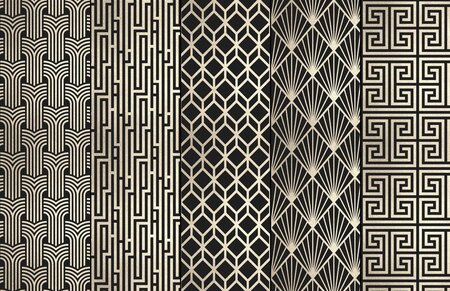
The Art Deco style is characterized by eclecticism. It combines geometry and ornamentation, modernism and classical symmetry, luxury and machine aesthetic, exoticism and urbanism. Key features include the geometrization of forms, straight lines, zigzags, stepped shapes, and «sunburst» rays. Additionally, unlike the free asymmetry of Art Nouveau, the Art Deco style favors compositional symmetry, a balanced arrangement of decorative elements, and the use of chrome, silver, mirrored surfaces, wood, ivory, and mother-of-pearl.
The 1920s—an era marked by significant archaeological discoveries and an intense interest in exotic cultures. Consequently, the ornaments and motifs of this style incorporated elements from classical antiquity, Egyptian, Aztec, and African visual arts. Furthermore, jazz culture, the nightlife of major cities, and the burgeoning freedom of women served as crucial sources of inspiration for the Art Deco style.
How did Art Deco style influence fashion magazine covers?
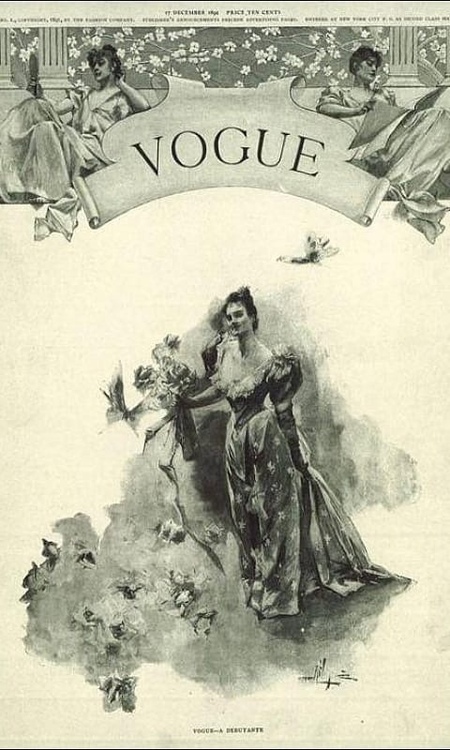
Let’s examine the changes and trends in fashion covers using Vogue magazine as an example. But first, a few words about the magazine itself. Vogue was founded on December 17, 1892, as a weekly magazine for the social elite of New York. The founders were Arthur Baldwin Turnure and Harry McVickar. In 1909, the publisher Condé Nast acquired the magazine, after which Vogue began transforming into a publication focused on fashion, beauty, and style. In 1916, the British (and subsequently other international) versions of Vogue were launched, marking an international expansion of the brand. Throughout the first third of the 20th century (up to the 1930s), the magazine heavily featured illustrated covers—artwork by artists rather than photographs. This was the golden age of illustration for Vogue.
1920
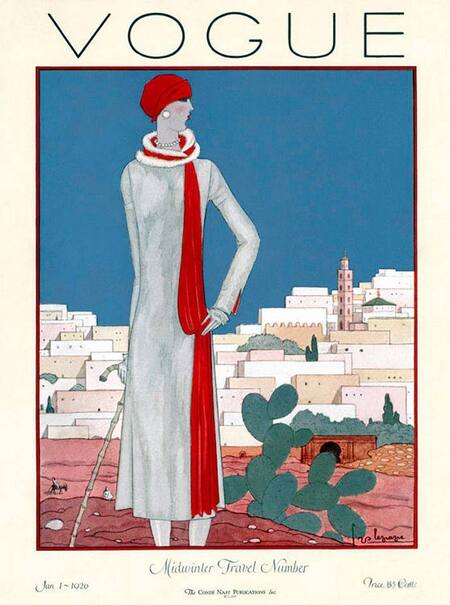
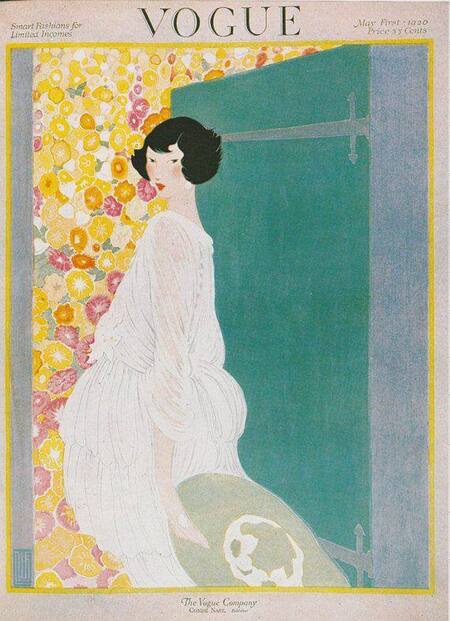
Vogue magazine covers, 1920
The Art Deco style in illustrations (1920s–1930s) is characterized by refinement, glamour, and geometry, blending elements of Art Nouveau, Cubism, and Expressionism. The transition from Art Nouveau illustration to a more geometric, «machine-age» aesthetic: simplified forms, linear stylization, and rhythmic motif repetition. Characteristic of this style is the use of saturated, sometimes exotic colors and high-contrast combinations, which lend the illustrations expressiveness and drama.
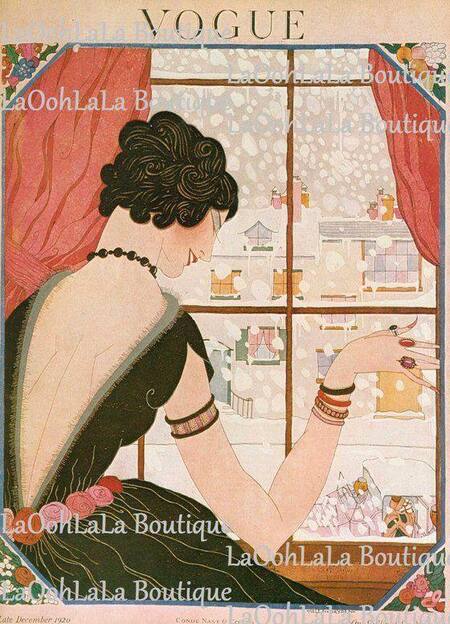
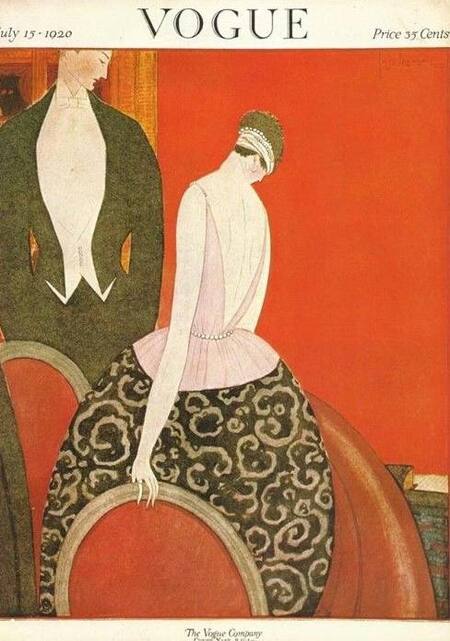
Vogue magazine covers, 1920
1921
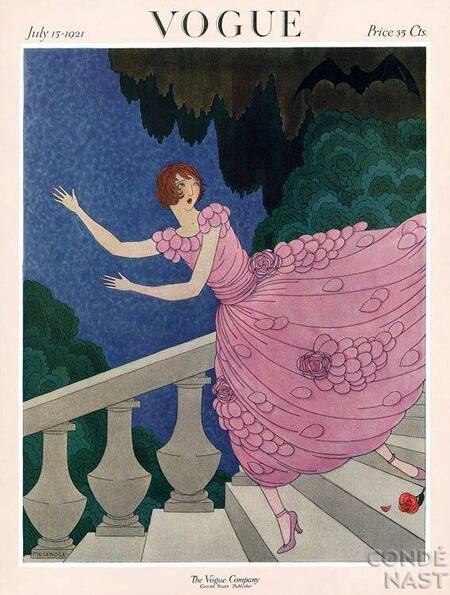
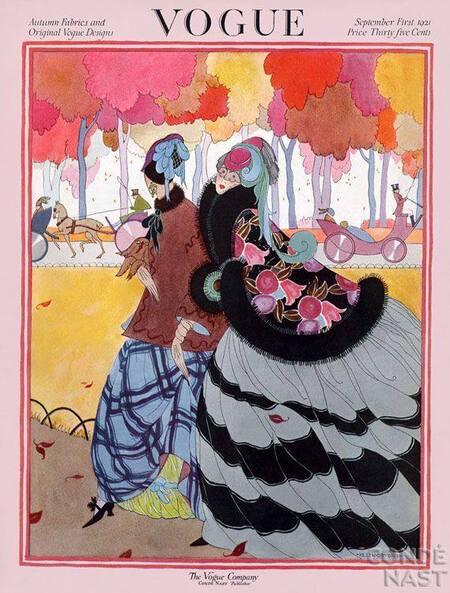
Vogue Magazine Covers, 1921
Another key characteristic of the covers from that era was their theatricality. This elevated them beyond mere illustrations into complete visual spectacles, each with its own narrative. This is evident in the dramatic poses of the models, the unconventional costumes, masks, fans, and various theatrical props. In the early 1920s, the cover compositions were flat and ornamental, reminiscent of a poster or a promotional advertisement. Printing technology at the time was limited, so colors were most often rendered using flat fills.
1922
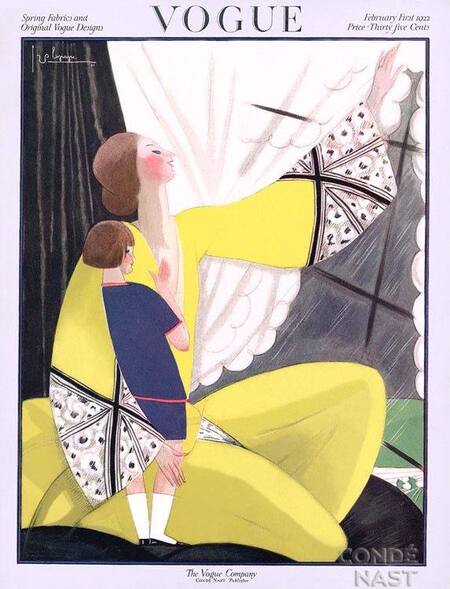
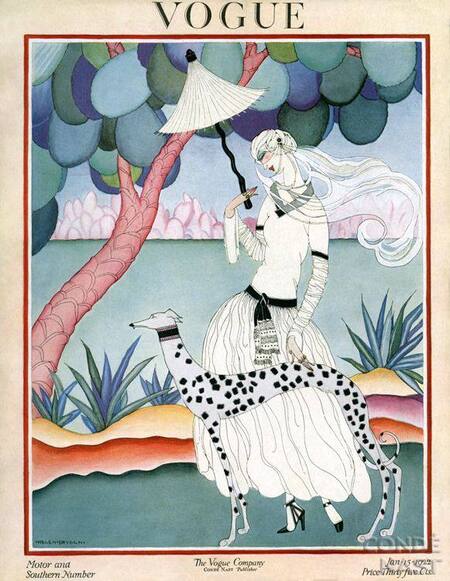
Vogue magazine covers, 1921
We can also note particular characteristics in the depiction of the female figure. Often, these were elongated, frequently stretched graphical silhouettes of women. Stylization and geometrization of the face were actively employed.
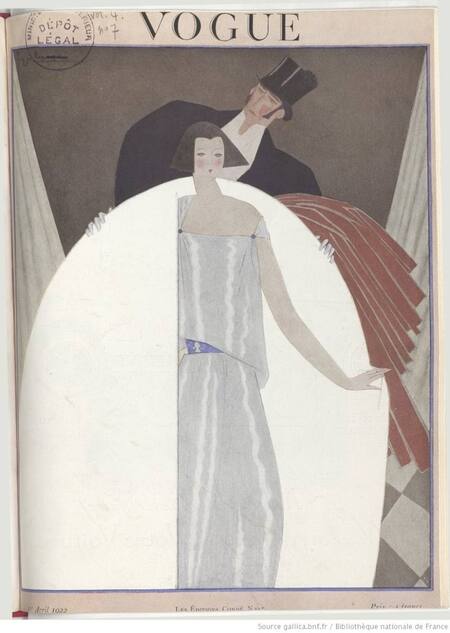
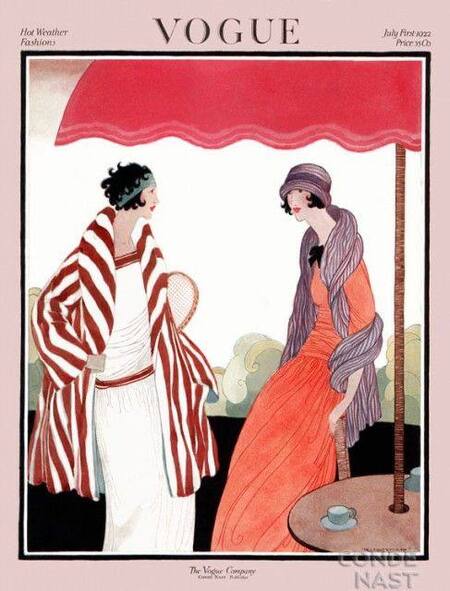
Vogue Magazine Covers, 1922
1923
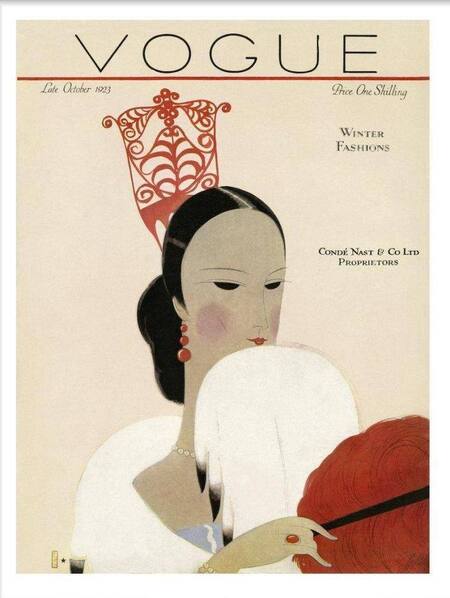
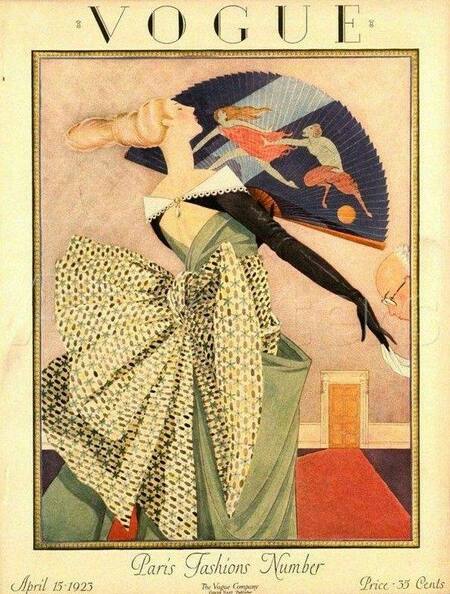
Vogue magazine covers, 1923