«We strived for an art that would have the ability to cure the century of madness and find that new order of things that would restore balance between heaven and hell» [1, p. 51].
Research Concept
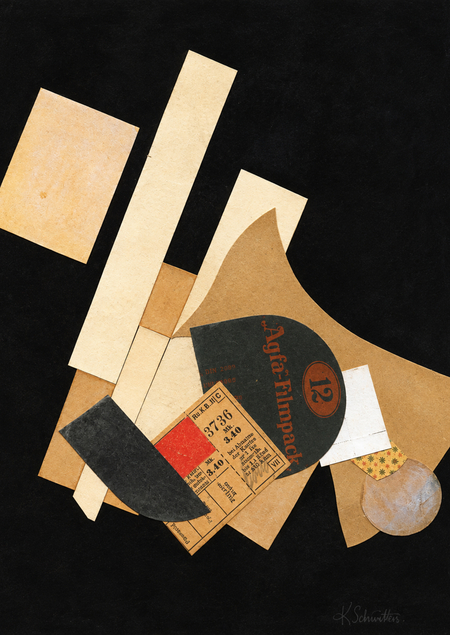
Kurt Schwitters’ collages are typically perceived as part of Dadaism—art of chance and destruction. At first glance, this is certainly true, but upon closer inspection, a strict organization of the plane is revealed in these works, one closely related to what would later form the basis of modernist typography. Schwitters' collages can be viewed as a space of experimentation where graphic design techniques—working with the letter as an object, dividing the plane into modules, juxtaposing diverse fragments—developed before receiving any theoretical substantiation.
The key question of this research is whether Kurt Schwitters’s collage-based chaos conceals a stable compositional system, and what that system entails.
Schweitzer’s arrangement in collages does not arise from geometry, but from the relationships between fragments: each piece gains meaning only in relation to others—through contrasts in size, color, texture, or plane. This mode of thinking, where the whole is greater than the sum of its parts, would later become the basis for montage theory: what Tretyakov would call «multiplication, not addition, ” Schweitzer was already applying in collage.
The study includes over sixty works from 1912–1948.
The main body of the building features collages, reliefs, and prints by Schwitters—these works were selected to encompass all periods of his creativity and diverse compositional approaches. The context is set by the works of Dadaists, such as the magazines «Dada» and «Der Dada, ” the poster poems of Raoul Hausmann, and the collages of Hannah Höch; works by predecessors and contemporaries, primarily Pablo Picasso, Vladimir Tatlin, and El Lissitzky; as well as pieces by masters of photomontage, most notably John Heartfield and Gustav Klutsis. Every piece is precisely attributed and dated, and sourced from a reliable repository: a museum collection, archive, or digitized publication.
The research structure moves from context to analysis, and then to the legacy of the Schwitters' method—examining how the techniques they employed continued to live on in photomontage.
Chapter Two examines Dada typography as a dismantling of traditional layout and the point of convergence between Swiss design and this movement. Chapter Three explores the collage technique—specifically, the components and principles Swiss design employed in his works. Chapter Four is organized by compositional elements: grid and rectangular framework, diagonals and center of gravity, color, and mass equilibrium. Chapter Five is dedicated to the texture, volume, and plane of the collage. Chapter Six takes us beyond the designer’s creation, analyzing his methodologies in photomontage from the 1920s–1930s.
When selecting textual sources, the primary focus is on works dedicated to typography and photomontage from the first half of the 20th century. The research utilizes texts by two contemporaries of Tschichold: Yan Tschichold’s book, «New Typography, ” which assesses the legacy of Dada and references Der Sturm magazine, and Sergei Tretyakov’s monograph on John Heartfield, which formulates the theory of photomontage. These are supplemented by the contemporary research of Oksana Vashchuk, in which Dada and montage are examined within the broader history of modernist typography. Particular attention is paid to sections discussing composition, texture, and the juxtaposition of heterogeneous elements.
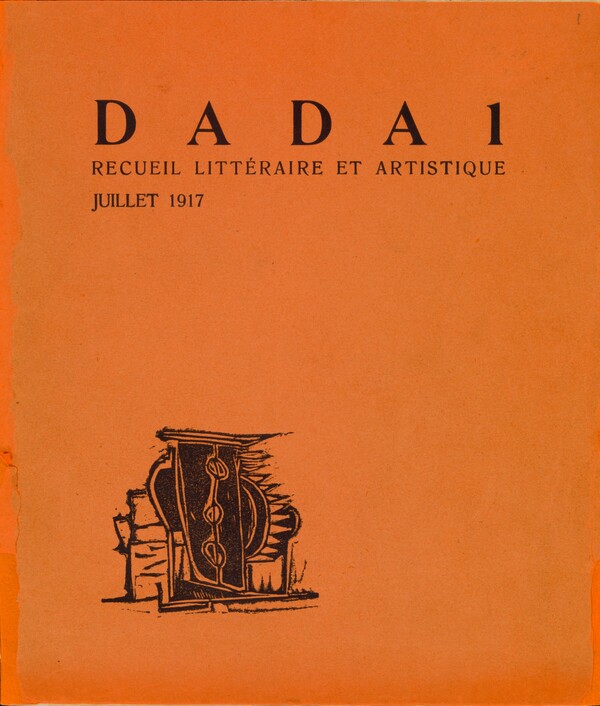

From left to right—Tristan Tzara, Dada No. 1, 1917; Hugo Ball, Caravan, 1917
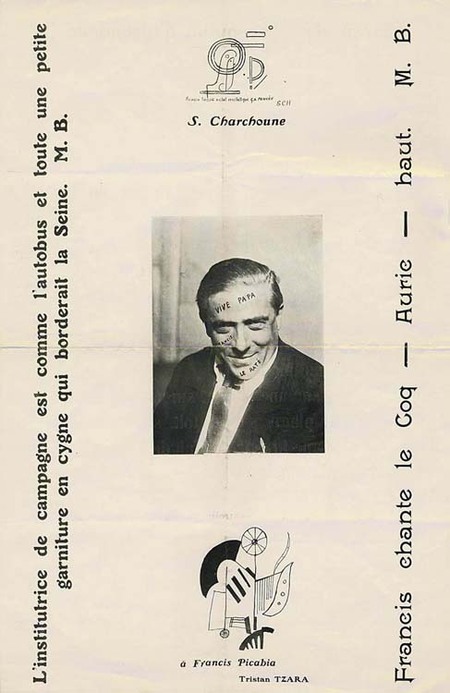
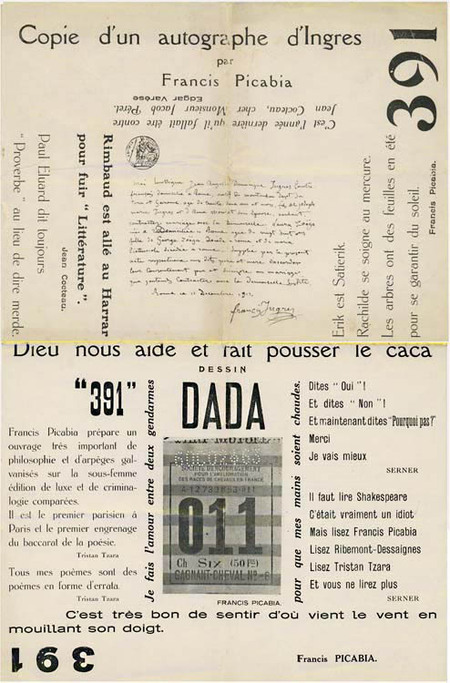
Francis Picabia, 391 No. 14, 1920
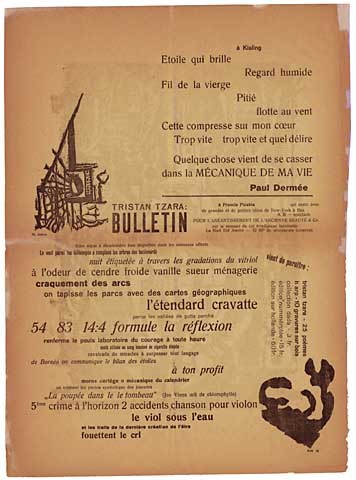
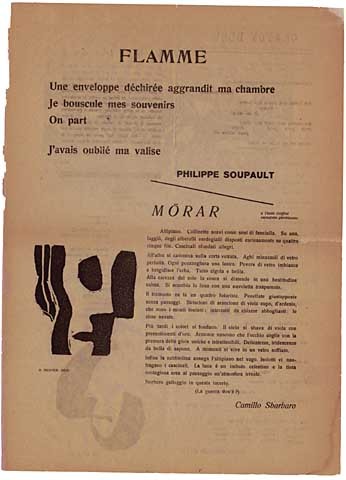
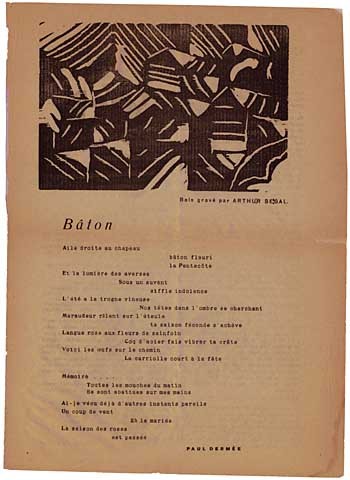
Tristan Tzara, Dada No. 3, 1918
Vashchuk, O. A. The Swiss School of Graphic Design. Formation and Development of the International Typographic Style: Monograph / O. A. Vashchuk; Postscript by S. I. Serov. — St. Petersburg: FSBEI HEI «SPGUTD,» 2013. — 304 p.
Tretyakov, S. M. John Hartfield: Monograph / S. Tretyakov; Layout Design by S. Telingater. — Moscow: OGIZ-Izogiz, 1936.
Tschichold, J. New Typography: A Handbook for the Modern Designer / Jan Tschichold; translated from German by L. Yakubson. — Moscow: Studio Artemy Lebedev Publishing, 2011. — 244 p.: 130 ill.