Nouveau Réalisme (New Realism) was an artistic movement that emerged in France in 1960 around the critic and theorist Pierre Restany. Its members included Yves Klein, Arman, Jean Tinguely, Daniel Spoerri, César, Raymond Hains, Jacques de la Villeglé, Mimmo Rotella, Niki de Saint Phalle, Gérard Deschamps, and others. Within art history, Nouveau Réalisme’s theoretical program was grounded in an engagement with the material environment of contemporary society. In his 1960 manifesto, Restany defined the art of the Nouveaux Réalistes as a direct appropriation of «sociological reality, ” encompassing the world of objects, advertising, urban communication, and mass consumption.
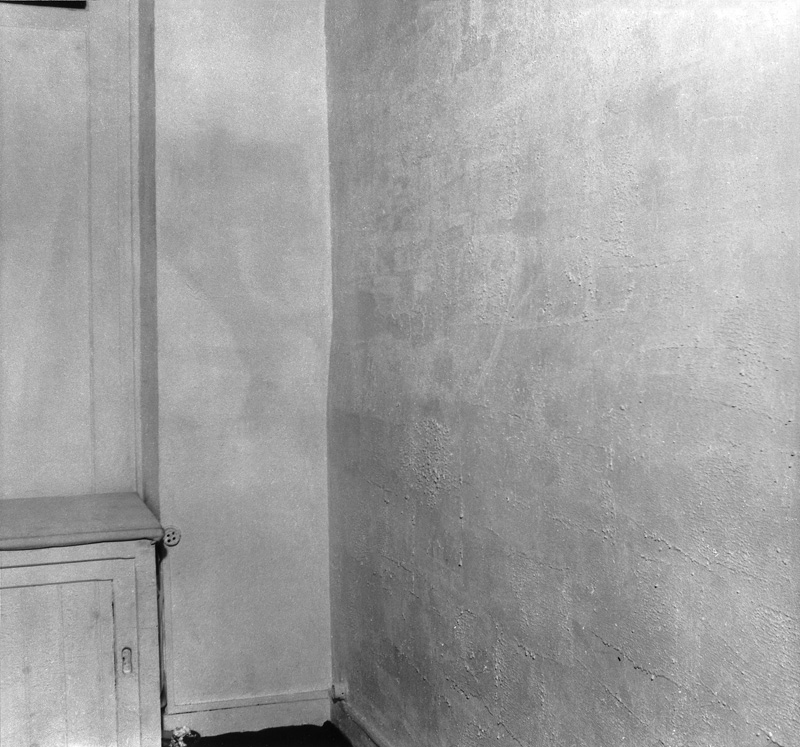
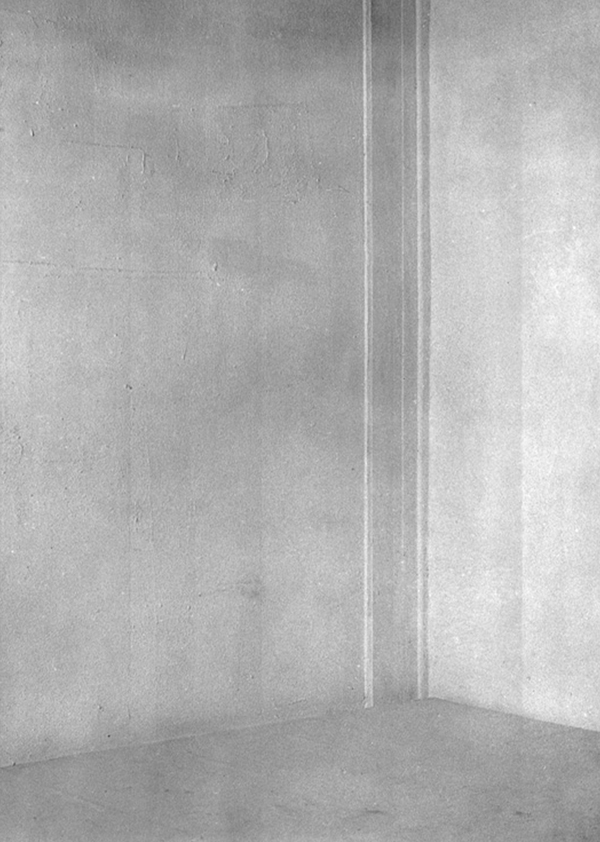
Yves Klein. La spécialisation de la sensibilité à l’état matière première en sensibilité picturale stabilisée (Le Vide). Galerie Iris Clert, Paris, 1958.
The origins of Nouveau Réalisme can be traced to the experiments of the historical avant-garde. Dada played a particularly important role through its challenge to conventional notions of authorship and artistic value. The central precedent was Marcel Duchamp’s concept of the readymade. Works such as Bicycle Wheel (1913) demonstrated that an ordinary object could become a work of art through an act of selection. As a result, the artwork came to be understood as the outcome of a conceptual gesture. This idea formed the basis of many strategies later developed by the Nouveaux Réalistes.
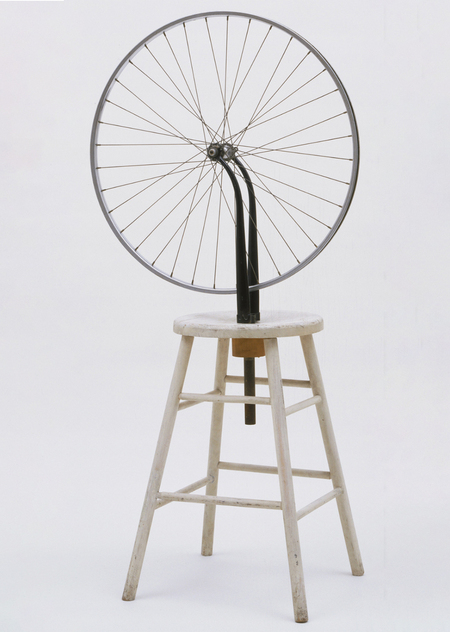
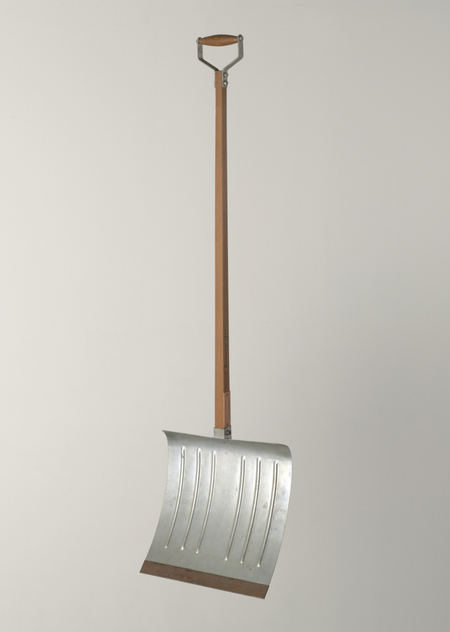
Marcel Duchamp. Bicycle Wheel. 1913 (third version, 1951). MoMA, New York.// Marcel Duchamp. In Advance of the Broken Arm. 1915 (fourth version, 1964). MoMA, New York.
A crucial stage in the evolution of object-based art was assemblage. This mode of artistic expression emerged at the intersection of Cubist collage and Dadaist experiments with found objects. Assemblage preserved the material identity of the object while placing it within a new system of meanings. For the Nouveaux Réalistes, this principle became fundamental. Their works were constructed from real objects extracted from everyday life and relocated into the space of art.
Arman. Chopin’s Waterloo. 1962. Piano elements mounted on a wooden panel. Centre Pompidou, Paris.
Arman developed this approach with particular consistency. He produced accumulations composed of large quantities of identical objects. In Chopin’s Waterloo (1962), fragments of a destroyed piano are assembled into a monumental composition. The work exemplifies the Nouveau Réaliste strategy of transforming an ordinary object into an autonomous artistic structure. A related concern appears in the work of César. His Ricard (1962) consists of a compressed automobile body. Here an industrial object becomes a sculptural form associated with serial production and the material culture of the modern city.
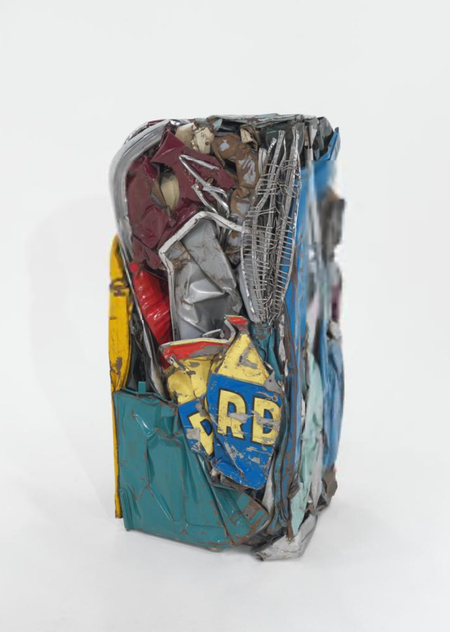
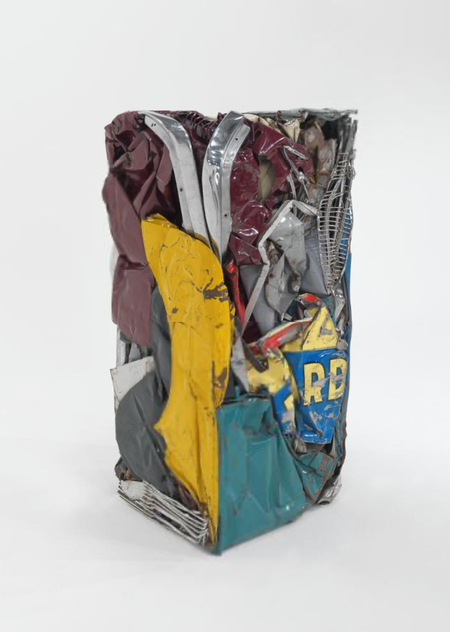
César. Compression «Ricard». 1962. Compressed lacquered steel. Centre Pompidou, Paris.
The practice of décollage occupied a significant place within the movement. Raymond Hains, Jacques de la Villeglé, and Mimmo Rotella worked with torn advertising posters, revealing their intrinsic visual organization. In Hains’s Panneau d’affichage (1960), fragments of posters and a metal support create a complex structure of urban signs. Jill Carrick has interpreted such works as engagements with historical memory embedded within the visual culture of consumer society.
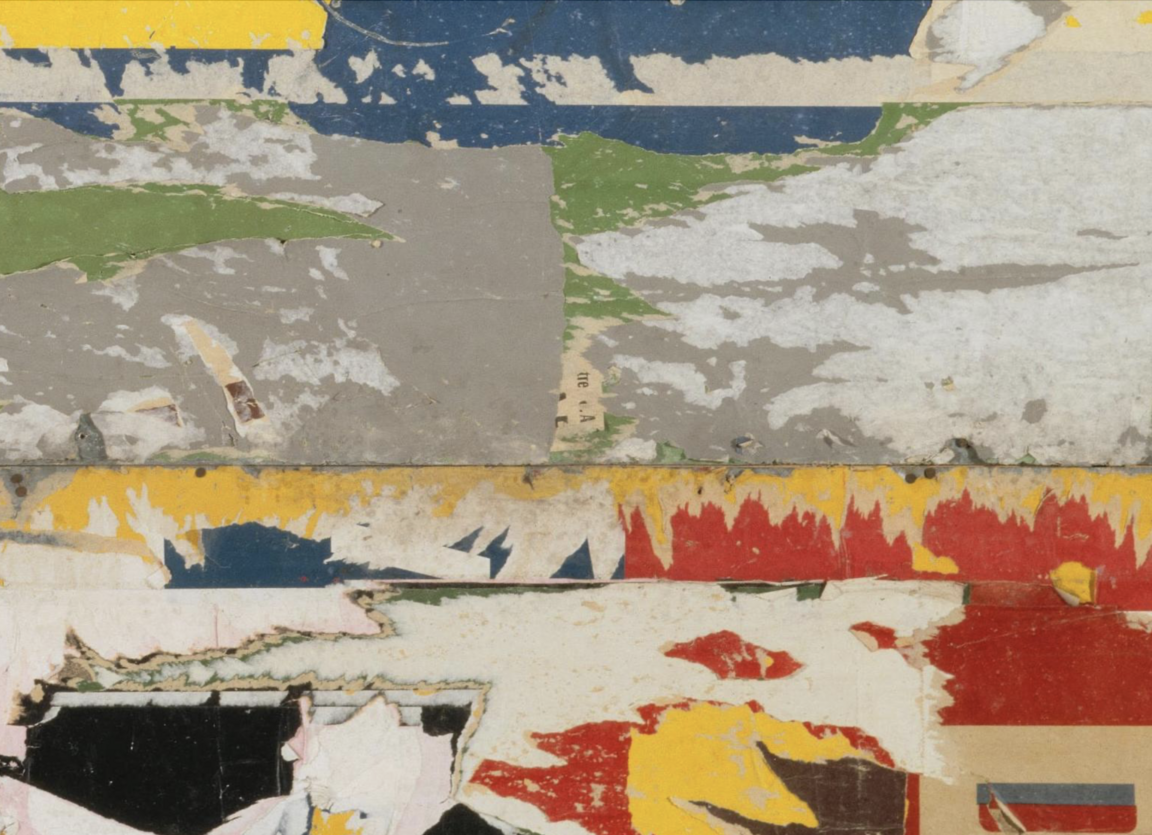
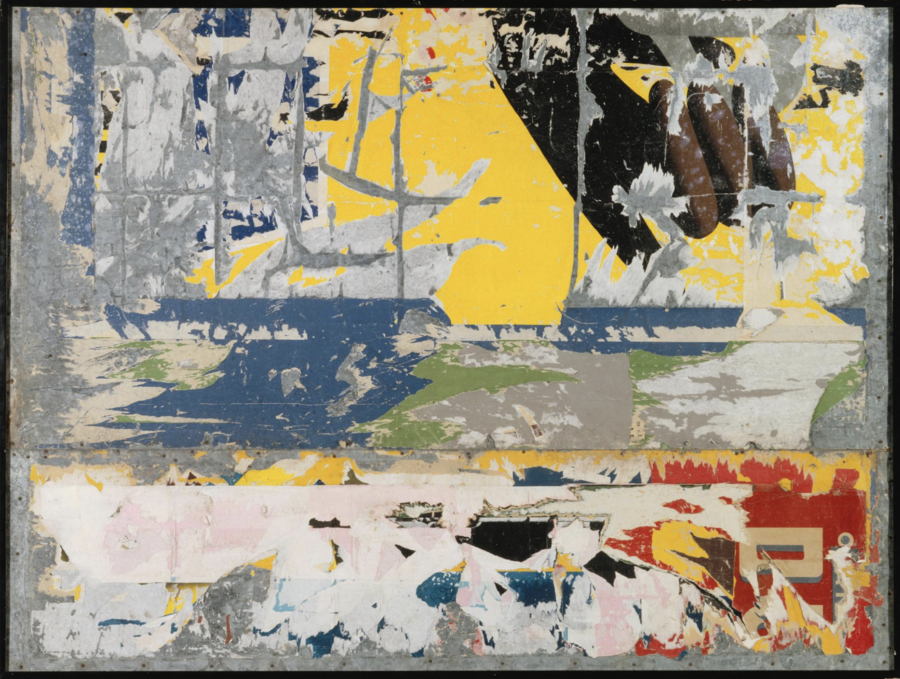
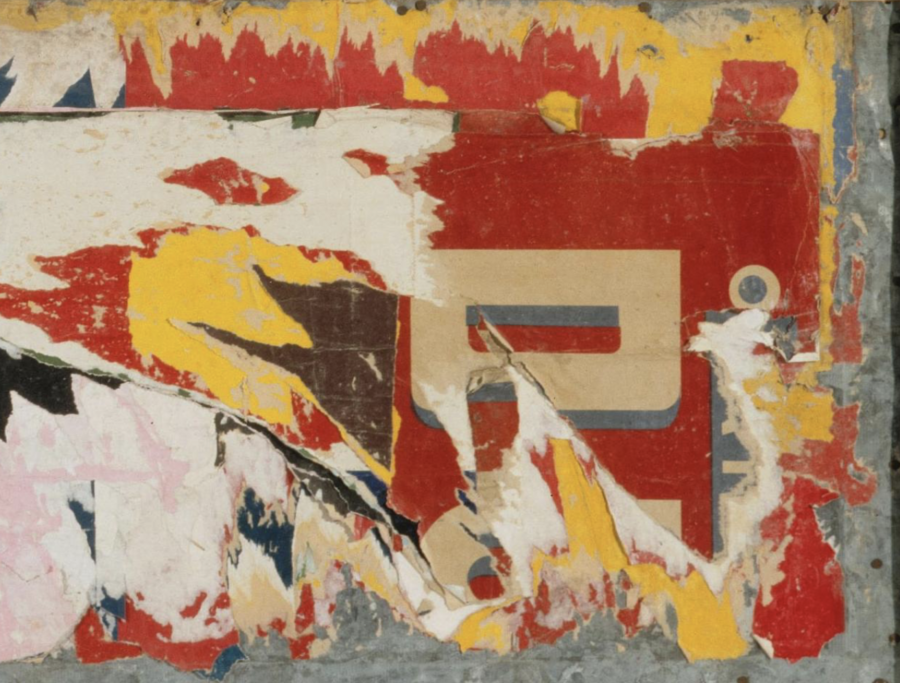
Raymond Hains. Panneau d’affichage. 1960. Torn posters on zinc sheet. Centre Pompidou, Paris.
Yves Klein occupied a distinctive position within the movement. His work expanded Nouveau Réalisme beyond object-based practice. In Monochrome Bleu (IKB 3) (1960), Klein focused on the perception of color as an autonomous reality. His actions and projects, including Le Vide (The Void, 1958), broadened the definition of the artwork and anticipated the development of performance, happenings, and conceptual art. Scholars frequently describe his practice as a transition from the material object toward the artistic event.
Yves Klein. IKB 3 (Monochrome bleu). 1960. Pure pigment and synthetic resin on canvas mounted on wood. Centre Pompidou, Paris.
Daniel Spoerri and Jean Tinguely also made important contributions to the movement. Spoerri created his «trap-pictures, ” in which the remains of meals were preserved exactly as participants had left them. Repas hongrois, tableau-piège (1963) transforms an incidental moment of everyday life into an artwork. Tinguely developed kinetic constructions and mechanical devices that emphasized the instability of contemporary material culture.
Yves Klein. La spécialisation de la sensibilité à l’état matière première en sensibilité picturale stabilisée (Le Vide). Galerie Iris Clert, Paris, 1958.
The theoretical significance of Nouveau Réalisme lies in its reconsideration of the relationship between art and reality. Pierre Restany viewed the movement as a form of «poetic recycling» of the modern world. Benjamin H. D. Buchloh later analyzed Nouveau Réalisme in relation to the emergence of the society of the spectacle and new forms of consumption. Jill Carrick emphasized the social and political dimensions of the movement’s object practices, particularly in the works of Arman, Spoerri, and Niki de Saint Phalle. Julia Robinson situated Nouveau Réalisme within a broader network of artistic developments that included Neo-Dada, Happenings, Fluxus, and early Pop Art. In her interpretation, the movement marked a shift from the autonomous art object toward event-based and participatory forms of artistic experience.
Daniel Spoerri. Le Repas hongrois (Tableau-piège). March 1963. Assemblage. Centre Pompidou, Paris.
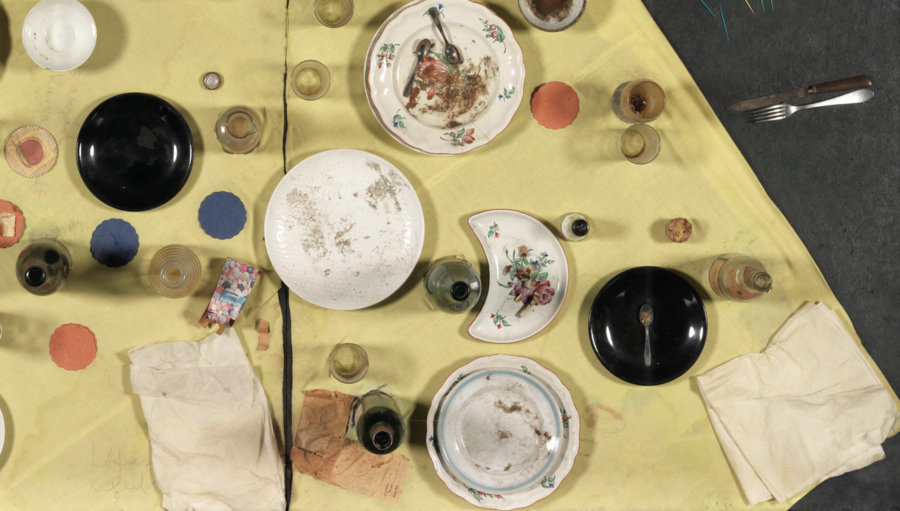
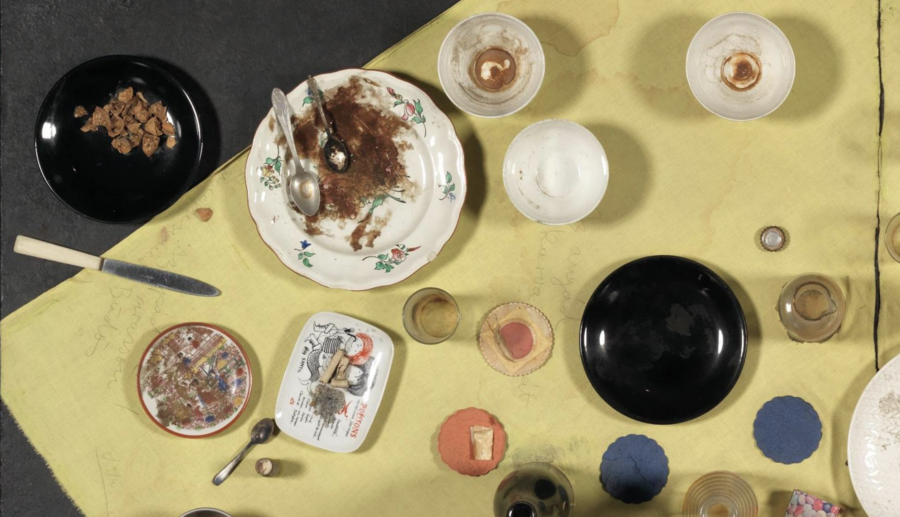
Daniel Spoerri. Le Repas hongrois (Tableau-piège). March 1963. Assemblage. Centre Pompidou, Paris.
Nouveau Réalisme exerted a significant influence on Arte Povera, which emerged in Italy during the late 1960s. Arte Povera artists retained an interest in the direct presence of things while turning toward natural materials and physical processes. Germano Celant defined this approach through a rejection of stable artistic forms in favor of lived experience and material reality. Jannis Kounellis’s Untitled (12 Horses) (1969), in which live horses occupied the gallery space, extends a trajectory initiated by Nouveau Réalisme. Art becomes connected to reality through the direct presence of the object itself.
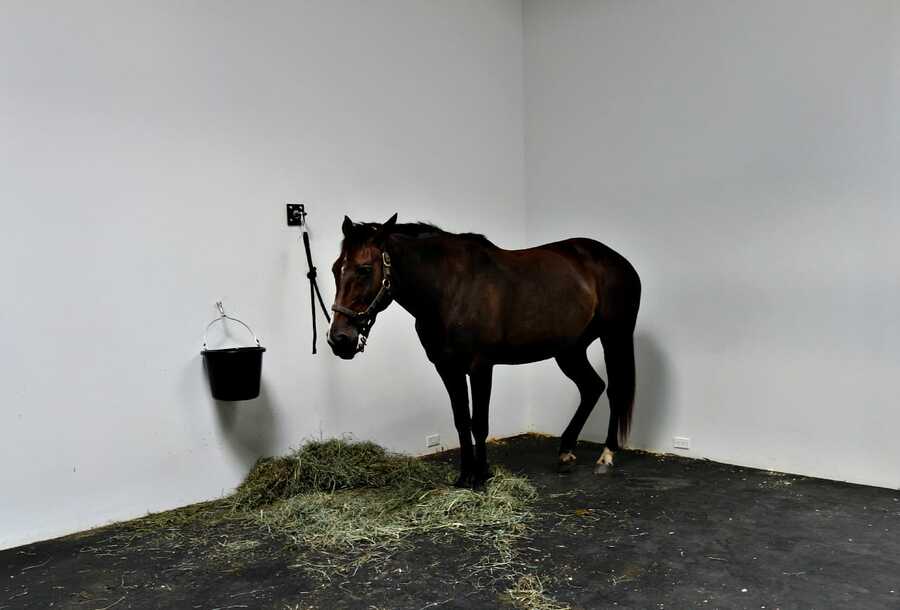
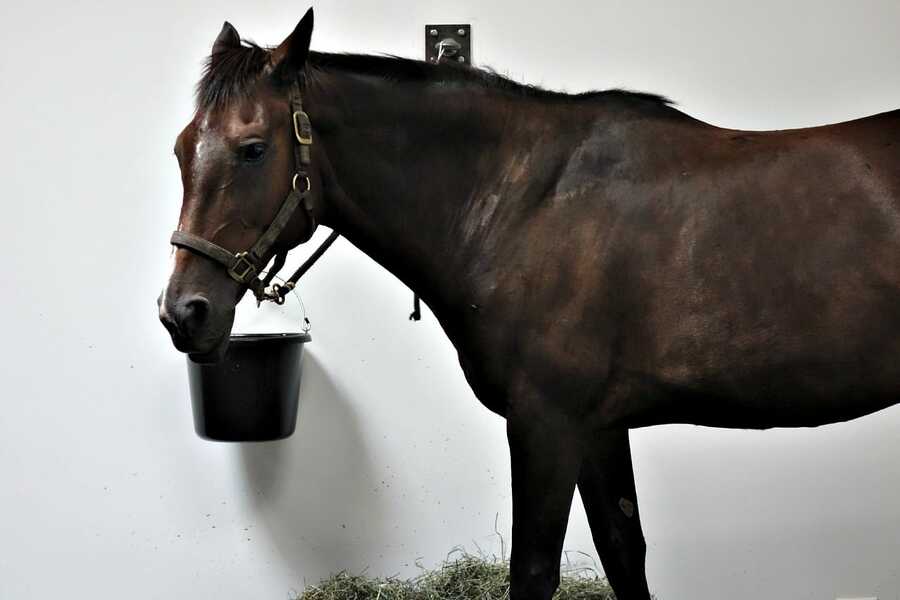
Jannis Kounellis. Untitled (12 Horses). 1969. Live installation with twelve horses. Originally presented at Galleria L’Attico, Rome.
Nouveau Réalisme thus occupies a central position in the history of postwar European art. It combined the legacy of Dada, the principles of assemblage, and the logic of the readymade into a new artistic program focused on the investigation of contemporary material culture. The practices developed by the Nouveaux Réalistes prepared the ground for conceptual art, performance, and Arte Povera, shaping some of the most influential artistic tendencies of the second half of the twentieth century.
Jannis Kounellis. Untitled (12 Horses). 1969. Live installation with twelve horses. Originally presented at Galleria L’Attico, Rome.
Klein Y. Sorbonne Lecture. 1959 // Harrison C., Wood P. (eds.). Art in Theory 1900–1990: An Anthology of Changing Ideas. Oxford: Blackwell Publishers, 1992. P. 803–811.
Wollheim R. The Work of Art as Object. 1970 // Harrison C., Wood P. (eds.). Art in Theory 1900–1990: An Anthology of Changing Ideas. Oxford: Blackwell Publishers, 1992. P. 787–794.
Restany P. The New Realists. 1960 // Harrison C., Wood P. (eds.). Art in Theory 1900–1990: An Anthology of Changing Ideas. Oxford: Blackwell Publishers, 1992. P. 711–713.
Celant G. Arte Povera. 1969 // Harrison C., Wood P. (eds.). Art in Theory 1900–1990: An Anthology of Changing Ideas. Oxford: Blackwell Publishers, 1992. P. 886–891.1.
Museum of Modern Art. Readymade. URL: https://www.moma.org/collection/terms/readymade (accessed: 08.06.2026).
Museum of Modern Art. Bicycle Wheel by Marcel Duchamp. URL: https://www.moma.org/collection/works/81631 (accessed: 08.06.2026).
Museum of Modern Art. In Advance of the Broken Arm by Marcel Duchamp. URL: https://www.moma.org/collection/works/105050?sov_referrer=art_term&art_term_slug=dada (accessed: 08.06.2026).
Museum of Modern Art. Marcel Duchamp and the Readymade. URL: https://www.moma.org/collection/terms/dada/marcel-duchamp-and-the-readymade (accessed: 08.06.2026).
Tate. Nouveau Réalisme. URL: https://www.tate.org.uk/art/art-terms/n/nouveau-realisme (accessed: 08.06.2026).
Centre Pompidou. Chopin’s Waterloo by Arman. URL: https://www.centrepompidou.fr/en/ressources/oeuvre/c9n4MbE (accessed: 08.06.2026).
Centre Pompidou. Compression «Ricard» by César. URL: https://www.centrepompidou.fr/en/ressources/oeuvre/epDgkqa (accessed: 08.06.2026).
Centre Pompidou. Le Nouveau Réalisme. URL: https://mediation.centrepompidou.fr/education/ressources/ENS-nouvrea/ENS-nouvrea.htm (accessed: 08.06.2026).
Centre Pompidou. Panneau d’affichage by Raymond Hains. URL: https://www.centrepompidou.fr/fr/ressources/oeuvre/czAg8e5 (accessed: 08.06.2026).
Centre Pompidou. IKB 3 (Monochrome bleu) by Yves Klein. URL: https://www.centrepompidou.fr/en/ressources/oeuvre/cAne9x5 (accessed: 08.06.2026).
Little ArtNecdotes. Le Vide (1958) by Yves Klein. URL: https://www.littleartnecdotes.com/le-vide-1958/ (accessed: 08.06.2026).
Centre Pompidou. Le Repas hongrois (Tableau-piège) by Daniel Spoerri. URL: https://www.centrepompidou.fr/fr/ressources/oeuvre/coXyynA (accessed: 08.06.2026).
Hyperallergic. The Calm and Controversy of 12 Horses in an Art Gallery. URL: https://hyperallergic.com/the-calm-and-controversy-of-12-horses-in-an-art-gallery/ (accessed: 08.06.2026).
Smart P. Twelve Live Horses. Medium. URL: https://medium.com/@penelope.smart/twelve-live-horses-7b599cc10491 (accessed: 08.06.2026).
Tate. Arte Povera. URL: https://www.tate.org.uk/art/art-terms/a/arte-povera (accessed: 08.06.2026).
Marcel Duchamp. Bicycle Wheel. 1913 (third version, 1951). Metal wheel and painted wooden stool. MoMA, New York // Museum of Modern Art. URL: https://www.moma.org/collection/works/81631 (accessed: 08.06.2026).
Marcel Duchamp. In Advance of the Broken Arm. 1915 (fourth version, 1964). Wood and galvanized-iron snow shovel. MoMA, New York // Museum of Modern Art. URL: https://www.moma.org/collection/works/105050?sov_referrer=art_term&art_term_slug=dada (accessed: 08.06.2026).
Arman. Chopin’s Waterloo. 1962. Piano elements mounted on a wooden panel. Centre Pompidou, Paris // Centre Pompidou. URL: https://www.centrepompidou.fr/en/ressources/oeuvre/c9n4MbE (accessed: 08.06.2026).
César. Compression «Ricard». 1962. Compressed lacquered steel. Centre Pompidou, Paris // Centre Pompidou. URL: https://www.centrepompidou.fr/en/ressources/oeuvre/epDgkqa (accessed: 08.06.2026).
Raymond Hains. Panneau d’affichage. 1960. Torn posters on zinc sheet. Centre Pompidou, Paris // Centre Pompidou. URL: https://www.centrepompidou.fr/fr/ressources/oeuvre/czAg8e5 (accessed: 08.06.2026).
Yves Klein. IKB 3 (Monochrome bleu). 1960. Pure pigment and synthetic resin on canvas mounted on wood. Centre Pompidou, Paris // Centre Pompidou. URL: https://www.centrepompidou.fr/en/ressources/oeuvre/cAne9x5 (accessed: 08.06.2026).
Yves Klein. La spécialisation de la sensibilité à l’état matière première en sensibilité picturale stabilisée (Le Vide). Galerie Iris Clert, Paris, 1958 // Little ArtNecdotes. URL: https://www.littleartnecdotes.com/le-vide-1958/ (accessed: 08.06.2026).
Daniel Spoerri. Le Repas hongrois (Tableau-piège). March 1963. Assemblage. Centre Pompidou, Paris // Centre Pompidou. URL: https://www.centrepompidou.fr/fr/ressources/oeuvre/coXyynA (accessed: 08.06.2026).
Jannis Kounellis. Untitled (12 Horses). 1969. Live installation with twelve horses. Originally presented at Galleria L’Attico, Rome // Hyperallergic. URL: https://hyperallergic.com/the-calm-and-controversy-of-12-horses-in-an-art-gallery/ (accessed: 08.06.2026).