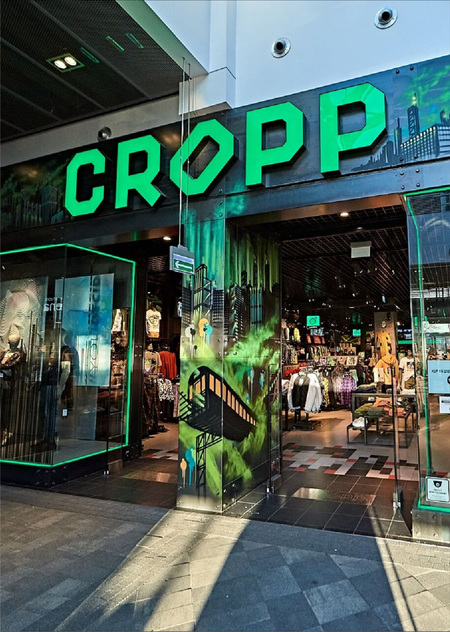
Cropp is a Polish clothing brand owned by the LPP Group, operating in the streetwear and casual segments. The brand’s identity is strongly shaped by ideas of self-expression, youth culture, and resistance to conformity.
How does Cropp’s communication shape audience identity and reinforce nonconformist values within the context of the mass market?
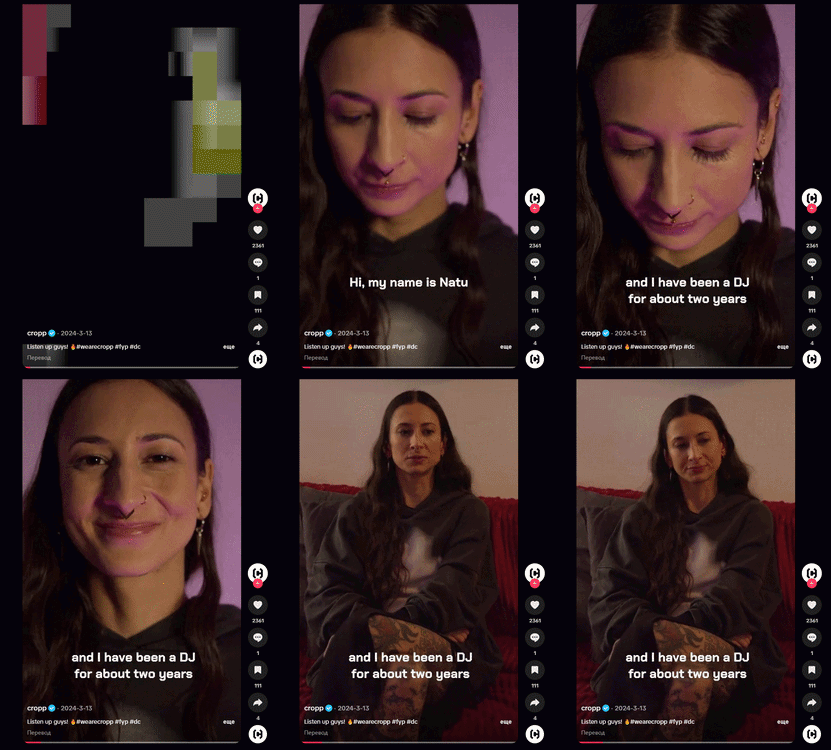

Videos from Instagram and Tik Tok
This study examines the brand’s digital communication strategy and the mechanisms through which visual and media practices foster social identity and a sense of belonging among consumers.
Cropp’s primary audience consists of Generation Z consumers (aged 16–25), characterized by high digital engagement, sensitivity to visual aesthetics, and a strong aspiration for individual self-expression.
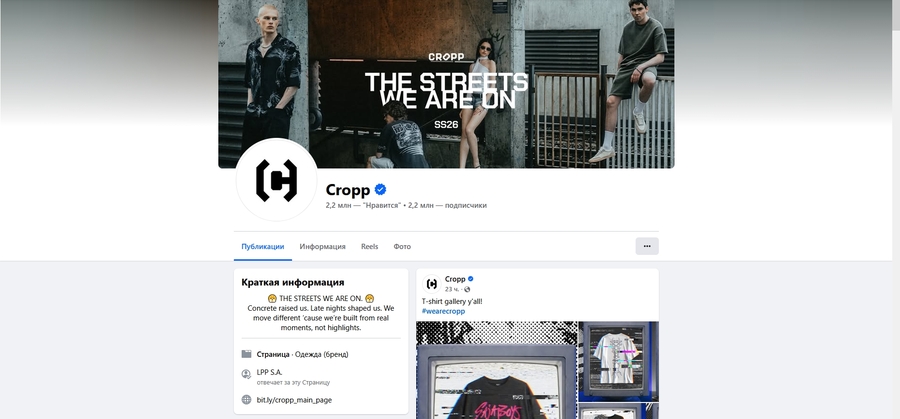
Cropp’s main Facebook page
Communication Channels
Screenshot of the Facebook post
Instagram and TikTok serve as Cropp’s primary visual communication channels. Instagram functions as a curated portfolio of the brand’s visual identity, while TikTok is used for short-form videos, trend-based challenges, and audience engagement through humor and viral content.
A photo from the Cropp store during a graffiti workshop
Facebook primarily serves as a platform for news updates, promotional campaigns, and official announcements. However, its role in communicating with younger audiences has gradually diminished.
Cropp’s PR strategy includes collaborations with music festivals such as Open’er Festival, partnerships with emerging musicians and street artists, and support for skateboarding as a cultural practice. These initiatives strengthen the brand’s connection with youth culture and reinforce its nonconformist image.
Influencer marketing constitutes another important communication tool. The brand collaborates with both micro- and macro-influencers relevant to Generation Z in order to enhance perceptions of authenticity and cultural relevance.
User-generated content also plays a significant role in Cropp’s communication strategy. The active use of the hashtag #wearecropp fosters a sense of community and reduces the symbolic distance between the brand and its audience.
Screenshot of the brand’s page in Tik Tok
Cropp employs a digital-first communication strategy centered on visually driven platforms. Instagram and TikTok function as the brand’s primary channels for identity construction, community building, and audience engagement.
The brand extends its communication beyond social media through collaborations with musicians, street artists, and youth cultural events, reinforcing its association with creativity and nonconformism.
A photo from the Cropp store during a graffiti workshop
User-generated content, particularly through branded hashtags, further reduces the distance between the brand and its audience, transforming consumers from passive recipients into active participants in brand communication.
Theoretical Framework
A photo from the Cropp store during a graffiti workshop
Social Identity Theory (Tajfel & Turner, 1979)
Social Identity Theory suggests that individuals derive part of their self-concept from membership in social groups, creating distinctions between «us» and «them.» Brands can therefore function as symbolic resources through which consumers construct and express their identities.
Photo from Cropp’s autumn campaign in the style of London’s underground
Cropp positions its audience through identities associated with creativity, independence, and nonconformity. By promoting these values, the brand creates a symbolic community with which consumers can identify.


Photos from Cropp’s spring collection in Bangkok style
Uses and Gratifications Theory (Katz, Blumler & Gurevitch, 1973)
Uses and Gratifications Theory explains media consumption as driven by individual needs, including social integration, self-identification, entertainment, and information seeking.
Cropp’s communication strategy systematically addresses these needs through visual content and interactive media practices. The brand appeals to consumers’ desires for self-expression, social belonging, and escapism, thereby strengthening emotional engagement with the brand.
Branding Nonconformity: A Social Identity Perspective
Screenshot from the official Cropp website
Through the lens of Social Identity Theory, Cropp constructs a community centered on creativity, independence, and nonconformity. User-generated content under #wearecropp and collaborations with underground artists reinforce a shared sense of belonging among consumers. By associating the brand with alternative culture, Cropp transforms consumption into a symbolic expression of identity.