Concept
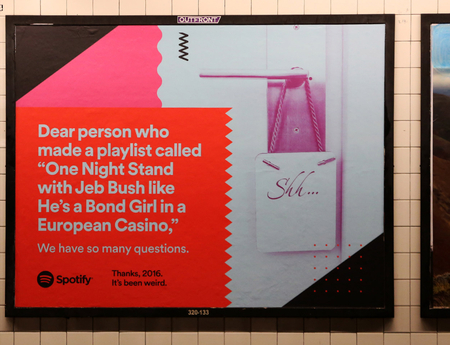
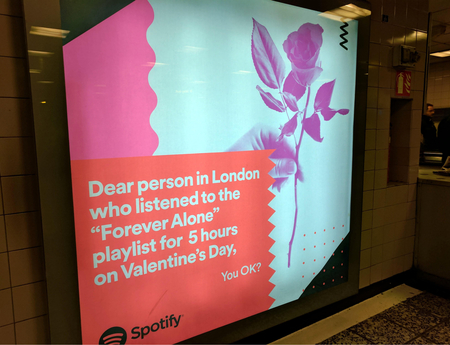
People listen to music in different ways: some replay the same song for years, while others curate playlists for their commute, work, or mood. In Spotify’s advertising, these habits stop being mere background noise and become talking points. Statistics turn into jokes, song titles become suggestive lines, and a familiar situation becomes a message you want to send to a friend. Crucially, the impact comes not from the data itself or a flashy poster, but from how the idea is articulated.This is the language I want to investigate. In the «Thanks, It’s Been Weird» Spotify campaign from 2016, the brand engaged its audience through unusual listening data. In other works, the brand employed wordplay, self-irony, and references to songs and events. The tones are different, but a single brand is recognizable in all of them. This leads to a question: what ties these diverse texts together into one coherent mode of communication?
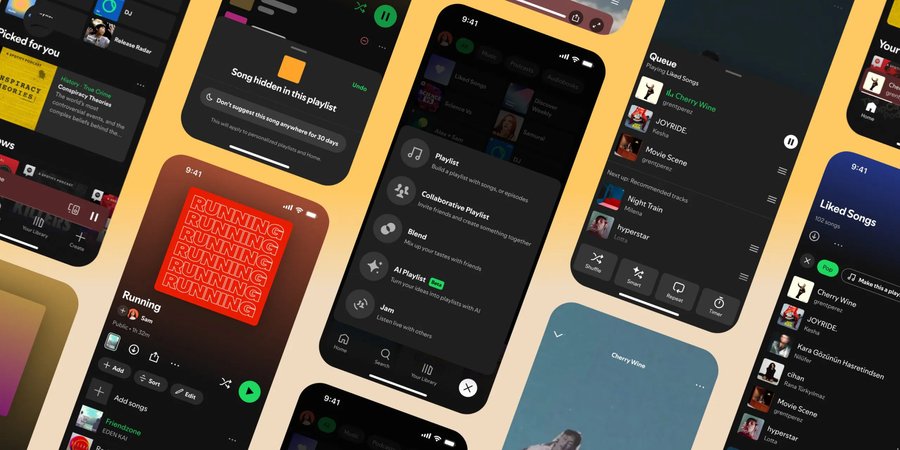
Updated mobile application interface for Spotify, 2025.
The period from 2016 to 2025 is interesting because Spotify released several major campaigns during this time, each employing different textual construction principles. Some messages are based on statistics, while others draw from song titles, everyday situations, or cultural references. What unites them is the appeal to the audience’s musical experience. In these cases, a single listener’s personal habit can become the foundation for advertising understood by thousands.
The focus of this study is on messages where the words convey the primary idea. While visual design is important for their reception, the central subject remains copywriting. The material consists of advertising copy sourced from Spotify publications, official media kits, archives of advertising awards, and participant portfolios. These sources allow for a direct engagement with the original phrasing and an examination of it within the context of specific advertising campaigns.
This research connects two principles: chronology and the nature of the advertising messaging. Campaigns from 2016–2018 prominently featured data and personalized appeals, while 2019–2020 focused on wordplay and musical associations. From 2021–2022 onward, the listener’s individual experience became paramount, and in 2023–2025, the connection between music and everyday and mass culture surfaced. These boundaries are fluid—certain techniques reappear, merely shifting in tone and purpose.
Interestingly, Spotify’s copywriting cannot be reduced solely to humor or personalization. The brand might playfully tease the listener, address them directly, reference a familiar situation, or speak in the language of musical and cultural allusions. In every instance, the form of the message changes, but the sense of closeness to the audience remains consistent.
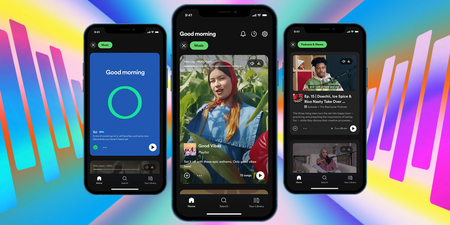
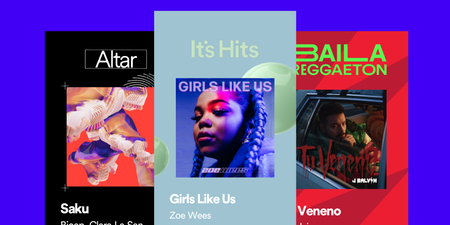
Examples of Spotify visual communication: mobile application interface (2023) and music playlist design.
Central Research Question: How does Spotify transform the listener’s musical experience into advertising messages, and what linguistic techniques does it use to engage its audience?
Hypothesis: Spotify’s recognizable language is not derived from a single technique, but from its ability to transform familiar material for listeners into concise, precise, and unexpected statements. This is what allows the brand to maintain a characteristic tone even in campaigns built around diverse themes and formats.
Navigation
- Research Concept
- Content Structure
- Data as Discourse (2016–2018)
- Musical Quote and Tonal Shift (2019–2020)
- Personalization and Engagement (2021–2022)
- Community Language and Cultural Context (2023–2025)
- Conclusion
- Bibliography
Data as of (2016–2018)
In Spotify advertising campaigns, listening statistics cease to be mere information about musical preferences. Instead, they become the material for a brief statement addressed to an individual or group of listeners.
Over three years, we can trace several ways this transformation occurs. In the «Thanks, It’s Been Weird» campaign from 2016, the brand uses the form of a letter and personal address. In «Goals,» launched in late 2017 and running in 2018, the data transforms into ironic wishes for the coming year. In «Wrapped» 2018, statistics more frequently serve as the basis for comparisons, questions, and cultural observations.
However, the subject of the study remains consistent: it is not the numbers themselves nor the poster design, but the linguistic devices that transform the musical experience into advertising copy. A description of the campaign in The One Club archive confirms that the foundation of the 2016 messages was unusual stories discovered within the listening data.
A rhetorical question to the listener who included the song «Sorry» 42 times on Valentine’s Day. Spotify, 2016.
Message to the Student: Thanks, 2016. It’s Been Weird.
In a 2016 campaign, Spotify addressed listeners as if they were writing personal letters. Instead of a generic message about the number of plays, the message was directed to a specific person to whom the brand wanted to say something. The first approach was to highlight an unusual music habit and address the person to whom it belonged directly.
A message to the listener who started playing Christmas music back in June. Spotify, 2016.
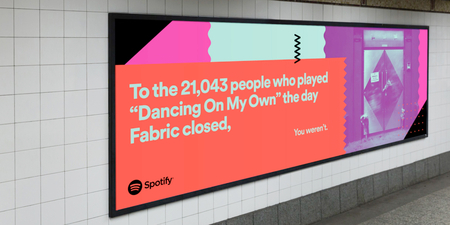
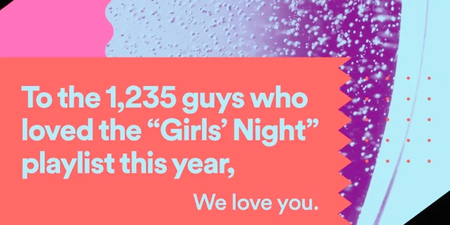
Addressing listener groups based on listening statistics. Spotify, 2016.
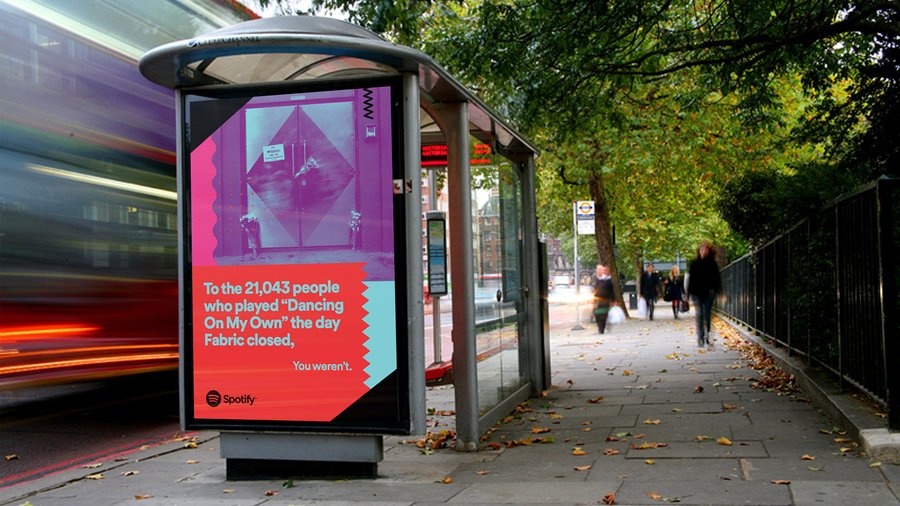
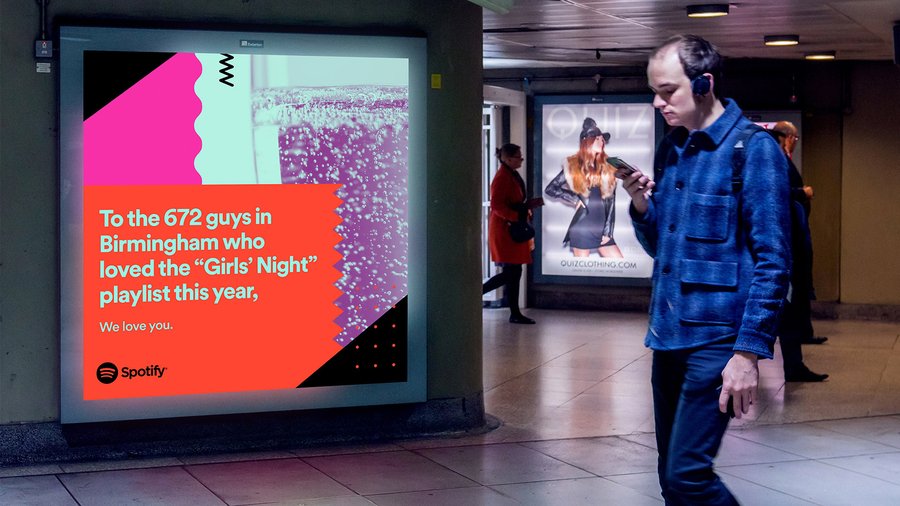
Messages to listener groups based on listening statistics. Spotify, 2016.
Spotify creates a short, dual-meaning statement. On one hand, it refers to thousands of people who have listened to a single composition. On the other, it speaks to a community experiencing a shared event. Unlike individual narratives, these posters do not imply a hidden personal story. Instead, they show how a shared musical preference can testify to a collective cultural response.
Rhetorical Question and Assumed Personal Narrative
In some messages, the statistics prompt speculation about what might be happening in the listener’s personal life. Spotify’s question does not require an answer; its function is to provoke association and allow the viewer to complete the scenario independently.
A note to listeners who included the song «It’s the End of the World as We Know It» on Voting Day for Brexit. Spotify, 2016.