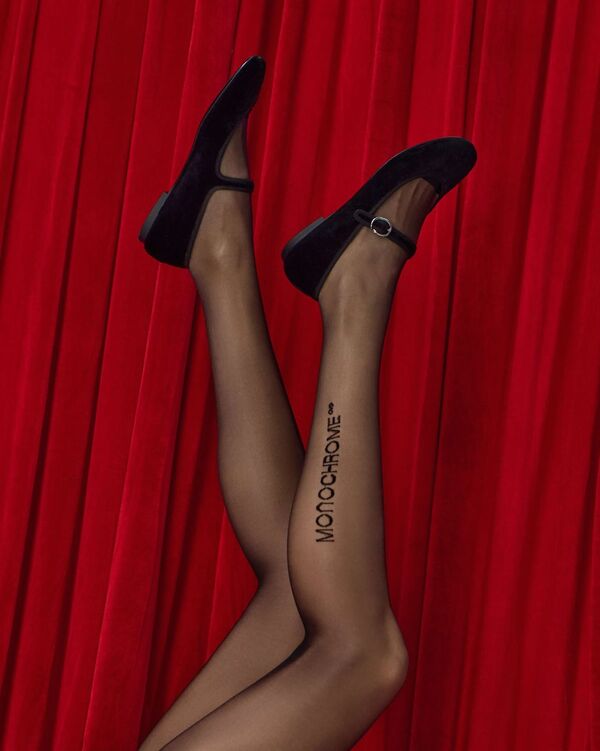
Brand logo, 2016.
The brand’s official website:
Rubricator
1. Introduction; 2. Communication channels; 3. Theoretical framework; 4. Analysis; 5. Conclusions and recommendations; 6. Sources.
Introduction
What is MONOCHROME
MONOCHROME is a Russian designer brand of oversized clothing, headquartered in Zelenograd. Nikolai Bogdanovich launched it in 2015 as a project focused on design and print at first. In 2016 stylist Alisa Bokha joined the team and became its lead designer, and it was her initiative that produced the first capsule of four oversized sweatshirts.
Over ten years MONOCHROME has grown from a local project into a large and recognizable name in the russian fashion industry. It has opened stores in Moscow and St. Petersburg, and its name has become familiar beyond the country as well.
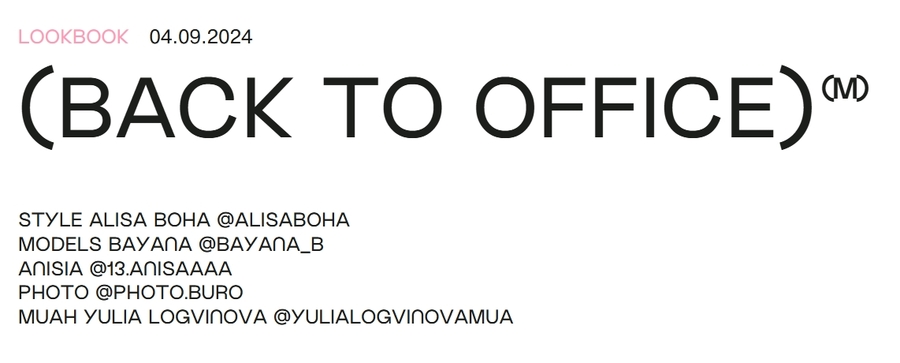
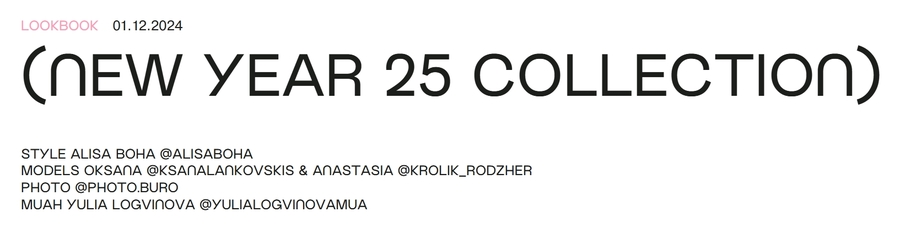
Lookbook covers from the official website, 2024-2025.
Positioning
MONOCHROME sells not clothing but an emotion and a way of living. The brand deliberately doesn’t build its communication around the functional properties of a garment, even though its clothes combine complex fabric blends and a high level of detail, but it is rather built around feeling, identity, and belonging. Historically, it is considered the brand that started the popularization of oversized fashion in Russia. On its website the brand frames its philosophy through three values: family, love, and sincerity.
The brand’s positioning rests on three elements:
A recognizable image — oversized silhouettes, a refined palette, minimalism, and experiments with textures and fabric combinations. The silhouette of the first sweatshirt, with its exaggeratedly wide sleeves and a minimalist MONOCHROME print on the chest is considered the brand’s benchmark. MONOCHROME has its own unicase typeface both Cyrillic and Latin, designed by the agency F61 and the MONOCHROME™ wordmark. The brand speaks in a language of its own, and its typography works as a visual code itself;
An ecosystem — around the main line the brand has built a whole consumer ecosystem that includes accessories, jewelry, watches, a children’s line, and a home goods direction. MONOCHROME reaches beyond clothing and covers a whole way of life;
Art and collaborations — MONOCHROME works regularly with major brands such as Pantone, Reebok, Casio G-Shock, Smashbox. These collaborations expand the ecosystem and gather around the brand a community of like-minded people who share its outlook not only on fashion but in other areas too.
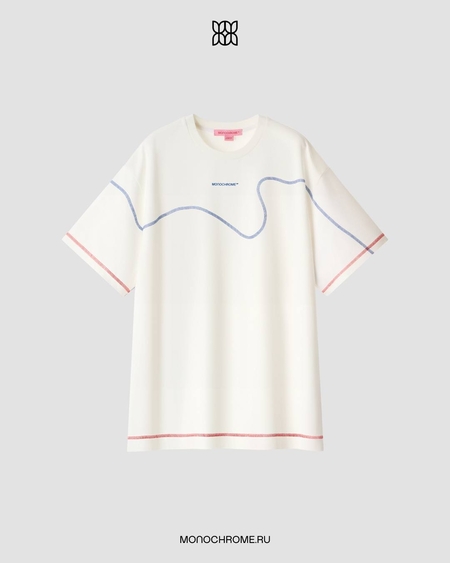
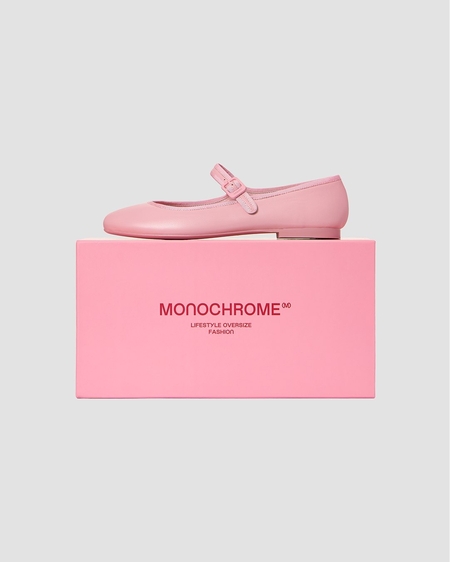
Promo materials from the website, 2026.
Target audience
MONOCHROME’s core audience is people with a developed visual taste, for whom clothing is a means of self-expression rather than just a function. Within it, several segments stand out.
Young people aged 18–30 who follow fashion — they keep up with trends and value recognition and their own visual image. For them MONOCHROME is a statement and a symbol;
People from creative industries — designers, photographers, stylists, and others from the art world who are drawn to the brand’s minimalism and to its idea of itself as a cultural project;
Brand devotees — they follow the founders' personal stories, the brand’s values, and its collaborations;
Families — through its children’s line the brand reaches buyers who connect with the idea of a family brand.
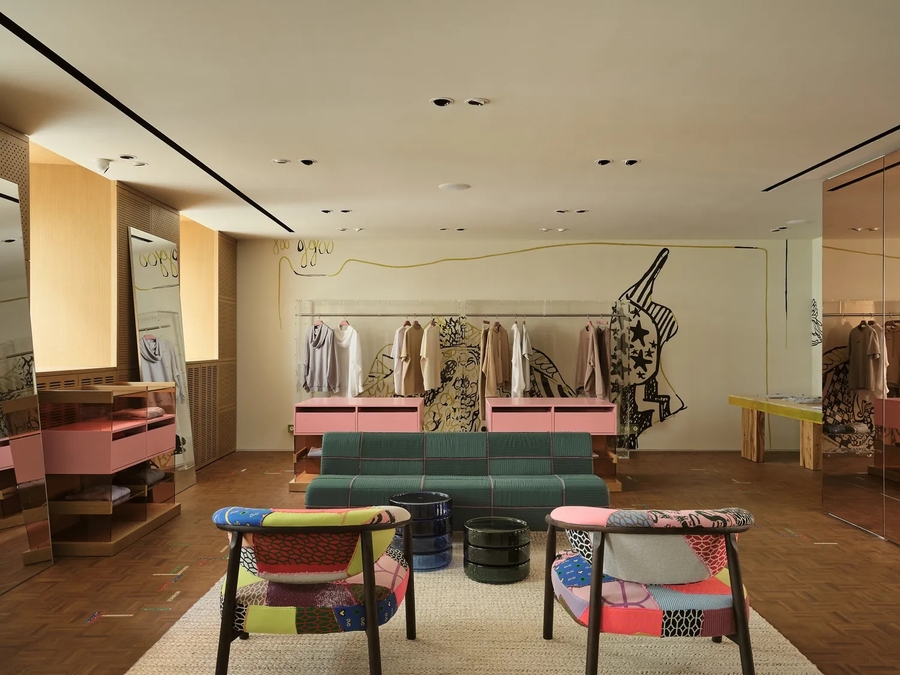
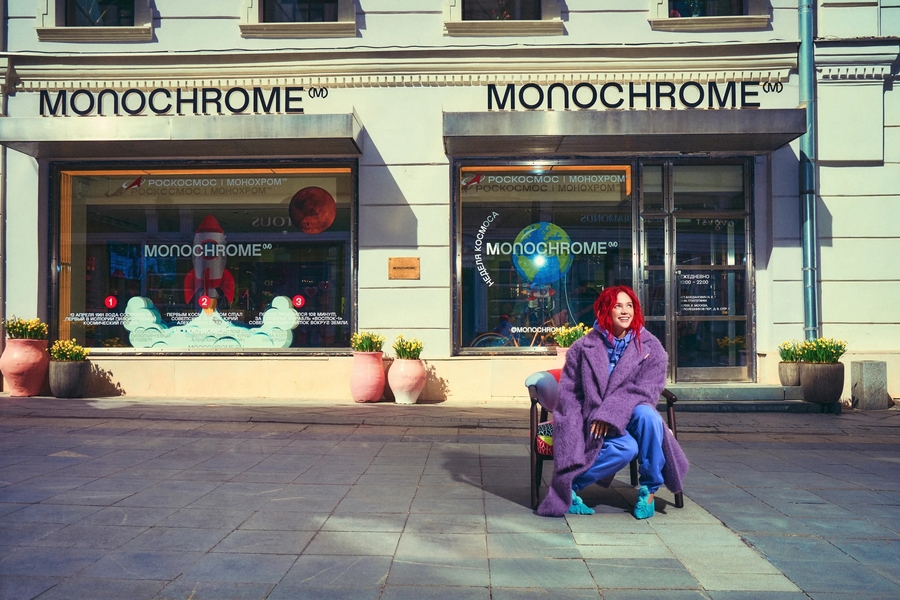
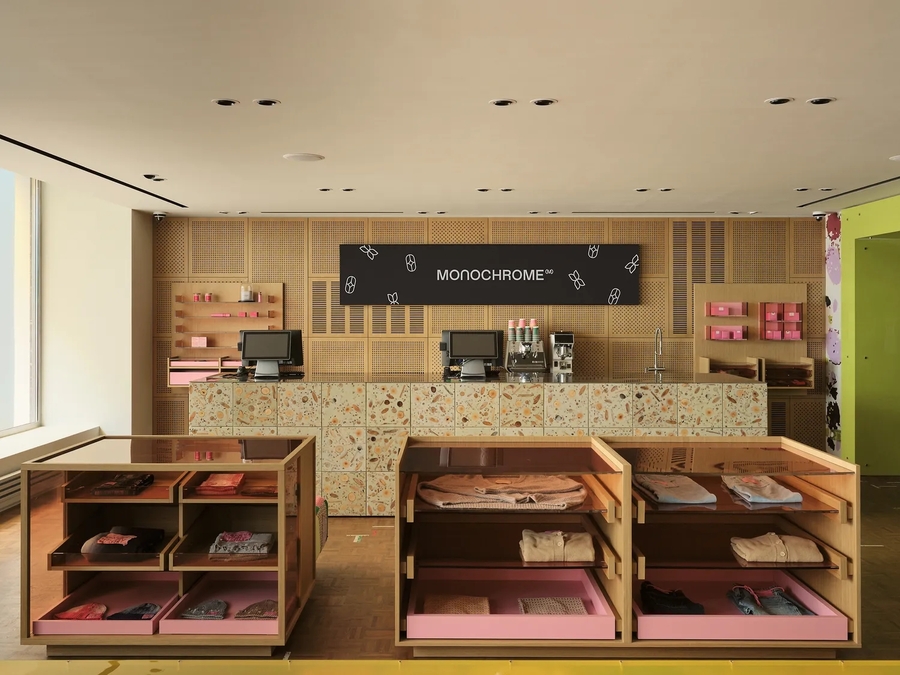
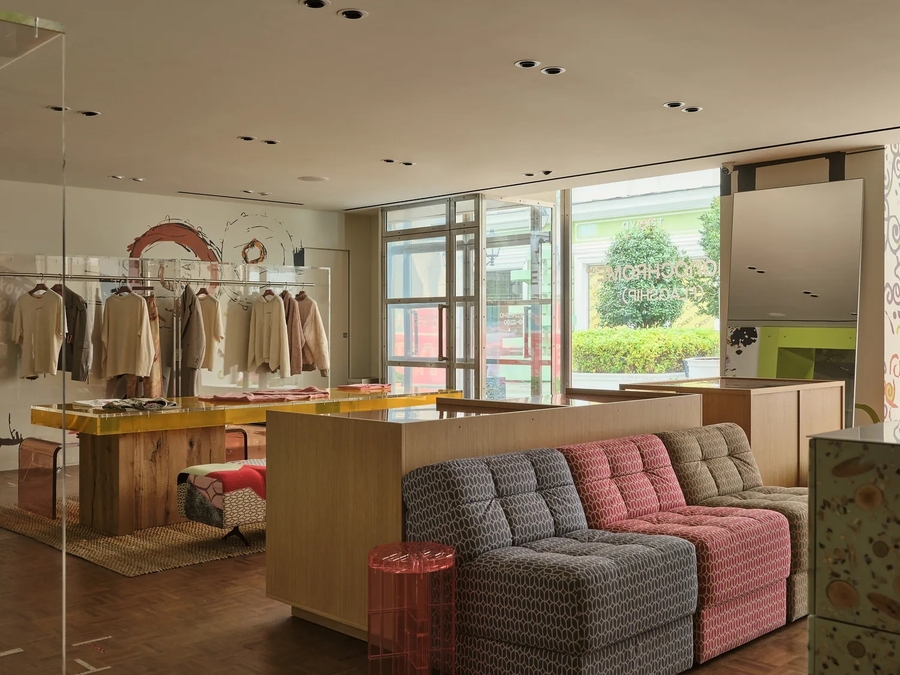
Photos of shops from website, 2024-2025.
Communication channels
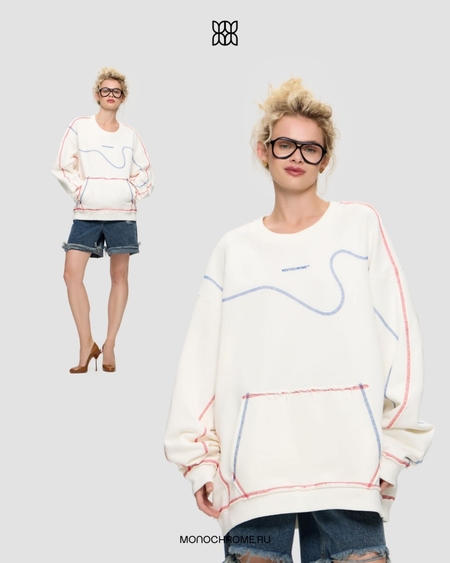
Official website
The website monochrome.ru is the brand’s main storefront. New arrivals appear every week, product cards present the signature cut and current colors, and looks styled by the lead designer are shown alongside them.
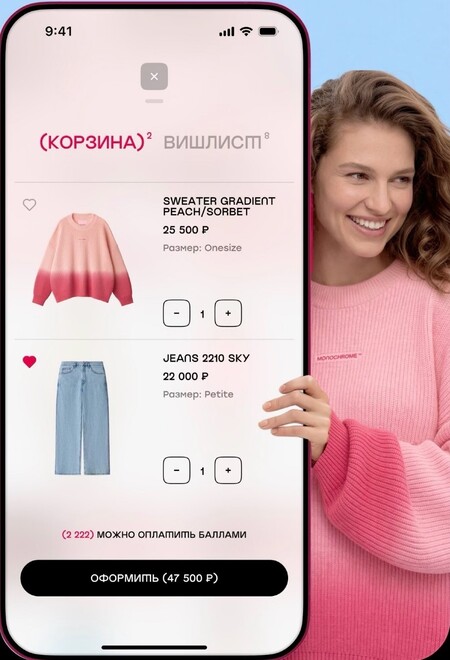
Mobile app
In late 2025 the brand launched its own mobile app, for now on iOS only. It is presented as a digital extension of the brand’s ecosystem and philosophy. Inside you will find the current collections and the full range, and you can also track an order’s status, check whether items are in stock at specific stores, and reserve them at the offline points. In effect the app brings online and offline together into a single place and makes everyday interaction with the brand more convenient.
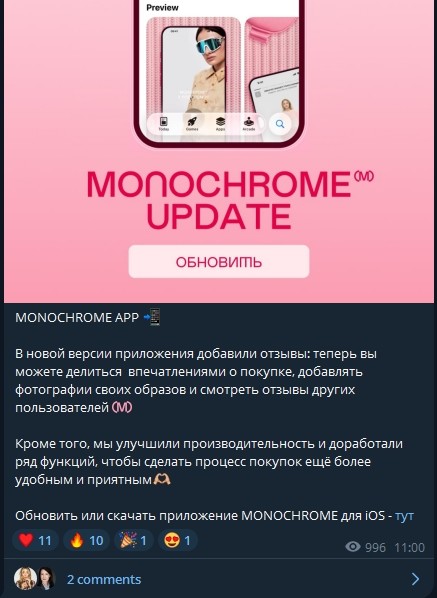
Telegram channel*
Telegram is the brand’s main channel for everyday communication inside Russia. It has almost 30 thousand subscribers and new posts every day. Through it the brand shares new arrivals and drops, announcements and collaborations, as well as practical messages such as store hours.
*RCN: The foreign owner of the resource violates Russian law.
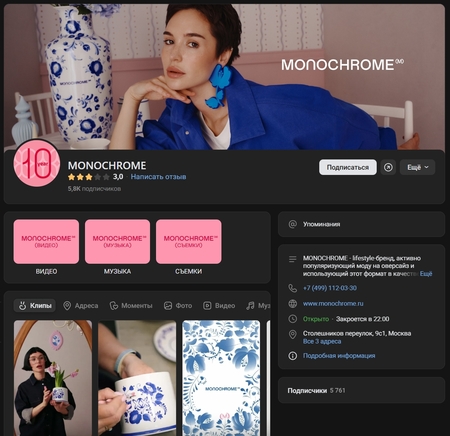
VK
On VK the brand has around 5.8 thousand subscribers, and the page is updated regularly. There is a community with a feed of posts, announcements of new arrivals and collaborations, and links to the website and catalog in the posts.
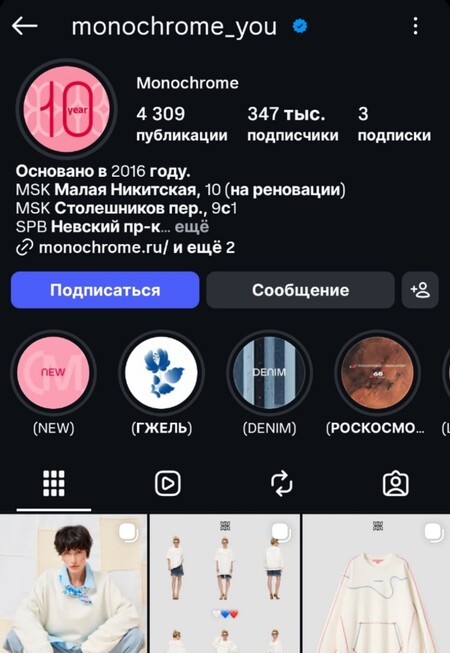
Instagram*
Instagram remains the brand’s largest and most important platform. It has around 347 thousand followers and more than 4,300 posts, and new ones always appear at two a day. This points to a thoughtful, systematic approach to social media, backed by daily work on content.
*Instagram belongs to Meta, an organization recognized as extremist and banned in the Russian Federation. In this project the platform is referred to only as visual material, without active links. Live communication with the audience inside the country runs through Telegram, the website, and VKontakte.
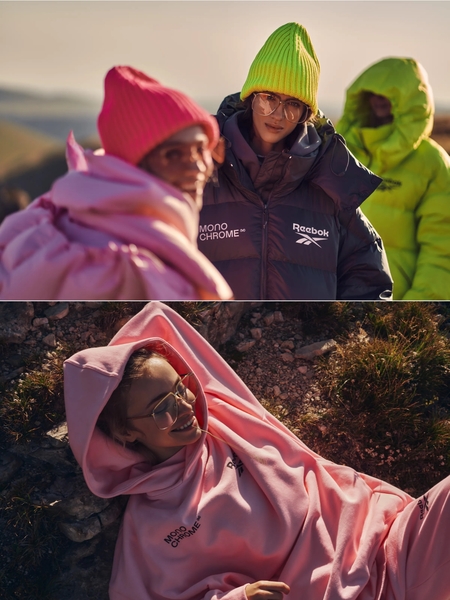
PR and collaborations
The brand invests heavily in its reputation through collaborations (Pantone, Reebok, Casio G-Shock, Smashbox), art projects, and features in lifestyle and fashion media (BURO., The Blueprint, and others). For a brand with such a strong aesthetic, being noticed and recognized by the professional community matters, because it raises its status in the eyes of the audience.
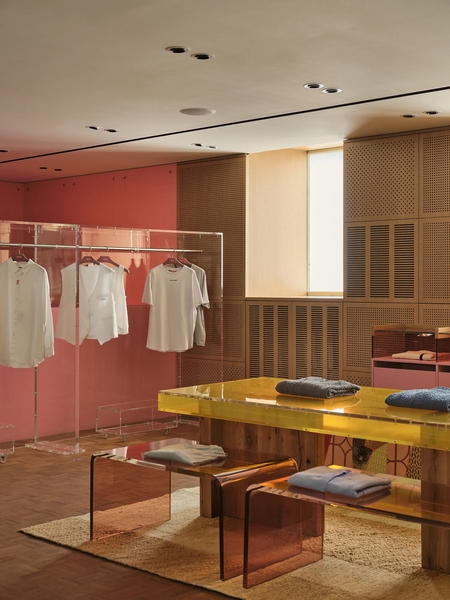
Physical spaces
The brand has its own stores in three cities: the flagship in Moscow on Stoleshnikov Lane, in St. Petersburg on Nevsky Prospect, and a store in Yekaterinburg in the Luxury gallery. MONOCHROME is also sold in multi-brand stores across the country.
For the brand these are not only points of sale but part of its communication. It calls its Moscow flagship a home built on warmth, memory, and attention to detail, and it presents the brand’s story as the story of a family. In St. Petersburg the space is deliberately implemented into the character of the city, with architecture and the recognizable yellow shop windows in the golden triangle of the center. The stores offer what online cannot: the flagship houses a lab where a garment can be adjusted in length or customized with embroidery. The shop becomes a place people want to visit, photograph, and show to others.
Tone of voice
The brand’s tone is emotional, informal, and lightly playful and ironic. MONOCHROME speaks to its audience as a community of like-minded people rather than a corporation addressing customers.
Main content types
Image post — mood and aesthetics, with no direct call to buy;
Product drop — a new item, a release date, a link;
Collaboration — a joint project and a limited offer;
Operational post — store hours, addresses, service;
Art and culture — reaching beyond the product into the cultural field.
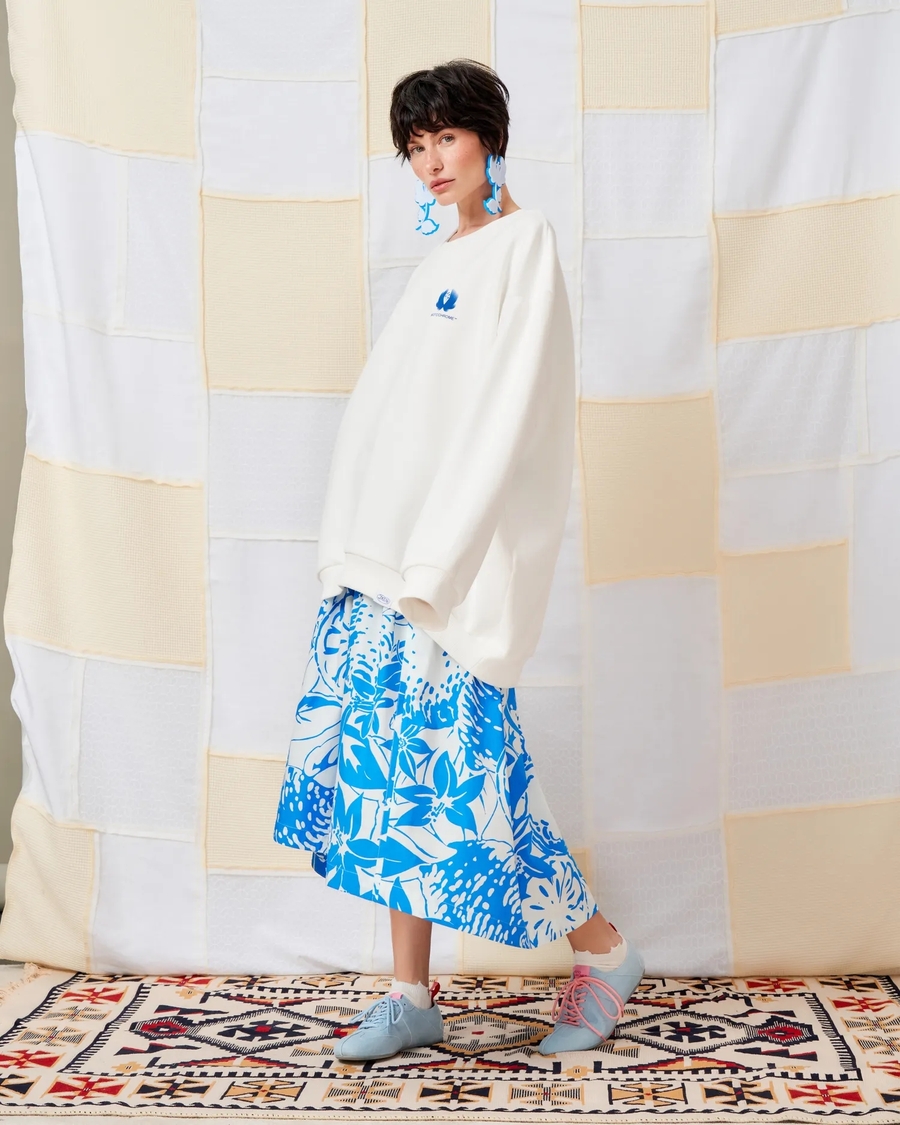
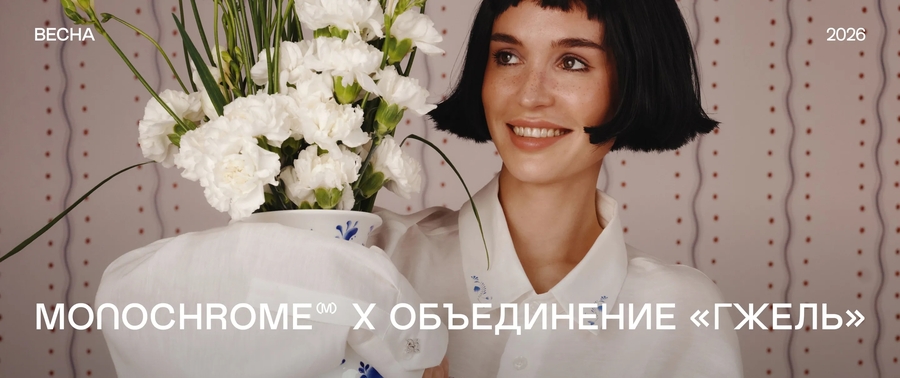
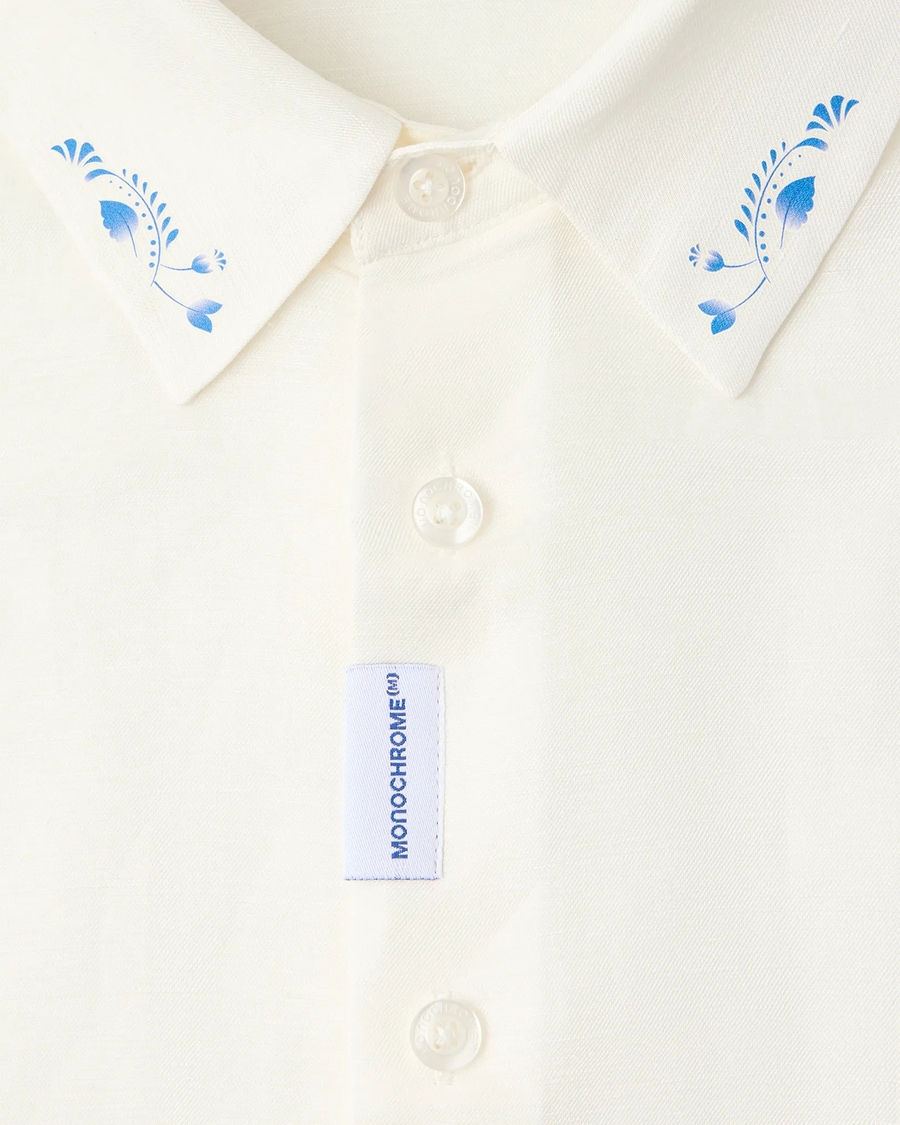
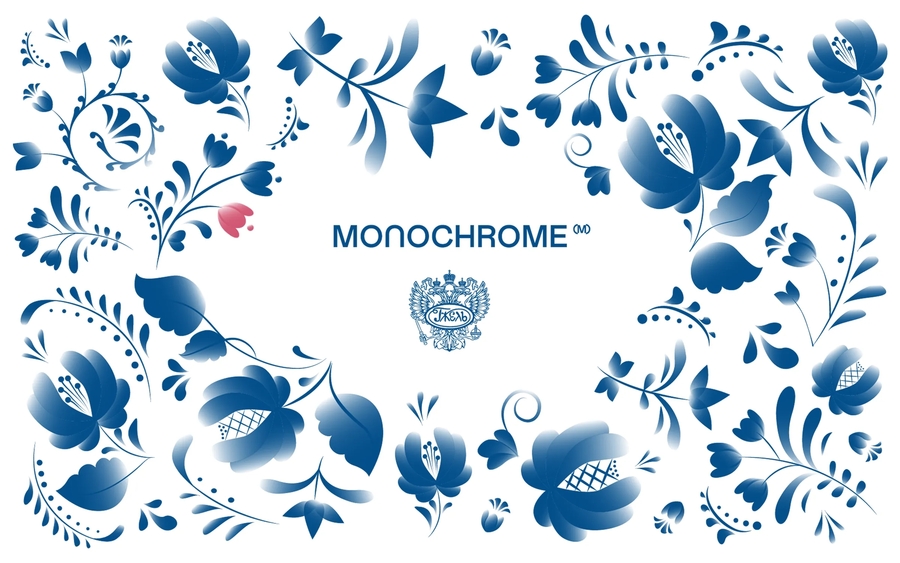



Collaboration materials with the Gzhel Association, 2026.
Theoretical framework
The Elaboration Likelihood Model (ELM)
The model was proposed by Richard Petty and John Cacioppo in 1986. It explains how a message changes a person’s attitude, that is, their settled evaluation of something. Its key idea is that an audience can be led to agreement along two different routes.
The central route works when a topic is interesting and important to a person, and they have the knowledge and the desire to think it through. Here persuasion comes from substantive arguments such as quality, facts, and values. The effect is deep and lasting, because people hold on to a decision reached through reasoning.
The peripheral route kicks in when a topic doesn’t really grab a person and the message passes by. Here it isn’t an argument that decides but rather quick cues, on the basis of which the mind draws a conclusion without going deeper. The effect is fast but shallow and short-lived.
In the case of MONOCHROME, four cues stand out the most.
Liking and attractiveness — what is beautiful and pleasant persuades on its own, and the appeal of an image or a celebrity seems to carry over to the product;
Social proof — if others, and especially one’s own circle do it then it must be the right choice;
Scarcity — limited availability and urgency push people to buy without thinking twice;
Authority — we are more willing to trust someone who has status or expertise.
Clothing is often sold through image and atmosphere and not through arguements.


Photos from website, 2025.
Dialogic Theory of Public Relations
This theory holds that strong relationships with an audience are built not on one-way messages from a brand but through dialogue in which both sides are open to each other. A brand and its public are connected, and the brand’s main task is to create an environment in which people both want to respond and are able to. Genuine dialogue rests on several things.
Equality — a conversation among equals, without pressure or a position of power;
Respect — everyone has the right to speak, and no one is ridiculed for it;
Propinquity — communication in real time. You cannot decide everything on your own and then simply present the audience with a fait accompli;
Trust — without it there is no dialogue;
Vulnerability — an open conversation is always unpredictable and cannot be rehearsed. You may run into criticism, and that has to be accepted;
Genuineness — speaking honestly and directly.
A brand also has to understand that its audience may be different and think differently, and to acknowledge its right to a voice, paying attention to what people ask even when it would be easier to ignore them.
The theory also looks at how dialogue plays out online and this maps perfectly onto a brand’s website and channels. What matters here is whether you can ask a question and get an answer, whether the information is useful and honest, whether there is a reason to come back, and whether all of it is easy to use. MONOCHROME persuades first through aesthetics and quick cues, and it also builds warm, almost personal relationships with its community. Together the two theories give a fuller picture of how the brand wins attention and how it keeps people close.