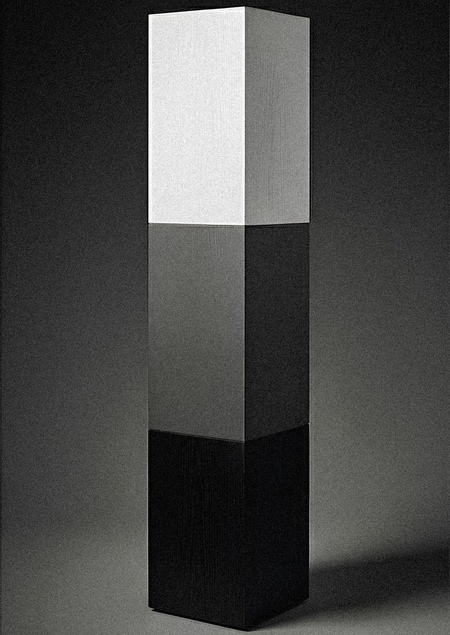
Half or more of the best new work in the last few years has been neither painting nor sculpture
Minimalism is an art movement that emerged in New York in the early 1960s, marking a radical break from the emotional intensity of Abstract Expressionism. It is characterized by the use of simple geometric shapes, industrial materials, and a deliberate rejection of metaphor, illusionism, and personal expression. Minimalism asserts that art does not need to «represent» anything; it is a literal, physical object that occupies real space and invites the viewer to experience it as an encounter between their body and the work’s presence.
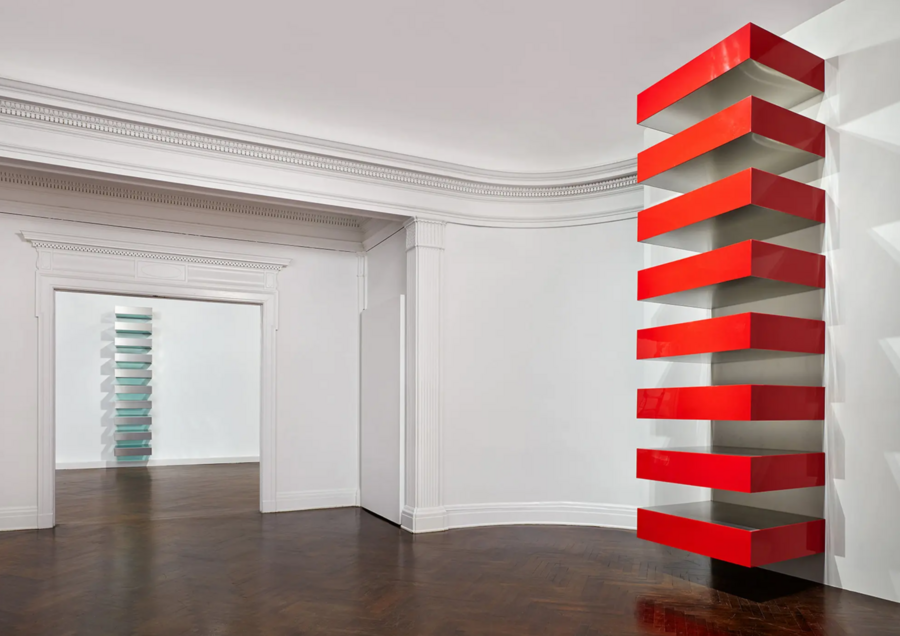
А red stack by Donald Judd, «Untitled (Bernstein 78-69)» (1978), at Mnuchi Gallery.
The movement’s key practitioners, such as Donald Judd, Robert Morris, and Dan Flavin, stripped art of its traditional narrative. Judd, the movement’s primary theorist, coined the term «specific objects» to describe his work — pieces that are neither painting nor sculpture, but autonomous entities. Simultaneously, Dan Flavin utilized mass-produced fluorescent lights, demonstrating that art could be made from the most ordinary commercial hardware.
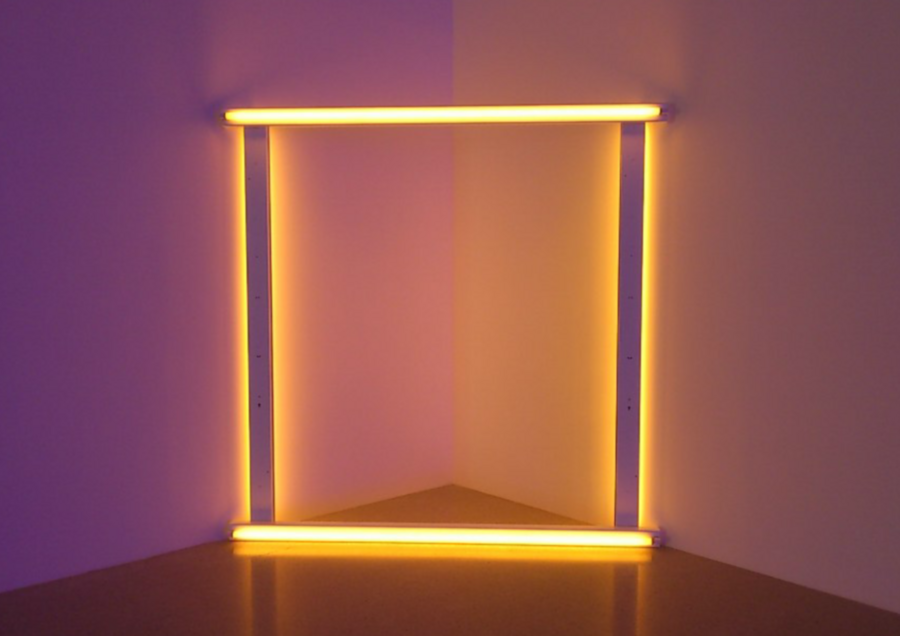
Dan Flavin untitled (to Christina and Bruno) 1966
Minimalism was profoundly shaped by the formalist theories of Clement Greenberg, who advocated for «medium specificity,» and the structural experiments of the Bauhaus and Russian Constructivism. However, it was the critical writing of Michael Fried in his 1967 essay Art and Objecthood that truly solidified the movement’s place in history. Fried famously attacked the «theatricality» of Minimalism, arguing that by relying on the viewer’s presence, these works blurred the line between art and everyday objects.
Untitled (L-Beams), Robert Morris, 1965
The legacy of Minimalism is vast. By reducing art to its simplest physical form, it paved the way for Conceptual Art, where the idea becomes more important than the material. Furthermore, its focus on the «white cube» gallery space forced artists to consider architecture as an integral part of the work, eventually leading to contemporary site-specific installations. From modern minimalist design to contemporary sculpture, the movement’s core belief — that «you see is what you see» — remains one of the most influential concepts in modern visual culture.
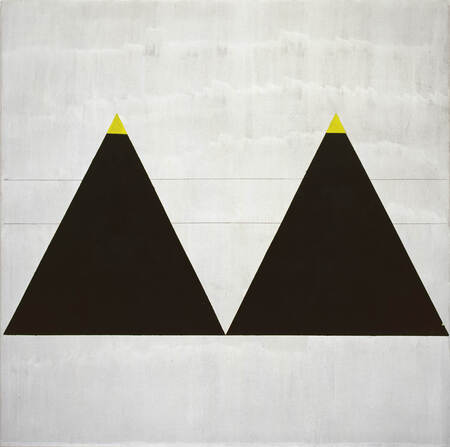
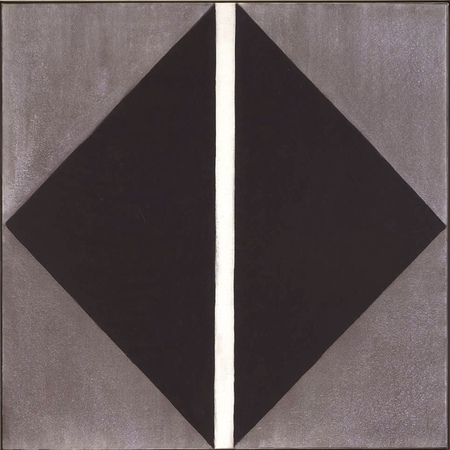
Agnes Martin, Untitled #1, 2003 / Agnes Martin, Untitled, 1957
Krauss, R. E. Passages in Modern Sculpture / R. E. Krauss. — New York: The Viking Press, 1977.
Morris, R. Notes on Sculpture / R. Morris // Artforum. — 1966.
Fried, M. Art and Objecthood / M. Fried // Artforum. — 1967.
Judd, D. Specific Objects / D. Judd // Arts Yearbook 8. — 1965.
Museum of Modern Art (New York, USA) | Tate: official website. — URL: https://www.tate.org.uk/art/artists/museum-of-modern-art-new-york-usa-23214
Джадд, Д. Без названия (Стек) [Изображение] / Д. Джадд. — 1967. — Текст: электронный // The New York Times: [сайт]. — URL: https://www.nytimes.com/2013/10/25/arts/design/donald-judd-stacks.html
Флавин, Д. Без названия (Кристине и Бруно) [Изображение] / Д. Флавин. — 1966–1971. — Текст: электронный // ArtDone: [сайт]. — URL: http://artdone.me/dan-flavin-untitled-to-christina-and-bruno-1966-71-dia-art-foundation-new-york/
Моррис, Р. Без названия (L-образные балки) [Изображение] / Р. Моррис. — 1965. — Текст: электронный // WikiArt.org: [сайт]. — URL: https://www.wikiart.org/en/robert-morris/untitled-l-beams-1965
Мартин, А. Без названия № 1 [Изображение] / А. Мартин. — 1974. — Текст: электронный // Art Canada Institute: [сайт]. — URL: https://www.aci-iac.ca/art-books/agnes-martin/key-works/untitled-1/
Труитт, Э. Стена для абрикосов [Изображение] / Э. Труитт. — 1968. — Текст: электронный // WikiArt.org: [сайт]. — URL: https://www.wikiart.org/en/anne-truitt/a-wall-for-apricots-1968.