Navigation
Concept
Concept
I was interested in how commonplace objects from daily life became part of art in the mid-20th century. Advertisements, product packaging, comic books, and celebrity photographs—everything people saw every day—started to be used by artists in their works. In this research, I examine American Pop Art through the work of eight artists who approached the imagery of mass culture in varied ways, transforming it into autonomous works of art.
I wanted to explore why mass culture became such a vital source of inspiration for artists and how the perception of familiar imagery changed when it entered the realm of art. I am interested in comparing different approaches. Some artists used real objects and advertising imagery, while others referenced the mass reproduction of photographs or comic book graphics. Through these examples, I aim to illustrate how the boundary between art and everyday life gradually dissolved.
Robert Rosenberg
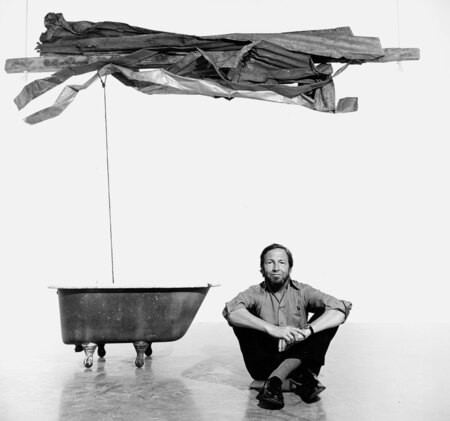
Rausenberg was among the first to begin blurring the lines between art and everyday life. He was interested not only in traditional art materials but in everything that surrounded people daily. Newspaper clippings, photographs, old objects, and randomly found items became part of his work.
He did not seek to embellish familiar objects or transform them into idealized images. Instead, the artist moved them into the space of art, proposing a new way to view what usually seems familiar and unnoticed.
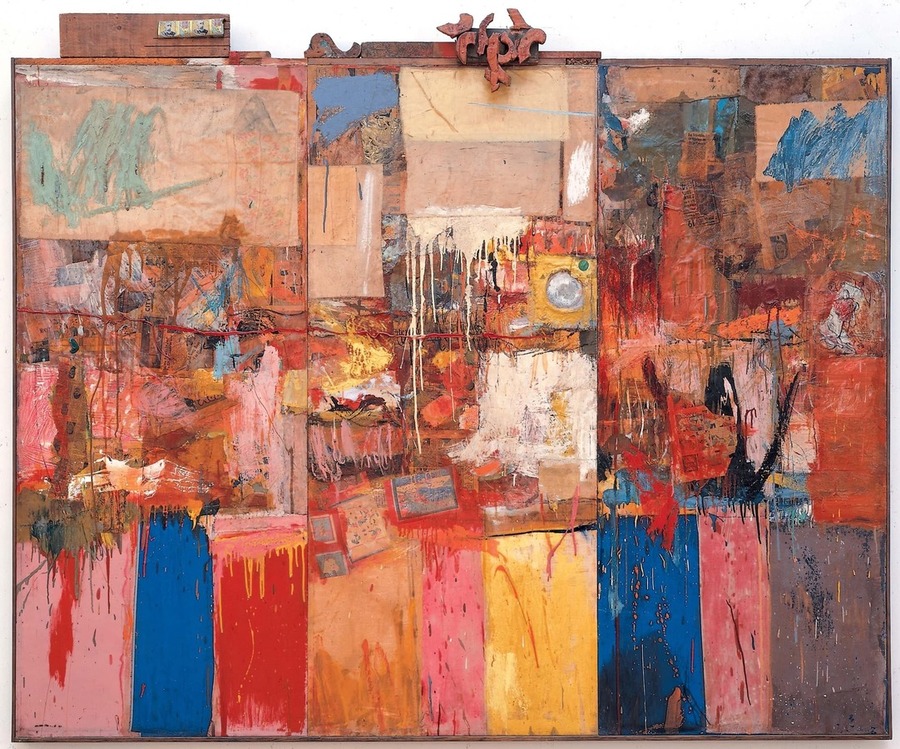
Robert Rauschenberg. «Collection, ” 1954–1955
Rauschenberg merges painterly brushstrokes with newspaper clippings, fabric, advertising images, and found objects. Diverse fragments seem to assemble into one large composition, one that lacks a singular narrative or a dominant element. The artist demonstrates that anything surrounding us can serve as inspiration and material for art.
Robert Rauschenberg. «Bed,» 1955
Instead of a canvas, Rausenberg uses his own bedding, applying pencil lines and washes of paint to it. An object tied to private space and daily life is placed on the wall where the viewer expects to see a painting. As a result, the boundary between a domestic object and a work of art becomes almost imperceptible.
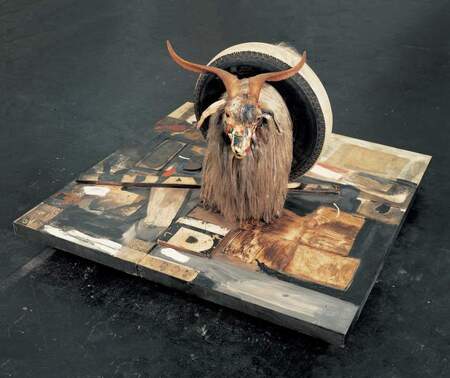
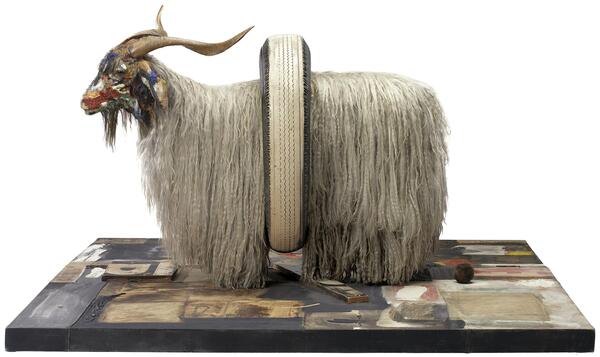
Robert Rauschenberg. «Monogram, ” 1955–1959
At the center of the composition is a stuffed Angora goat, through which a car tire is threaded. Along with the painted platform, these elements form an unusual sculptural construction. Raušenberg joins things that have no connection in everyday life, offering the viewer the chance to see something new in their combination.
Painting relates both to art and to life. Neither can be «created.» I try to operate in the space that exists between them.
Jasper Johns
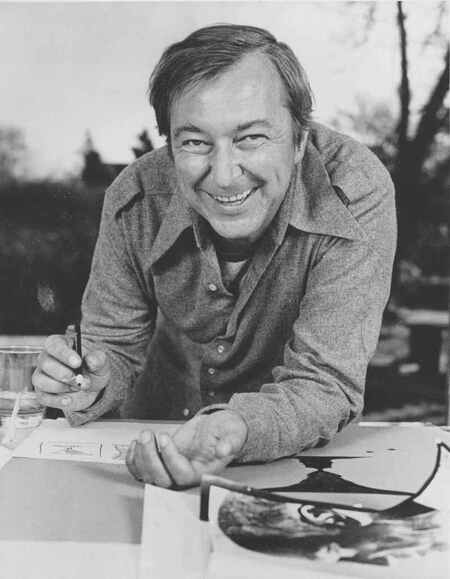
Jasper Johns was a close friend of Robert Rauschenberg. They met in New York in 1953 and supported each other’s creative explorations. However, Johns took a different path in his artistic practice. While Rauschenberg engaged with real objects, materials, and fragments of the surrounding world, Johns focused on familiar symbols and signs. Instead of creating new imagery, the artist utilized pre-existing symbols from daily life, exploring their form, materiality, and conventional perception. By transplanting these into the pictorial space, Johns invited the viewer to look anew at what usually goes unnoticed.
Jasper Johns. «Flag, ” 1954–1955
Jones takes one of the most recognizable symbols of American culture. But instead of simply depicting the flag, he transforms it into the painting itself. Beneath layers of wax and paint, fragments of newspaper are visible, connecting the national symbol to the specific, everyday reality of America in the 1950s.