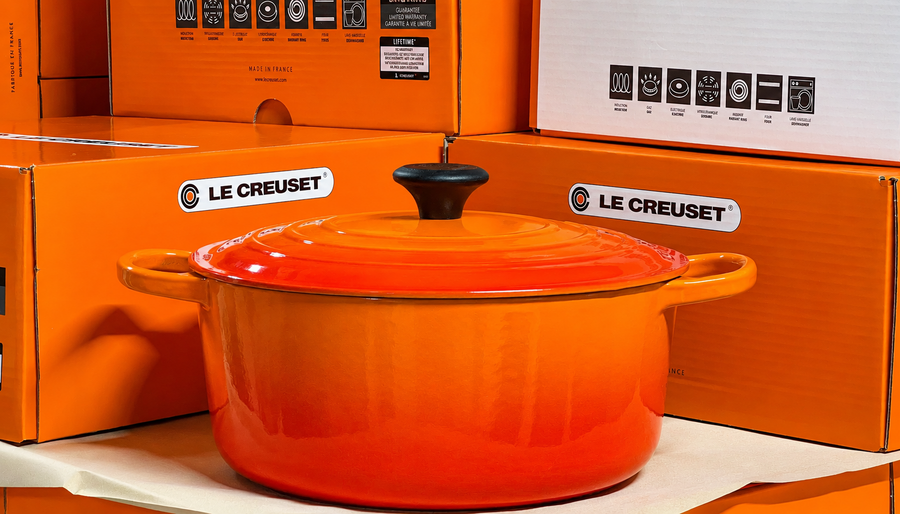
Le Creuset® Signature Flame Round Dutch Oven
Rubricator
1. Brand Background and Positioning 2. Communication Ecosystem 3. Theoretical Framework 4. Communication Analysis 5. Conclusion and Recommendations 6. Bibliography 7. Image Sources
Brand Background and Positioning
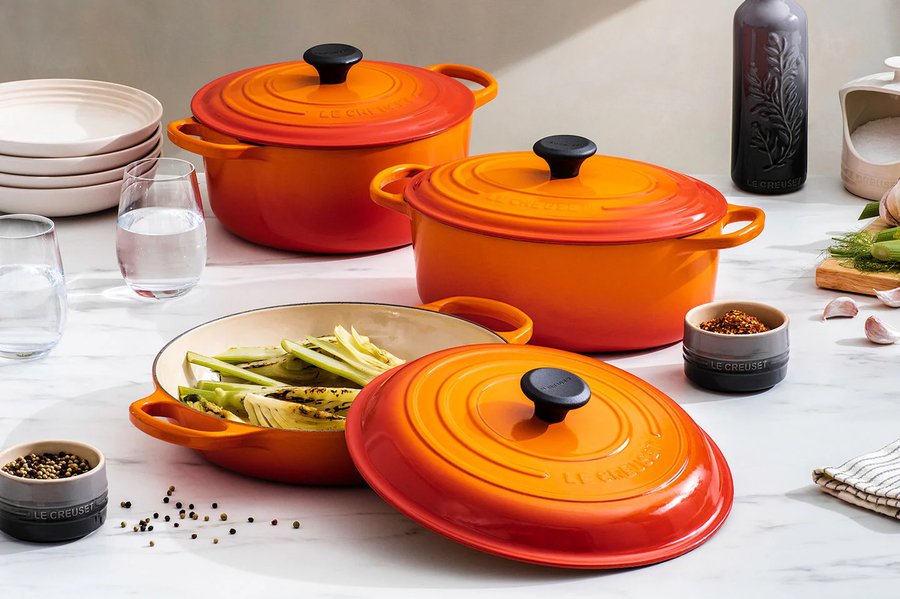
Le Creuset® Signature Flame Cookware Set
Le Creuset is a French premium cookware brand founded in 1925 in the town of Fresnoy-le-Grand in northern France. The company gained worldwide recognition for its enameled cast iron cookware, which combines functionality, durability, and distinctive aesthetic design. Over nearly a century, the brand has evolved from a specialized cookware manufacturer into an international symbol of quality home cooking and refined lifestyle. Today, Le Creuset products are sold in more than 60 countries and include a wide range of items such as cast iron cookware, ceramic products, kitchen accessories, and tableware.
Le Creuset® Petal Collection
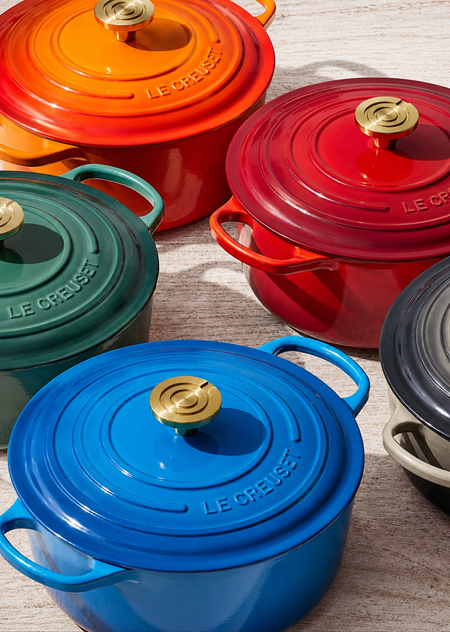
Their core positioning is built on a combination of craftsmanship, heritage, and emotional product value. Unlike many competitors, the brand sells not only cookware but also a particular lifestyle associated with comfort, family traditions, and the enjoyment of cooking. The company’s communications emphasize its French heritage, high quality standards, and product durability, often presenting its cookware as a «lifetime purchase.» At the same time, Le Creuset actively leverages the visual appeal of its products, highlighting vibrant colors, design aesthetics, and the ability of its cookware to become part of consumers’ home interiors and personal self-expression.
Lisa Graves with her Le Creuset collection at home in Houston, Texas (photo credit: Arturo Olmos/The Guardian)
Le Creuset’s audience primarily consists of middle- and upper-income consumers who view cookware as a long-term investment rather than a purely utilitarian product. Key segments include passionate home cooks, interior design enthusiasts, young families, and consumers seeking to express their social status and aesthetic taste through brand choices. In recent years, the company has also actively attracted younger audiences through social media, influencer collaborations, and limited-edition product collections.
As a result, Le Creuset remains relevant both to traditional customers who value quality and brand heritage and to Millennials and Generation Z consumers who are strongly influenced by visual culture and digital communication.
Communication Ecosystem
Le Creuset’s communication ecosystem is built on a combination of digital platforms, owned media content, and public relations activities. The brand maintains a consistent visual and conceptual identity across all consumer touchpoints, creating the image of a premium yet emotionally approachable brand. The main emphasis is placed on visual storytelling that showcases not only the products themselves but also the lifestyle they represent. Through this approach, Le Creuset’s communications go beyond traditional advertising and help build long-term emotional relationships with consumers.
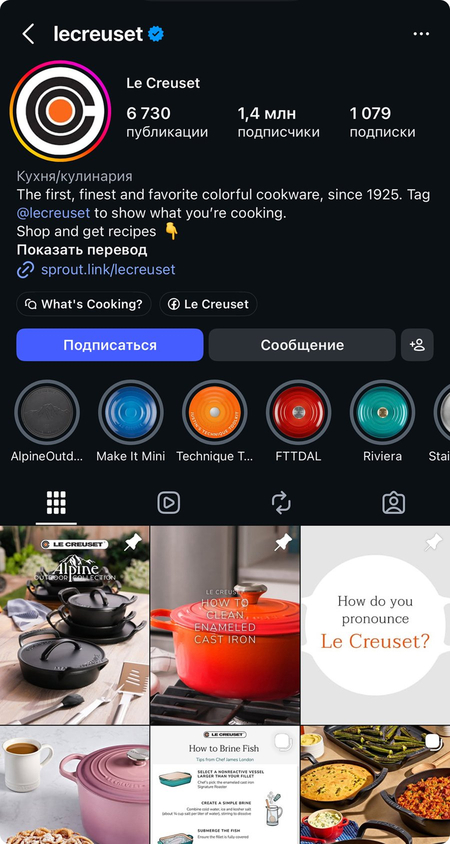
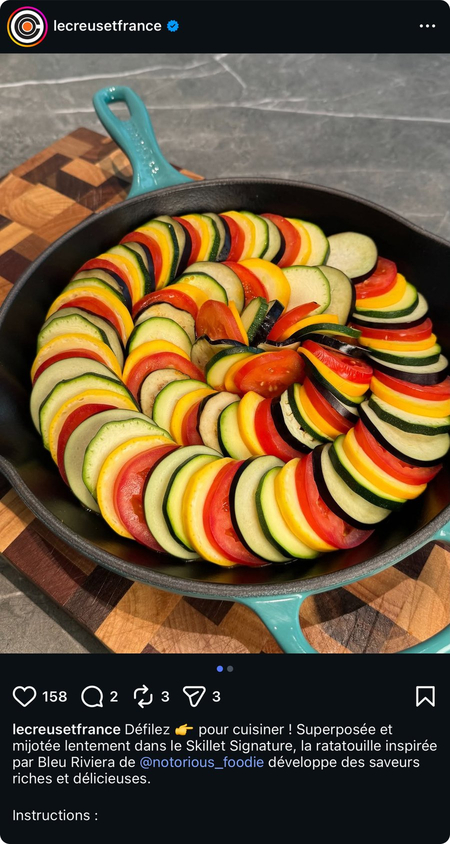
Screenshots from Instagram*
Screenshot from YouTube (Le Creuset Deutschland)
Social media represents a key component of the brand’s public presence. Le Creuset actively uses Instagram* as its primary visual communication platform, publishing product photography, recipes, seasonal collections, and user-generated content. TikTok enables the brand to engage younger audiences through short-form videos, recipe demonstrations, and trend-based content.
On Facebook**, the company maintains relationships with existing customers, promotes new products, and encourages community discussions. YouTube is used for longer-form content, including tutorials, recipes, and collection presentations.


Le Creuset® Cookware Sets
In addition, the brand maintains a presence on Pinterest, where users can discover inspiration for table settings, kitchen design, and cooking ideas. Together, these platforms function as an interconnected system that strengthens brand awareness and audience engagement.
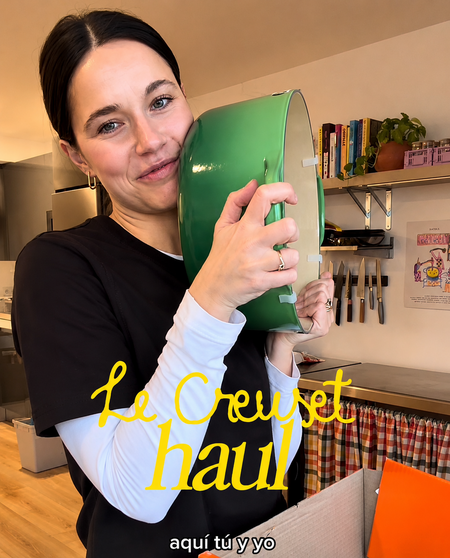
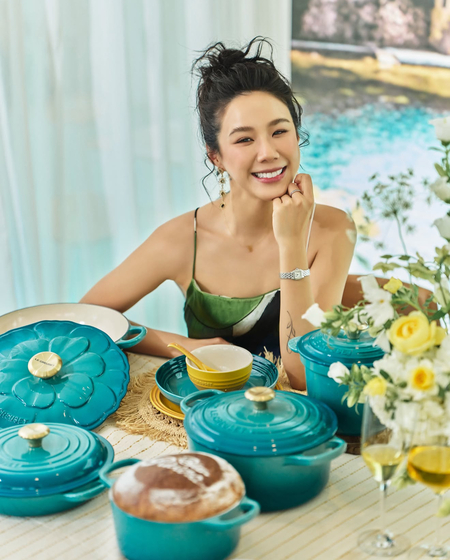
Instagram* post from @verogomez / Instagram* post from @an9lina
Public relations and influencer partnerships play an important role in Le Creuset’s communication strategy. The brand regularly collaborates with food bloggers, chefs, interior designers, and lifestyle influencers who integrate the products into their content and demonstrate their use in real-life settings. This strategy allows the company to leverage social proof and increase audience trust.
Screenshot from YouTube (Le Creuset Deutschland)
An additional PR tool is coverage in reputable media outlets focused on food, design, and lifestyle topics, including product reviews, interviews with brand representatives, and articles about new collections. Through the combination of media relations, influencer marketing, and organic user-generated content, Le Creuset maintains a high level of public visibility while reinforcing its premium brand image.
Theoretical Framework
This study analyzes Le Creuset’s communications through the Elaboration Likelihood Model (ELM) and Uses and Gratifications Theory (UGT).
ELM posits two persuasion routes: central (high involvement, logic-driven) vs peripheral (low involvement, cue-driven). In the Le Creuset context, the central route would involve consumers scrutinizing arguments about quality, heat distribution, warranty, etc. Peripheral route involves consumers responding to cues like visual appeal, celebrity endorsements, or social popularity. Both paths can lead to attitude change, but peripheral persuasion tends to produce less enduring change unless supplemented by later central justification.
Le Creuset’s marketing emphasizes peripheral cues (color, lifestyle imagery, «Instagram*-friendly» brand identity) and uses central arguments (durability, tradition) more as reinforcement than primary drivers.
UGT considers why audiences consume media content. People actively select media to satisfy needs: Diversion (entertainment, relaxation), Personal Identity (self-expression, image), Social Interaction (connecting with others), and Information/Surveillance (news, tips). Le Creuset’s media content meets these needs. For instance, its posts and videos serve as escapism and enjoyment (beautiful recipe visuals), support identity (aspiring to be a sophisticated cook with tasteful kitchenware), and foster community (fans exchanging tips on social channels). There is also an informational side (tutorials, product care tips). By considering UGT, we can explain the user engagement metrics (likes, shares) and community building in Le Creuset’s channels.
Communication Analysis
The Elaboration Likelihood Model