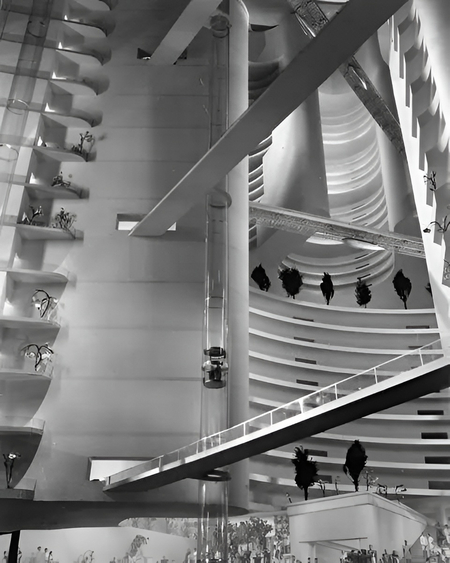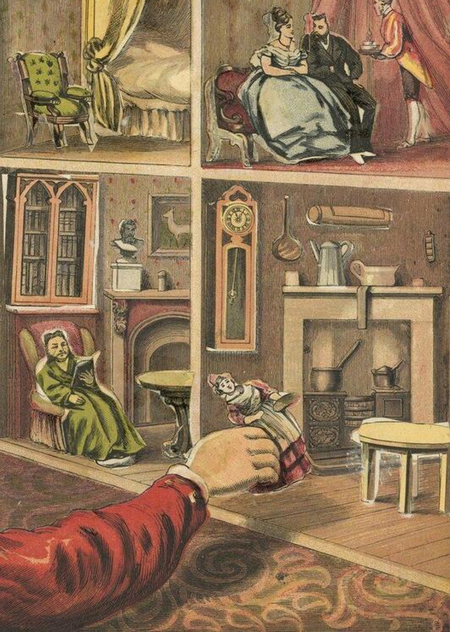
Concept
The dollhouse is a form of miniature reproduction of reality, in which the house transforms into a distinct artificial world. This space allows for the repeated enactment of various life scenarios. The rooms receive specific functions, the furniture and household items shape the setting, and the dolls become the main characters in imagined events.

In the process of play, the individual acts as both the director and observer of their own characters' actions. They independently define their relationships, distribute social roles, and manage the unfolding of events, thereby creating a contradiction between the illusion of the characters' autonomous lives and the complete dependence of their existence on the player’s will. The puppets begin to be perceived as independent entities, yet all their «lives» are determined by the person situated outside this miniature world. Therefore, the central interest of my research on this topic became the collision between reality and illusion, which emerges even during the most innocent game.
Visual Material Selection Principle
My primary research materials focused on European dollhouses from the 18th and 19th centuries and the details of their construction. For historical context, I also examined individual collectible dollhouses from the 17th century, particularly Dutch examples. These allowed me to trace early methods of creating artificial domestic spaces. Within the selected material, I paid special attention to the depiction of interior furnishings, doll figures, their functions, and the composition within the houses’ spaces.
Research Categorization Principle
I divided the research into two thematic sections. The first is dedicated to the historical context—the formation of the dollhouse as a miniature model of human life. It examines the origins of collectible dollhouses, the characteristics of their design, the principles of interior organization, and the gradual evolution of their purpose. Special attention was paid to how dollhouse interiors reproduced contemporary ideals of the perfect home.
The second part focuses on the dollhouse as a space for imaginative play. It explored ways for the player to interact with a miniature world, to develop characters and their social roles within the game, to create imagined scenarios, and to manage their unfolding events. In this chapter, I analyzed the dollhouse through the metaphor of a theatrical stage, where the rooms serve as set design, the dolls are the actors, and the player acts as the author and director of this play.
Principle of Selecting and Analyzing Textual Sources
As textual sources, I utilized scholarly articles on the history of both toys and the material culture of the era under consideration. Furthermore, I studied research dedicated to domestic space and the social functions of play. Priority was given to academic papers and dissertation research on the subject. When analyzing these sources, I paid particular attention to how researchers interpret dollhouses: as collectibles, models of domestic space, tools for upbringing, or instruments for mastering social roles?
The key research question and hypothesis.
In this work, the central question I asked myself is: «How does a dollhouse transform from a miniature model of living space into a theatrical stage where a player intentionally creates and controls life scenarios?»
Hypothesis: A dollhouse is not merely a scaled-down replica of a residence; it is also a complete play space that allows a person to reproduce and subsequently reimagine social relationships by creating imaginary characters and the scenarios of their lives. Thus, during play, the individual assumes the role of a director, and the dollhouse becomes an imagined stage upon which a play—imitating real life—is staged.
The Birth of a Miniature World: From Collectible Object to Toy
First Dollhouses
Today, a dollhouse is primarily perceived as a child’s toy. However, the earliest European examples served a completely different function. They were created as elaborate miniature collections, allowing owners to display their wealth, taste, and vision of the ideal home.
During the 16th and 17th centuries, such objects were accessible mainly to affluent families. Their contents replicated an entire domestic world—from furniture and tableware to textiles, paintings, and everyday household items.
Petronella Oortmann Dollhouse, Amsterdam, 1686–1710
One of the most famous surviving dollhouses from the 17th century. It was commissioned by Petronella Oortman, the wife of a wealthy Amsterdam merchant. The house was a large cabinet featuring miniature rooms finished with expensive materials.
The Oortman house was far more than a mere toy; it was a demonstration of collecting mastery. Specialists from various crafts were brought in to create it: carpenters, glassblowers, jewelers, weavers, and other artisans. The objects were crafted from genuine materials and replicated real-life items in miniature scale.Inside, there were living rooms, bedrooms, a kitchen, a laundry room, storage closets, and even a library with miniature books. Some details were functional—for instance, the kitchen included a water supply system.[2]
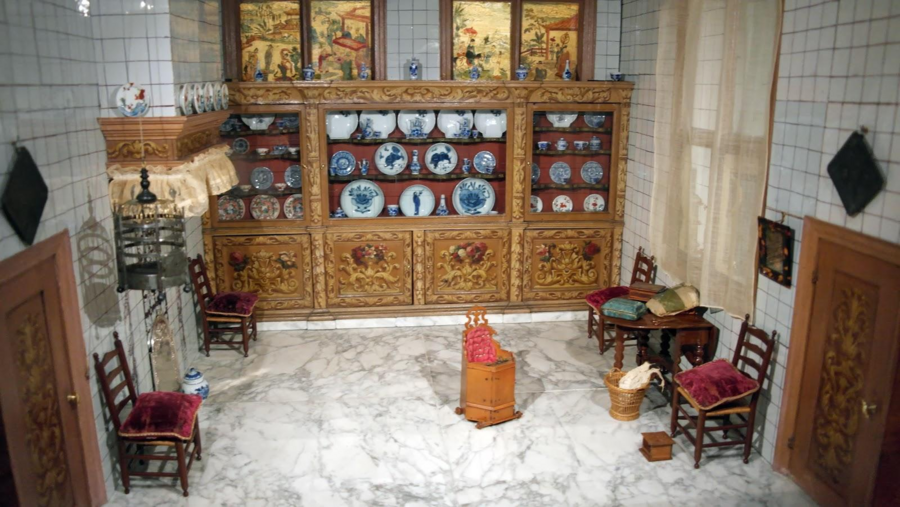
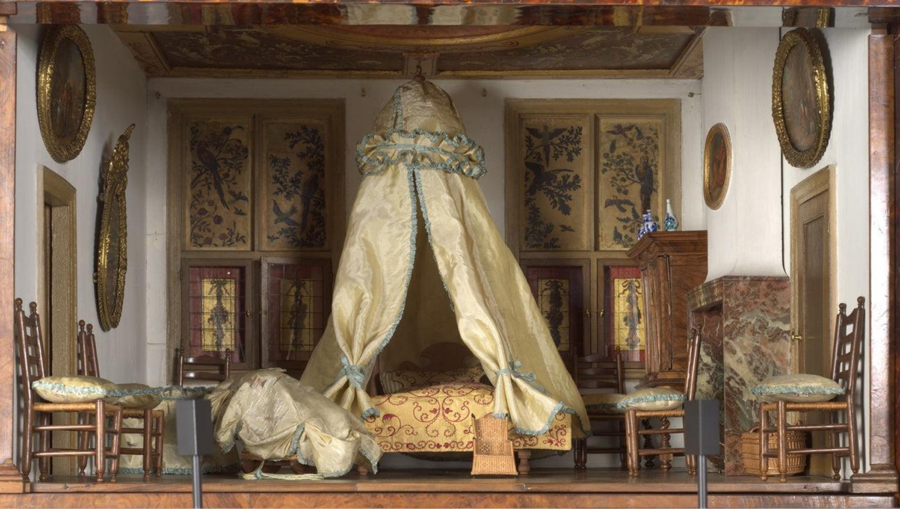
Petronella Oortman Puppet House, Amsterdam, 1686–1710, fragments
Rijksmuseum. 10 things about Petronella’s dolls; — Access: public. — URL: house.https://www.rijksmuseum.nl/en/stories/10-things/story/10-things-about-petronella-s-doll-house?utm_source=chatgpt.com (Accessed November 15, 2026)
Rijksmuseum. Dolls’ house of Petronella Oortman; — Access: public. — URL:https://www.rijksmuseum.nl/en/collection/object/Dolls-house-of-Petronella-Oortman--62700ab4ff22218345de76f77d58ad39?utm_source=chatgpt.com (Accessed November 15, 2026)
Live Journal // URL: https://lyzakov-pavel.livejournal.com/355703.html (Accessed November 15, 2026)