Rubricator:
1. The Colonial Period in Korea
2. Traditional Korean Space
3. The Influence of Western Architecture and Modernity
4. The Impact of Japanese Rule on Korean Architecture
5. Hybridization of Architectural and Interior Space
Research Concept
The study examines key Korean films that depict the era of colonial Korea (dramas «100 Days of Lies, ” „Mr. Sunshine, ” and the film „The Handmaiden“).
Hypothesis: The architecture in the film portrays Gyeongseong as a city of cultural duality: traditional Korean space preserves national identity, the Western becomes a symbol of modernization and power, and Japanese influence acts as both a mediator and an instrument of the city’s colonial restructuring. The visual image of Gyeongseong (Seoul) in the drama is formed through the coexistence of traditional Korean architecture, Western architectural forms, and the Japanese colonial organization of urban space. However, this coexistence is not an equal cultural synthesis: the architectural environment reflects the social and political hierarchy of colonial society, where the city’s modernization simultaneously becomes a tool for establishing a new power and a space for the erasure of Korean identity.
Japan’s ruling colonial ideology was reflected in the appearance of Gyeongseong (modern-day Seoul). The streets were redeveloped to meet Japan’s military and economic objectives, and structures symbolizing the Joseon Dynasty and the Korean Empire were demolished. Traditions, colonial urban planning, and autonomous modifications by residents—all these elements together shaped the unique character of Gyeongju as a colonial city.
From the 1920s to the 1930s, Gyeongseong began to resemble a modern city thanks to significant advancements in modernization and urban planning. The nature of urban planning in Japan led to sharp distinctions between Namchon (Japanese quarters) and Bukchon (Korean quarters) in Gyeongseong. The former was prosperous, clean, dynamic, and civilized, while the latter was dilapidated, dirty, damp, and uncivilized.
How does the architecture of Gyeongseong, as depicted in Korean cinema, reflect the interaction between Korean tradition, Japanese colonial policy, and Western modernism?
Still from the drama «Mr. Sunshine»
Governor-General’s building, a frame from the drama «100 Days of Lies» (2026)
The General Governorate of Korea before Gyeongbokgung Palace symbolizes the brutality of imperialism and the hypocrisy of power.
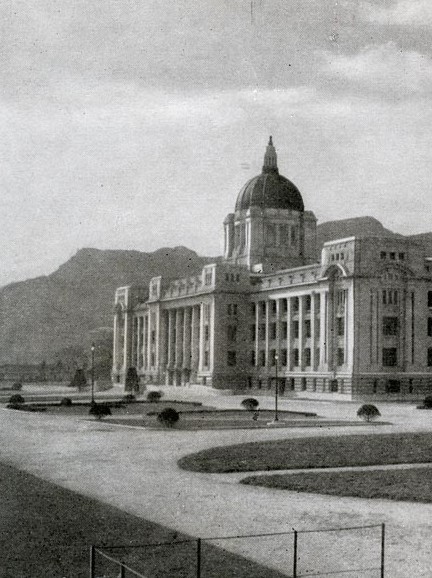
The Japanese Governor-General’s building in Seoul was constructed in a Western monumental style, directly opposite the grounds of the Gyeongbokgung Palace complex (such a forceful displacement of Korean heritage through the construction of new administrative buildings). Furthermore, ten buildings from the palace complex were demolished to erect the Governor-General’s House. Thus, the architectural language of modernism was employed to assert new power within the space of the former Korean monarchy.
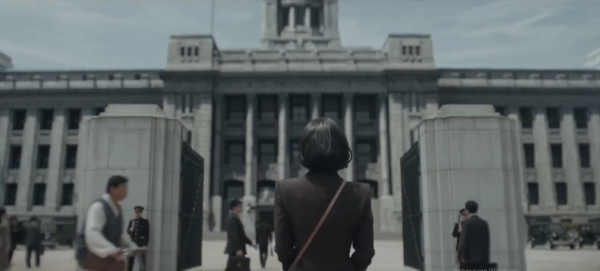
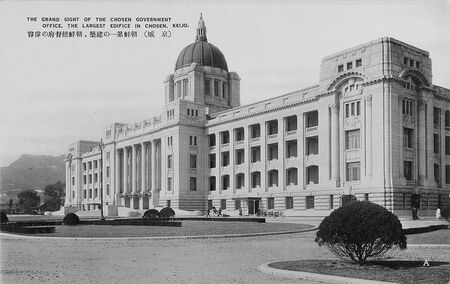
Governor’s Mansion, architect Georges de Lalande, Neoclassicism, 1926
Kensong Station Building
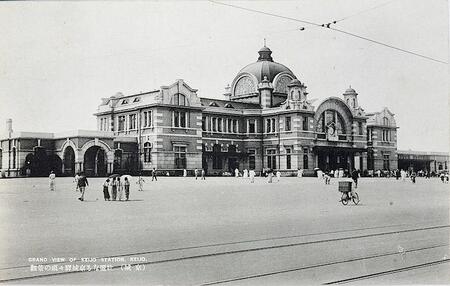
A railway station featuring a symmetrical composition, a large central window, clocks, and an arched structure. The railway in colonial Korea was not merely transportation infrastructure; it integrated the peninsula into the economic and political networks of the ruling Japanese Empire.
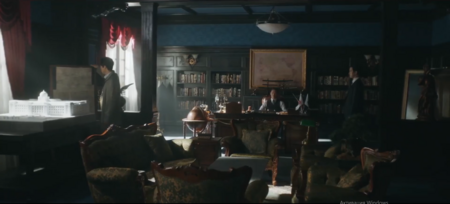
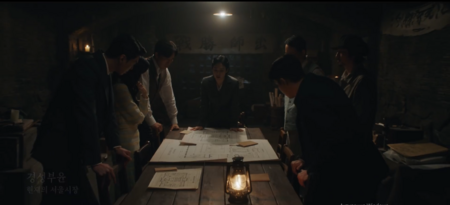
1. Japanese Governor-General’s Office 2. Secret Sanctuary of Independence Fighters
In Sato Shinichi’s studio, black and gold tones are used to emphasize hypocrisy and inner fragility.
The hideout in Gugukdan symbolizes solidarity and healing for those who operate while evading Japanese surveillance—muted light, dark interior tones, and raw materials.
The contrast between old quarters and new buildings
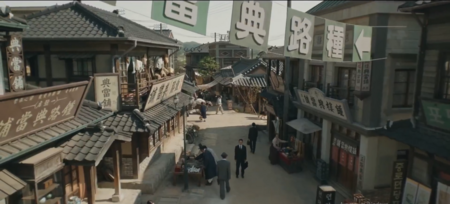
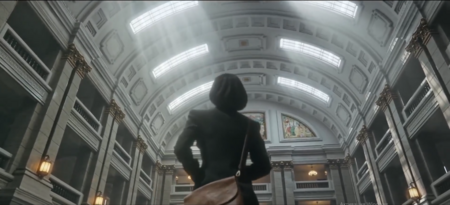
Stills from the drama «100 Days of Lies»
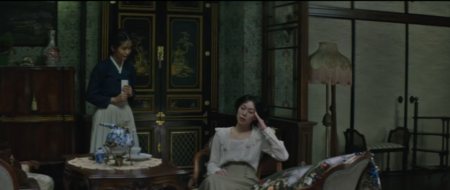
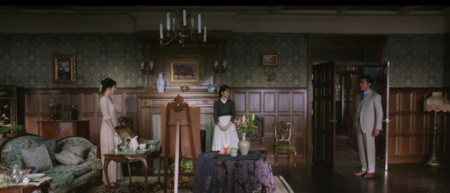
Stills from the film «The Handmaiden» (2016)
Here, you can already discern European bourgeois aesthetics, material prosperity, and social status. This reflects the aesthetic of the European bourgeois home from the late 19th to early 20th century. In colonial Korea, Western culture spread through private interiors, household items, furniture, and new models of daily life. The Western interior was tied to concepts of modernity, refinement, affluence, and belonging to a specific social class. It could serve as a language of prestige utilized by representatives of various social and cultural groups.
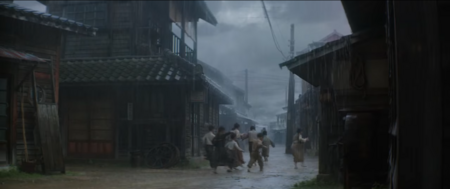
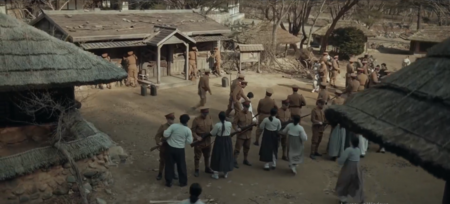
1. «The Maid» 2. «100 Days of Lies»