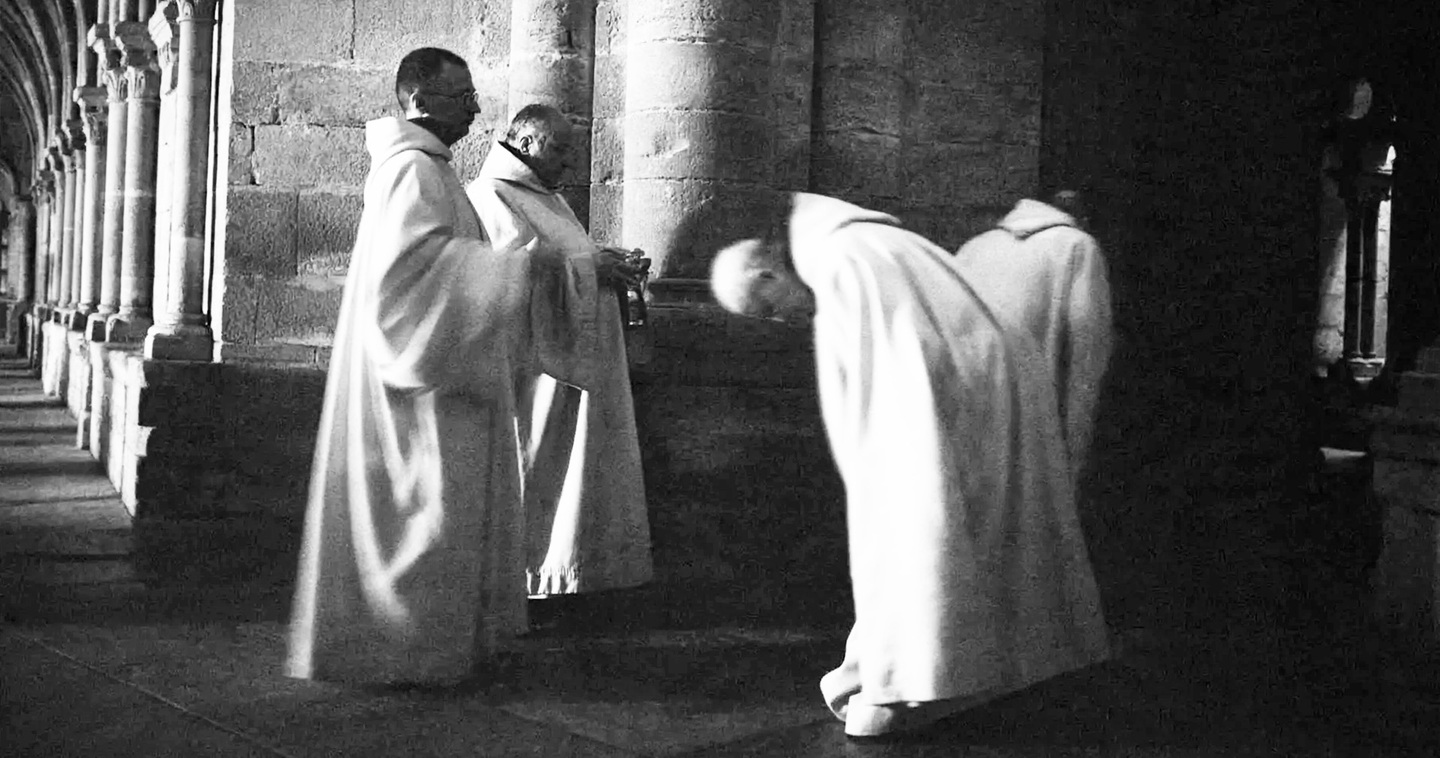
Minimalism is a philosophy built on the principle that less means more, striving for maximum simplicity and clarity.
Concept
Rationale for Topic Selection
I became curious about how the minimalism familiar to us actually emerged and what influenced its philosophy. After all, many people today often perceive style as emptiness—a lack of detail or meaning—without considering the significance of its simplicity.
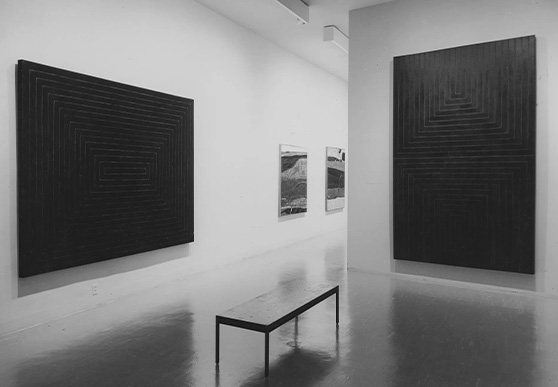
Frank Stella, Black Paintings (late 1950s–early 1960s)
Minimalism is currently concise and universal, which is why it is heavily employed in interior design, architecture, fashion, and the styling of websites and applications. It allows focus to be placed on the main elements and significantly simplifies the task for the user or buyer. The word «minimalism» first appeared in 1960s New York galleries, but the idea of consciously removing everything extraneous to avoid distraction from the core concept was first articulated in the 12th century. Bernard of Clairvaux, in his «Apology» (circa 1125), wrote the first manifesto in history concerning monks and monastic austerity. The Apology was also a response to criticism directed at the Cistercians; Bernard was defending his order. He noticed that the cloister space, where monks prayed, needed to be clean. His adversary was the problem of distraction, not a lack of beauty. After all, decoration draws the eye, and the monk would spend the day admiring it instead of focusing on prayer, which was crucial to him.
Abbot Bernard Clairvaux
The Cistercians («white monks»), who left Cluny in 1098, created architecture, design, and visual culture from light, proportion, and void—using the same materials that Judd, Le Corbusier, and Paulson would employ eight centuries later. The Abbey of Le Thoronet demonstrates what space can look like. The dispute between Cluny and Cîteaux was the first conflict in European culture over whether splendor demanded gold or emptiness.
The Abbey of Le Thoronet, general view from the southeast, France, 12th century
However, there is a difference between the two closely related philosophies. It lies in the answer to one question: what are we freeing ourselves from? For the monks, the answer was tied to faith. They removed everything from their lives that distracted them from God. In our modern time, the answer is more grounded and everyday—we free ourselves from anything that might simply distract us from ourselves.
Eight centuries of asceticism yield to ornament: Gothic reintroduces color and detail, and the white walls are once again forgotten. This revival occurs in 1953 when Le Corbusier, upon arriving in Le Corbusier, designates it as architecture of tranquility—the proper architecture. It is indeed a striking example of linear purity, simplicity, harmonious proportions, and the absence of superfluous decoration. Decades later, John Pawson transforms Le Corbusier into a pilgrimage site for contemporary minimalists.
Material Selection Principles
The first principle is selecting objects similar in architectural approaches. The second principle is material comparability; photographs should be chosen with similar angles. The third principle is that every fragment must align with the theme and the question.
Principles of Research Structuring
The structure of this work traces the chronology of the philosophy’s genesis and evolution: — lavish life (Cluny Abbey) — 12th-century Cistercian architecture (Sainte-Cécile, Le Thoronet, Cîteaux, Sylvacane, Fontenay) — a modernist interpretation of this tradition in the 20th century (Le Corbusier, La Tourette Monastery) — its continuation in the early 21st century (John Pawson, Novy-Dvur)
Principle of Selecting and Analyzing Textual Sources
The first principle is to prioritize primary sources. These include texts in which the concept is formulated by the participants themselves. The second principle is to verify information using multiple independent sources.
Key Research Question and Hypothesis
How did minimalism truly emerge, and what is its core idea?
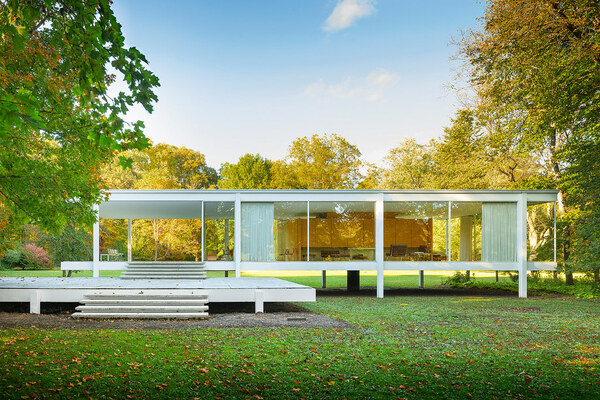
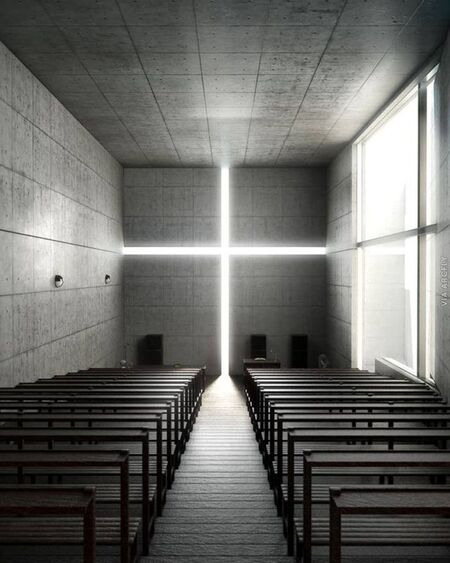
Farnsworth House, Illinois (Mies van der Rohe, 1951) / Light Church, Ibaraki (Tadao Ando, 1989)
Minimalism has become a lifestyle and an industry for decluttering—shedding excess objects and visual noise—a privilege of white space. My hypothesis is that this minimalism is not merely a style of modernity, but a way of thinking that has accompanied humanity for many centuries. Over eight hundred years, only the reason for our choice has changed, which is what this research intends to explore.
Main Body
Part 1. Excess
The history of minimalism begins not with emptiness, but with negation. In 909–910, Duke William I of Aquitaine founded the Benedictine monastery of Cluny in Burgundy.
Cluny Abbey, Duke of Aquitaine William I the Pious (France, 909)
The South Tower of Cluny Abbey
The capitals from the Abbey of Cluny are outstanding examples of Romanesque sculpture from the 11th and 12th centuries. They adorned the columns of the choir and the eastern part of the ambulatory in the main monastery church—Cluny III. They feature complex, detailed, and dynamic compositions.
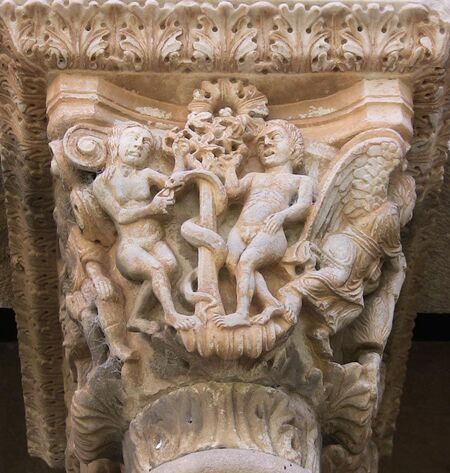
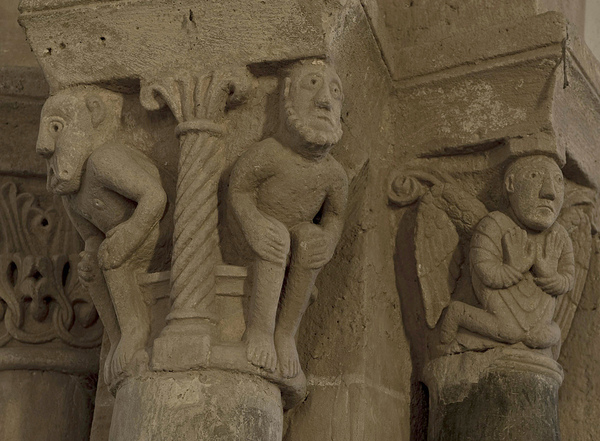
Columns of the Cluny Abbey
The main pursuit of the monks became continuous, lavish worship. It was written that it never ceased for a single minute, and the masses were celebrated with such solemnity that one might see angels before the altar rather than mortals. The monastery received donations of land, grain, wine, and church furnishings inlaid with gold and precious stones.