INDEX
Concept1. Academic Salon and World Exhibitions (1855–1862) 2. Salon of the Rejected (1863–1873) 3. Independent Exhibitions (1874–1884) 5. Conclusion 6. Bibliography
CONCEPT
Exhibitions occupy a significant place in artistic life. They provide an opportunity to encounter the works of various artists and cultivate an interest in art. Furthermore, an exhibition is not merely a collection of paintings, but a specific mode of their presentation. The perception of these works is influenced by their arrangement in the gallery, their proximity to other pieces, the hanging order, and the overall organization of the display.
Particular interest lies with Paris in the second half of the 19th century, a period when the established system of academic exhibitions began to be supplemented by independent artistic initiatives. This study is dedicated to the changes in the organization and exhibition of painting in Paris between 1855 and 1884.
The focus is on how in-situ exhibitions were formed—how works were selected and placed, and the role artists played in that process.
The period from 1855 to 1884 is chosen as a time of turning point in Parisian exhibition life. During these years, the conventional system of displaying painting changed: artists began to actively challenge the role of the official Salon and organize their own exhibitions. By 1884, the independent organization of exhibitions advanced significantly with the emergence of the Society of Independent Artists, which rejected juries and awards.
For the research, textual and visual materials were selected to illuminate the theme and trace changes in Paris’s exhibition life.
The textual sources provide information for analyzing the historical context and organizing exhibitions, while the visual materials allow for an examination of how the exhibits looked and how artworks were presented.
The structure of this study is based on a chronological principle: the material is distributed across the main stages of exhibition life in Paris from 1855 to 1884. Within each period, specific aspects of exhibition organization are examined, which allows not only for tracking the sequence of events but also for comparing changes in the selection of works, their placement, and the participation of artists in creating the displays.
The research question is as follows: How did the system for organizing and exhibiting art exhibitions in Paris change between 1855 and 1884, and what role did the artists themselves play in this process?
From the question posed, the following hypothesis emerges: the Parisian exhibition model began transitioning from a centralized system, where the selection of works relied on an academic jury, toward a more autonomous organization of exhibitions by artists who gained greater freedom in selecting and presenting their work.However, the official Salon did not disappear; rather, it continued to exist parallel to independent exhibitions until 1881.
PARIS EXHIBITION AND WORLD FAIR (1855–1862)
The Paris Salon is an art exhibition that has remained one of the foremost venues for displaying painting in France for several centuries. It was first organized in 1667, at the initiative of the Royal Academy of Painting and Sculpture. Over time, the Salon evolved into a significant event in the city’s artistic life.
In the mid-19th century, the Paris Salon was the primary venue where artists could present their work to the general public. State art institutions were responsible for organizing the exhibition, and a special jury was in charge of selecting the paintings. Artists submitted their work in advance, after which the jury decided which pieces would be included in the exhibition.
Paris Salon at the Palace of Fine Arts, main entrance, 1855
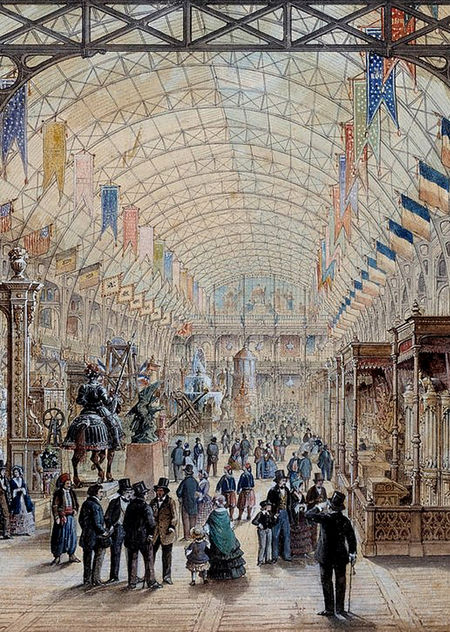
In 1855, the Paris Salon became part of the World’s Fair program, giving its artistic exhibition an international dimension. It featured not only French artists but also international ones.A separate Palace of Fine Arts was constructed on Avenue Montaigne to display the works. After the conclusion of the World’s Fair, the Salon continued as an independent event and had been held in the Palace of Industry since 1857.
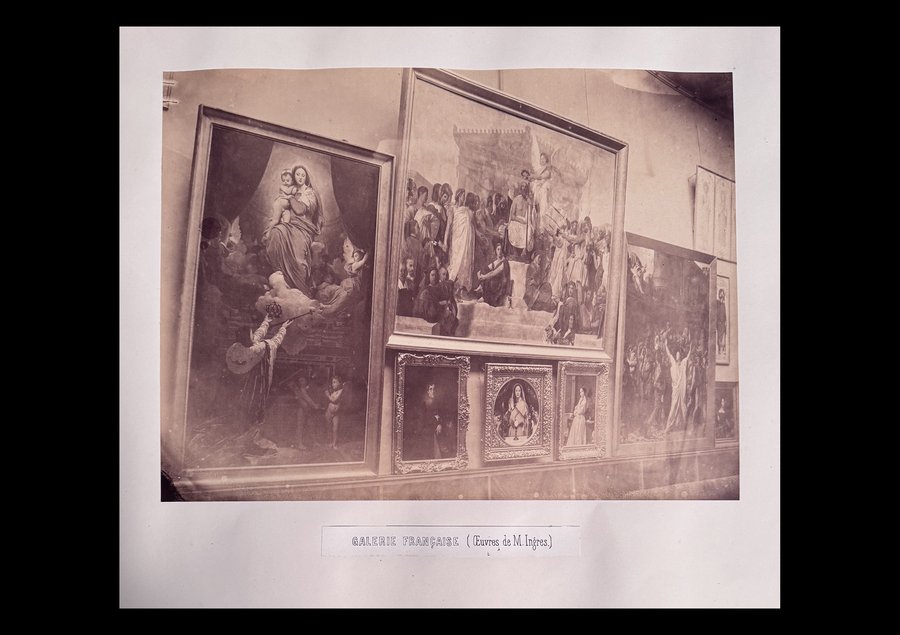
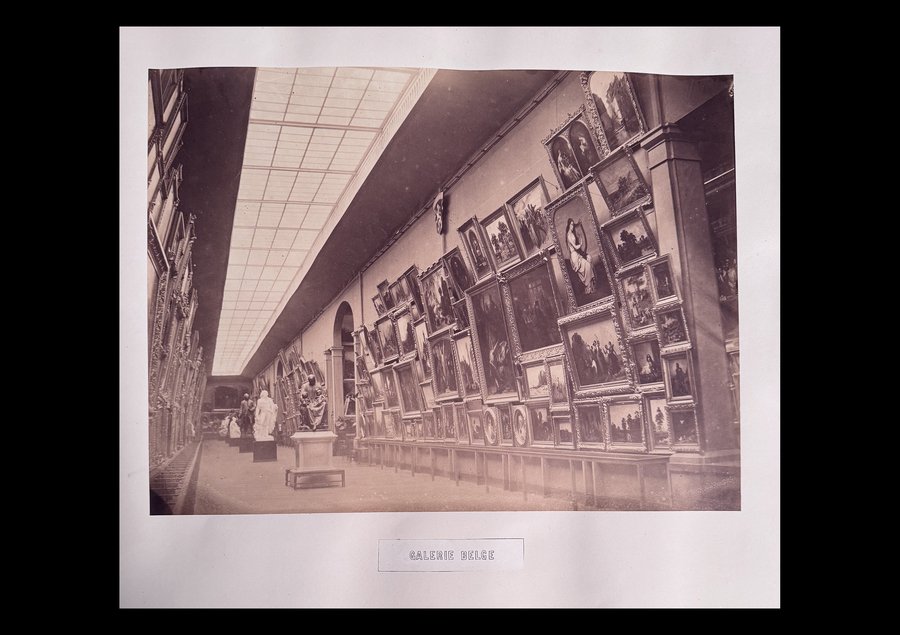
Photograph by André Disderi, Belgian Gallery, 1855; French Gallery, works by Engr, 1855.
Durand-Marat et Cie, Palace of Industry, Paris World’s Fair, 1855, chromolithography, 1855.
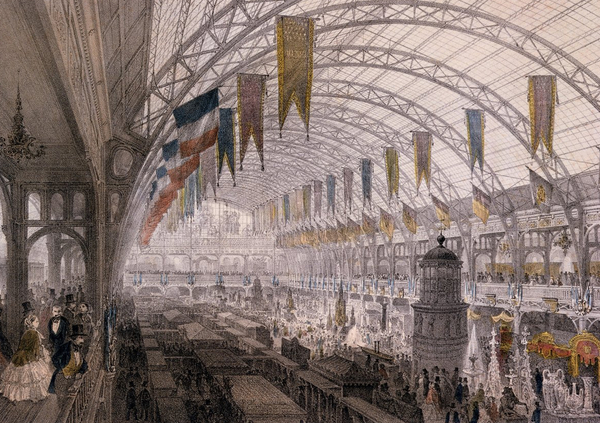
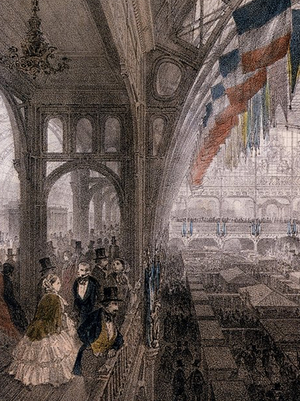
Louis-Julien Renault, interior of the Palace of Industry at the World’s Fair, 1855.
Lithograph by Max Bertelien (1811–1877), view of the Palace of Industry in Paris, 1855.