1. Navigation
- Index
- Concept
- Interior as Emotional Resonator
- Interior as a Mirror to the Protagonist
- Interior as Metaphor and Plot Driver
- Conclusion
- Bibliography
- Image Sources List
2. Concept
In the opinion of many film viewers, interior design in movies serves merely as a backdrop, a set piece for the plot and characters. However, this perception is deeply misleading and superficial. Space in good cinema is never neutral or accidental; it becomes a full-fledged element of the film’s narrative. An interior can serve entirely different purposes, each aiming for a deeper immersion of the viewer in the film. Space can establish the emotional register of a scene, reflect the internal state of the characters, or encode the plot of the film—thereby becoming a legitimate artistic element of cinema, equal to many others.Interior design is a distinct visual device with which directors can work in countless ways. By establishing the tone of the entire film through the color palette, the form of the rooms, the appearance of the furniture, and other interior elements, the director communicates with the viewer through forms that often carry more meaning than many of the characters' lines.
The central research question focuses on the topic of interior design as an active visual device within film and the functions it performs in the narrative. The visual study’s hypothesis is built on the idea that the interior in cinema becomes an independent narrative device, fulfilling numerous emotional, psychological, and plot functions realized through recurring visual motifs. These frequent techniques—for example, a unified color and lighting scheme in the interior—can manifest differently across various films, sometimes carrying even opposing meanings, and it is this diversity that demonstrates the interior is a multifaceted language, not merely a primitive decorative element in a film.
The research is structured around the examination of several visual techniques that make cinematic spaces functional. The logic of the categorization is based on the idea of viewing an interior through the prism of three key components vital to any film: atmosphere, the protagonist, and the narrative. First, the interior is examined as an emotional resonator that establishes the necessary mood for a given genre; second, as an inner mirror reflecting the character—where the space mirrors the personality, worldview, or soul of the character; and finally, as a metaphor that reflects the plot, encoding the film’s core conflict and primary motif. The research structure also employs the principle of analyzing each of these identified concepts using a specific film as an example, which in turn serves as a visual illustration for the techniques highlighted in the categorization.
The visual material for the study consisted of scenes from three selected films, chosen based on the principle of the director actively utilizing the interior space, which serves a prominent visual role. Based on this, three films were selected: Stanley Kubrick’s The Shining—where the interior functions as an emotional resonator; Yorgos Lanthimos’s Poor Things—where the interior mirrors the protagonist’s inner world; and Bong Joon-ho’s Parasite—where the interior drives the plot and acts as a metaphor for the film’s central motive.The textual sources were selected to examine each of the chosen films—its history, the director’s intent, and the meanings embedded within the work. Furthermore, an analysis of sources discussing the significance of interior design in cinema, and specifically in the films chosen for this study, was conducted.
The reasons for choosing this topic stem from a personal interest in cinema and the various non-obvious, unconventional, or typically overlooked narrative elements—such as interior design—that are nevertheless crucial to the film’s storytelling. Modern viewers, often accustomed to missing interesting details in movies, unconsciously absorb the meanings embedded in various visual techniques to a large extent. The relevance of this topic lies in the research’s aim to provide an analytical foundation for this skill—a foundation that is highly necessary in today’s world where cinema is frequently perceived by viewers superficially.
3. Interior as an Emotional Resonator
When an audience member hasn’t yet grasped what is happening in the film but subconsciously begins to absorb its atmosphere and emotions, visual techniques start at work—drawing the viewer into a sensation of anxiety, coziness, fear, and countless other feelings. The interior often primes the viewer for a specific emotional register before the narrative itself does, and the film The Shining by Stanley Kubrick becomes the prime example of space functioning in this manner. The Overlook Hotel’s setting here operates as a machine for manufacturing fear, despair, and madness.
Kubrick deliberately rejected classical horror tropes, filling the hotel space with vivid light, color, and symmetrical geometry that subconsciously frightens the viewer. According to the director, the maze-like layout and vast halls created a sufficiently sinister atmosphere that required no reliance on cliché devices.The first technique is symmetry and central perspective. Kubrick constructs the composition so that the lines of the walls, ceiling, and floor converge at a single point precisely in the center of the frame: this creates an unnatural, perfect harmony from which neither the viewer nor the characters have a visual escape, as if trapped in a snare. The hotel space is ominously ordered, but this symmetry—which promises harmony—fails to deliver tranquility; instead, it disorients both the viewer and the protagonists.When all converging lines lead to one point, the viewer’s gaze becomes trapped within the composition, generating claustrophobia even before anything frightening occurs. Beneath the perfect symmetry lies an architectural absurdity—the inconsistencies in the room arrangement were deliberately created so that the viewer could not map the hotel, and control over the space was never achieved. This kept the viewer perpetually in a state of alertness and unease. Symmetry and mirror-like reflections function as markers of duality and cyclicity in the events—they immerse the viewer in a spectrum of negative emotions, instilling a fear that is not conveyed through typical «clichéd» horror devices.
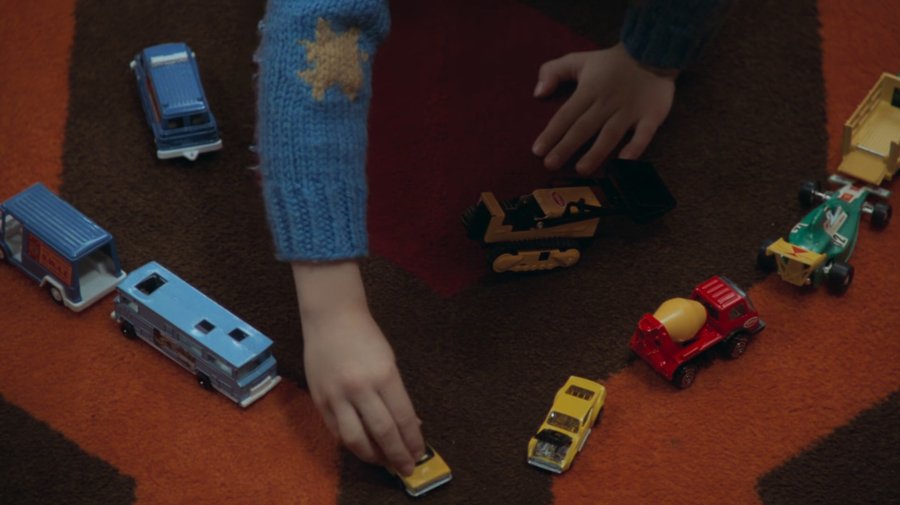
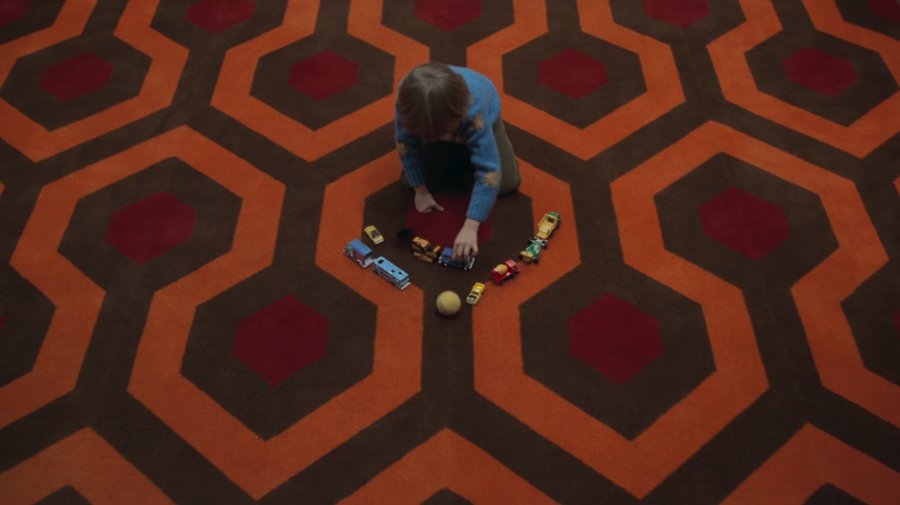
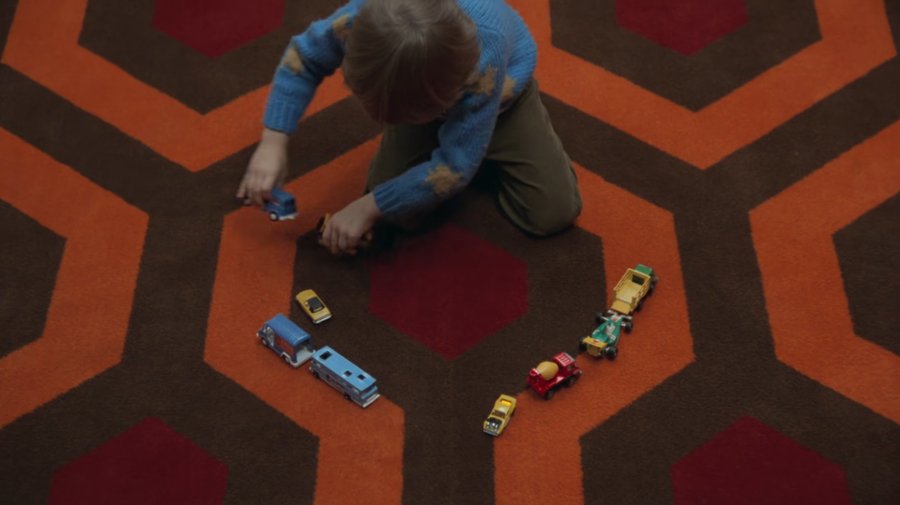
The emptiness and scale of the setting also contribute to the film’s atmosphere. High ceilings, vast halls, and floor-to-ceiling windows make the characters appear small and isolated; this disproportion between the human figure and the space creates a sense of loneliness and self-loss. The void here weighs heavily on the individual, eroding them and compelling the viewer to absorb this mood and feel anxiety, even before any traditionally frightening events have occurred.
Alongside the aforementioned techniques, light and color are also at play. «Shine» is an astonishingly bright and vibrant film for its genre, yet this cold, unnatural color makes the hotel space particularly unsettling. Red functions as a danger signal—burgundy-red walls in the elevator, the restroom interior, the columns, and the corridors, alongside the chairs in the ballroom, appear during some of the film’s most brutal scenes. Blue becomes the color of innocent victims—the pastel-blue walls of the rooms, the chairs on the airplane, the night light from the windows. Additionally, acidic shades appear in the film—toxic green, screaming purple—which echo the film’s inexplicable events. Here, color serves not merely as an embellishment to the interior design but as a semantic core, sustaining the atmosphere established by the architectural forms.
4. Interior as a Mirror of the Protagonist
The space can also be used to reflect the people inhabiting it. Interior design can become an extension of a character’s consciousness—a reflection of their inner world, thoughts, feelings, and deep psychological transformation. In this chapter, the interior is examined as a mirror of the hero’s inner world: not merely a backdrop, but a visual projection of their personality.
The central material for this chapter is Yorgos Lanthimos’s film Poor Things, a film in which the protagonist, Bella Baxter, begins to live anew, reacquaints herself with the world, and space becomes the instrument of this discovery. The film’s interiors incorporate Victorian motifs alongside surreal, disproportionate forms and unconventional materials. This visual chaos—the juxtaposition of elements that are not meant to work together in a real-world interior—serves as a precise metaphor for the heroine’s consciousness, which is not yet fully formed.
The first scene, which reveals the world through the heroine’s eyes, is a synthesis of the uncombinable as a visual principle. The interiors in the film create a sense of space that cannot be «read"—a space that becomes an illustration of how Bella perceives the world; for her, the world is something new, unknown, and incomprehensible. This visual chaos, reflected in the massive chair backs, the multi-tiered arrangements of plates on the wall, the undulating ceilings, the fabric wall coverings, and other interior elements that visually illustrate Bella’s gaze, embodies a world she is newly discovering. Interestingly, as the heroine herself changes—as she matures internally and undergoes transformation—the surrounding space—the interiors—reflects her curiosity about the world and her yearning for freedom, while simultaneously adapting to the internal shifts occurring within her.
The director also employs light and color to reflect how the heroine perceives the world, undergoing gradual transformations throughout the story. The soft, almost toy-like, naive colors in the Lord’s house reflect Bella’s naivety and her childlike curiosity toward a world that seems too vast and strange for her. As she matures, the color palette evolves and grows more complex, emerging in saturated and anxious hues. Furthermore, color and light signify the end of Bella’s growth, once again emphasizing that the interior unfolds alongside the character, becoming a narrative device that indicates the protagonist’s state. The interior acts as a co-conspirator in the events, not only depicting the character’s condition but also helping the viewer experience it visually.
5. Interior as Metaphor and Driver of the Plot
6. Conclusion
The study demonstrated that interior design in cinema is not merely a backdrop accompanying the plot, but an independent visual protagonist that interacts with the viewer through the language of form and constitutes a complete narrative element.The primary conclusion of the research not only confirms the hypothesis but also emphasizes that film speaks in multiple languages, possessing an immense diversity of techniques—each one capable of serving as a functional visual illustration for a specific directorial vision and contributing to the overall success of the film.The study clearly illustrates that space, when utilized skillfully as an active element of the narrative, can elevate any film, rendering it significantly more complex, profound, and compelling. Furthermore, the ability to view a film through the lens of visual techniques such as interior design allows the audience to decode new meanings, revealing cinema from an entirely novel perspective.
Color in «The Shining» // blueprint URL: https://theblueprint.ru/culture/cinema/siyanie (Date accessed: 11/06/26)
What secret meanings did Stanley Kubrick embed in «The Shining» // Kino Reporter URL: https://kinoreporter.ru/kakie-tajnye-smysly-stenli-kubrik-zalozhil-v-siyanie/?amp (Date accessed: 11/06/26)
Architecture and Cinema: The spatial uneasiness of Kubrick’s The Shining // parametric architecture URL: https://parametric-architecture.com/architecture-and-cinema-the-spatial-uneasiness-of-kubricks-the-shining/ (Date accessed: 11/06/26)
Poor, Unhappy, Stylish // blueprint URL: https://theblueprint.ru/fashion/cinema/bednye-nescastnye (Date accessed: 11/06/26)
In the World of «Poor & Unhappy» // galarie46 URL: https://shop.galerie46.com/instashop/v-mire-bednykh-neschastnykh/?srsltid=AYCX9vIbDIjwS87uQzY1VY44FVChPYtU-57RNKYBdh4rPuWFH7TUgqxN (Date accessed: 11/06/26)