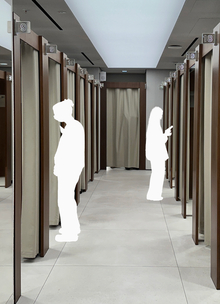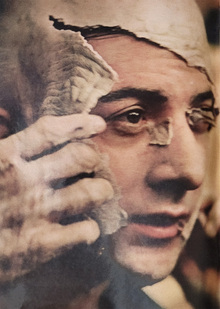
Исходный размер 951x1280

The Architecture of Institutional Critique

Данный проект является учебной работой студента Школы дизайна или исследовательской работой преподавателя Школы дизайна. Данный проект не является коммерческим и служит образовательным целям
Проект принимает участие в конкурсе

Table of contents

00/ Concept 01/ Introduction to the First Wave of Institutional Critique 02/ Daniel Buren 03/ Michael Asher 04/ Hans Haacke 05/ Gordon Matta-Clark 06/ Mierle Laderman Ukeles 07/ Marcel Broodthaers 08/ Institutional Critique Today 09/ Conclusion

It is not a question of being against the institution: We are the institution. It’s a question of what kind of institution we are, and what values we institutionalize.

— Andrea Fraser
From the Critique of Institutions to an Institution of Critique (2005)

Concept

Museums and galleries are often presented as neutral spaces whose only purpose is to display art. However, the way these spaces are designed strongly affects how artworks are viewed, interpreted, and valued. Architecture, lighting, spatial organization, and institutional rules all influence the viewer’s experience while remaining almost invisible.

This presentation explores how artists in the late 1960s and 1970s began questioning the idea of the «neutral» museum space. Instead of focusing only on producing artworks, they turned their attention toward the institution itself — its walls, systems, economics, and hidden structures of control.

The project focuses on the First Wave of Institutional Critique and examines how artists used space itself as a critical tool. Through interventions, removals, documentation, and performance, these artists exposed the museum not as a passive container, but as an active system that shapes cultural meaning.

The gallery space is not a neutral container, but a powerful ideological chamber.

— Brian O’Doherty

I chose this topic because institutional critique changes the way we understand exhibition spaces and the role of art itself. As a design and visual communication student, I became interested in how architecture, display systems, and spatial organization influence perception without viewers always realizing it.

What especially interests me is that these artists did not only criticize museums through images or symbolism. They worked directly with the structure of the institution — removing walls, interrupting sightlines, exposing administration, and revealing hidden labor. Their works transformed space into both the subject and the material of critique.

This topic is also important today because many contemporary galleries and museums still operate through similar systems of authority, visibility, and control. Understanding the First Wave of Institutional Critique helps us better understand how cultural spaces continue to shape artistic value and public experience.

01/ Introduction to the First Wave of Institutional Critique

By the late 1960s, many artists began moving away from traditional object-based art practices and toward a direct investigation of the museum itself. This shift marked the beginning of what later became known as the First Wave of Institutional Critique.

Rather than treating the gallery as a neutral background, artists started examining how institutions control visibility, movement, interpretation, and value. The museum was understood not only as a physical building, but also as a system shaped by ideology, economics, administration, and power.

Artists such as Daniel Buren, Michael Asher, Hans Haacke, Mierle Laderman Ukeles, and Marcel Broodthaers approached this critique in different ways, but all shared a common goal: to reveal the hidden structures operating behind the polished surface of the museum.

Their interventions fundamentally changed the relationship between art, space, and institution. The gallery itself became part of the artwork, and architecture became a tool for exposing systems that had previously remained invisible.

02/ Daniel Buren
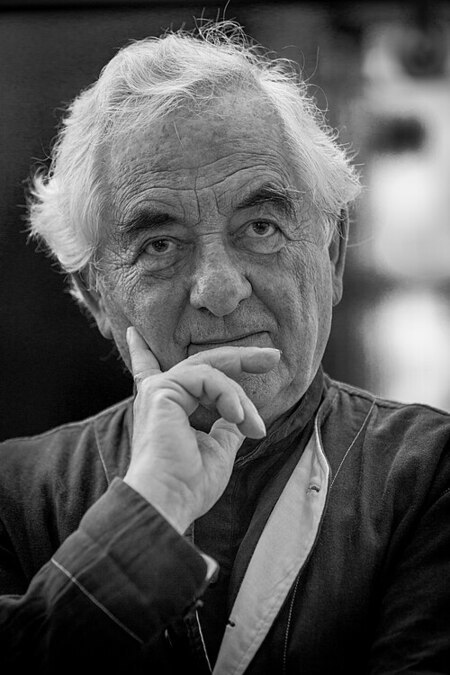
post

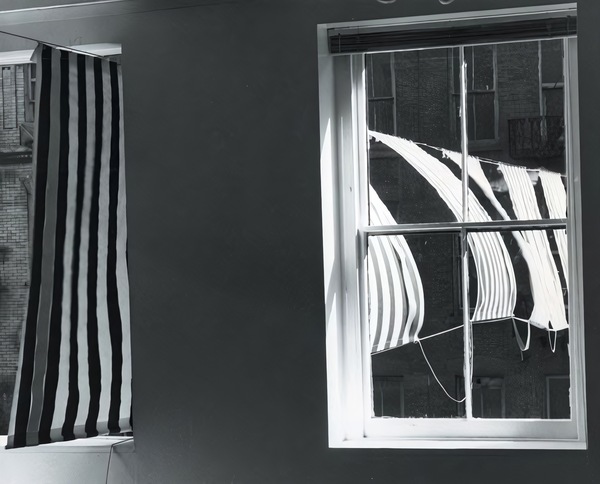
Daniel Buren’s work focuses on how museums control visual experience. Exhibition spaces guide how visitors move, what they see, and how they interpret artworks. In 1971, Buren installed Peinture-Sculpture at the Guggenheim Museum, a building designed by Frank Lloyd Wright with a continuous spiral structure that directs the viewer’s gaze.

Buren placed a large striped fabric installation in the center of the museum’s atrium, interrupting the natural flow of sightlines. Instead of allowing smooth visual movement through the space, the work forced viewers to confront the structure of the building itself. The installation acted less as an object and more as a disruption of spatial order.

The museum’s decision to remove the work before the exhibition opened confirmed its institutional control over space. The reaction demonstrated that museums regulate not only what is shown, but also how space can be used. Buren’s intervention made this control visible.

Исходный размер 1170x658

Daniel Buren at the Guggenheim Museum / New York, 1971

In Within and Beyond the Frame (1973), Daniel Buren argued that the museum frame actively constructs meaning rather than neutrally presenting art. His striped banner in the Guggenheim disrupted Frank Lloyd Wright’s architectural control over vision and circulation. The work’s removal before opening exposed the limits of institutional tolerance and revealed the museum itself as an ideological structure.
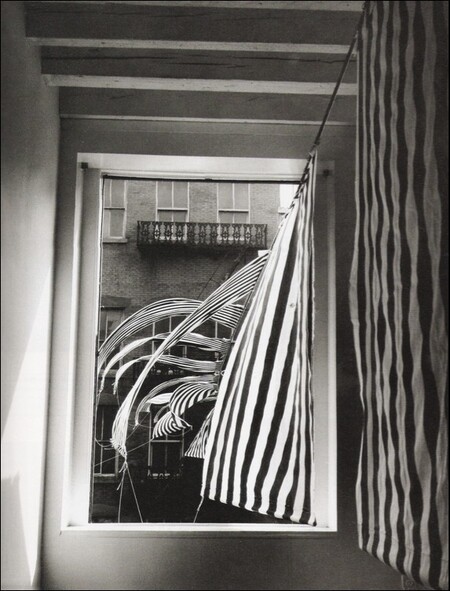
Daniel Buren, Within and Beyond the Frame, 1973

03/ Michael Asher
post

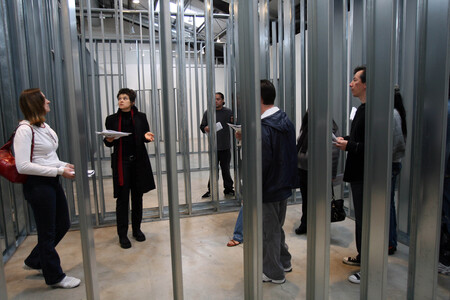
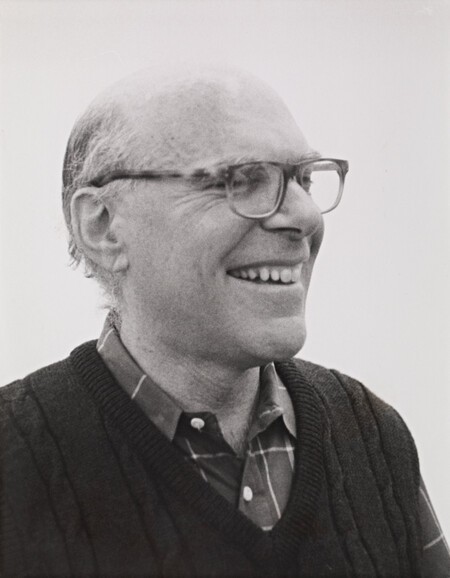
Michael Asher’s practice used removal rather than addition. In 1974 at the Claire Copley Gallery, he removed the wall separating the exhibition space from the administrative office. This simple act exposed the internal structure of the gallery.

Commercial galleries rely on separating public display from private business. This division creates the impression that art exists independently from economic processes. By eliminating the barrier, Asher revealed that exhibition and commerce are directly connected.
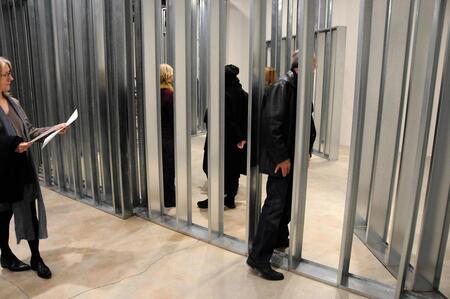
Michael Asher: Claire Copley Gallery // «Architectural Subtraction», 1974

Visitors entering the space were confronted with the gallery’s working environment desks, paperwork, and staff activity. The installation removed the illusion of neutrality and showed the gallery as a functional business structure rather than a purely cultural space.

04/ Hans Haacke
post

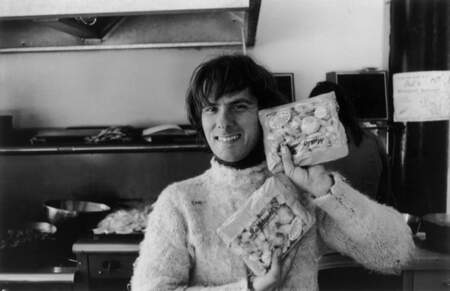
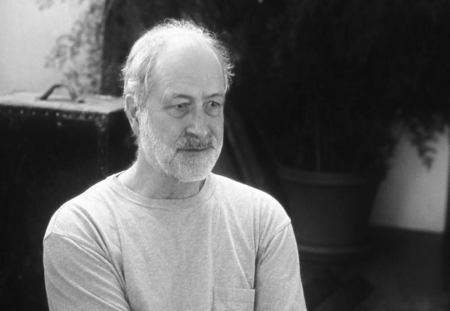
Hans Haacke expanded institutional critique beyond the museum building itself. He used data, documentation, and research-based methods to show how cultural institutions are connected to broader economic systems. His work aligns with what Benjamin H. D. Buchloh later described as an «aesthetic of administration.»

In Shapolsky et al. Manhattan Real Estate Holdings (1971), Haacke documented a network of real estate ownership in New York. The work consisted of photographs and detailed information about property transactions, revealing patterns of urban exploitation linked to institutional funding structures.

Исходный размер 1000x667

Hans Haacke: Shapolsky et al. 1971

Исходный размер 1600x759

Hans Haacke: Shapolsky et al. 1971

The Guggenheim cancelled Haacke’s exhibition and called it inappropriate and too politically sensitive. This reaction actually strengthened Haacke’s critique because it demonstrated how museums protect their own institutional image and financial interests. The museum did not act as a neutral cultural space, instead, it acted like an organization defending its power and reputation.

A liberal public is interesting to have as an audience. It is for that very reason that corporations make such an effort to ally themselves with cultural institutions.

— Hans Haacke

05/ Gordon Matta-Clark

post

While many artists of institutional critique focused on exposing the hidden systems of museums and galleries, Gordon Matta-Clark approached architecture itself as a site of intervention. Trained as an architect, Matta-Clark rejected the idea of buildings as stable, functional structures. Instead, he treated architecture as something political, temporary, and deeply connected to social and economic conditions.

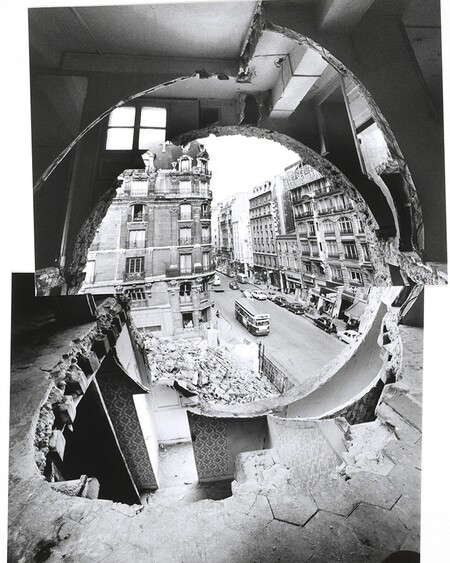
Working during the 1970s, Matta-Clark became known for his large-scale «building cuts» — physical incisions made into abandoned houses, warehouses, and urban structures scheduled for demolition.
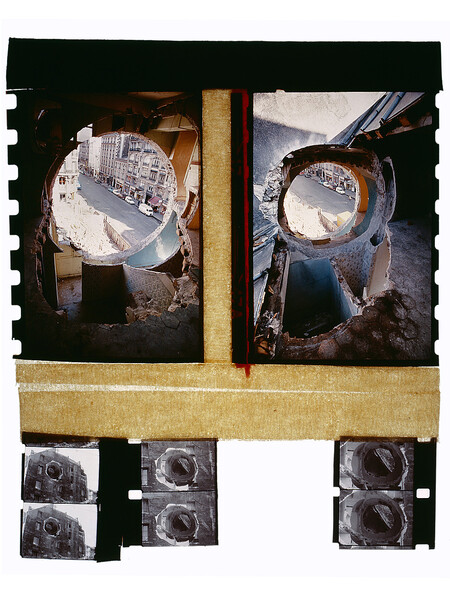
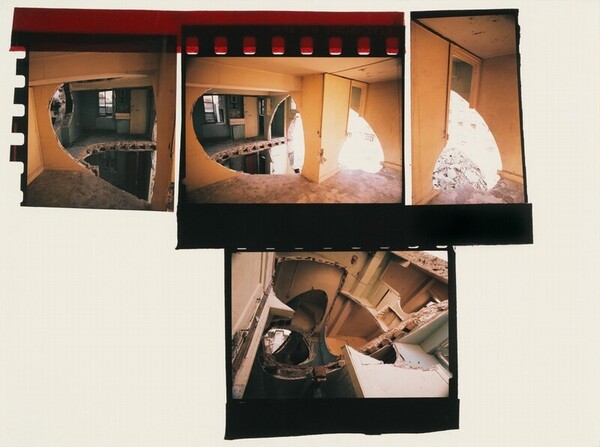
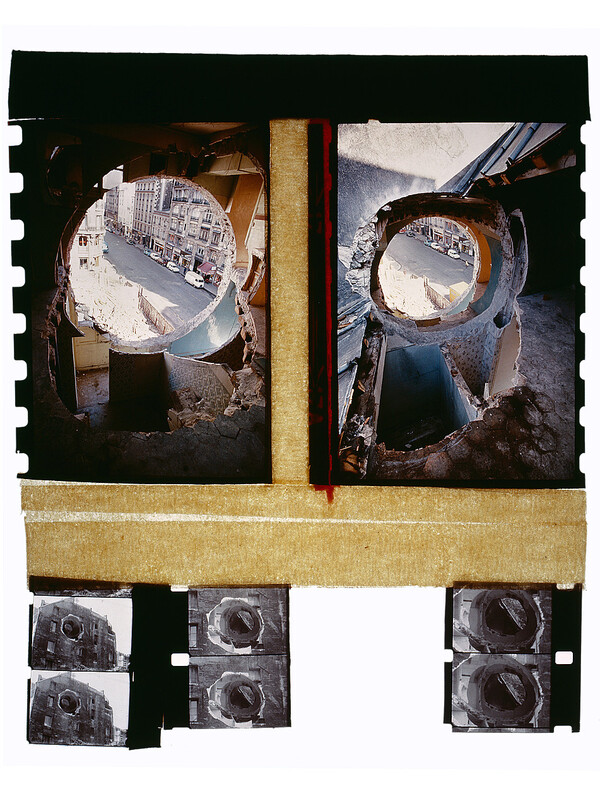
Gordon Matta-Clark: Conical Intersect, 1975

In works such as Conical Intersect (1975), buildings were no longer experienced as fixed or permanent forms, but as open structures that could be interrupted, exposed, and reimagined.

His interventions questioned processes of urban redevelopment and the institutional control of public space. By cutting through walls and foundations, Matta-Clark revealed the hidden systems and power structures embedded within the built environment.

Although many of his works took place outside traditional museum spaces, they still connect closely to institutional critique. Like other first-wave artists, Matta-Clark challenged the idea that architecture is neutral, showing instead that space is shaped by political, economic, and social forces.
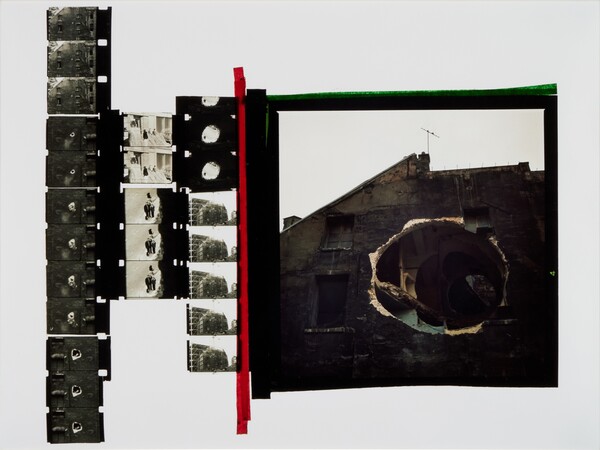
Gordon Matta-Clark: Conical Intersect, 1975

Loading...

06/ Mierle Laderman Ukeles

«I am an artist. I am a woman. I am a wife. I am a mother. (Random order). I do a hell of a lot of washing, cleaning, cooking, renewing, supporting, preserving, etc. Also, (up to now separately) I ‘do’ Art. Now I will simply do these everyday things, and flush them up to consciousness, exhibit them, as Art.»

— Mierle Laderman Ukeles
Manifesto for Maintenance Art, 1969
post

Mierle Laderman Ukeles focused on the often invisible labor required to maintain institutional spaces. In her Manifesto for Maintenance Art (1969), she argued that systems such as museums depend on continuous maintenance work that is usually ignored or undervalued.

Through performances such as Washing/Tracks/Maintenance: Outside (1973), Ukeles cleaned the entrance steps of the museum as a public artistic action. By turning ordinary maintenance work into performance, she challenged the hierarchy between artistic production and everyday labor.

Her work revealed that museums and cultural institutions depend on continuous physical work in order to maintain the appearance of order, cleanliness, and permanence. The «neutral» white cube could only exist through constant maintenance.

Ukeles’s practice connects closely to institutional critique because it exposes the hidden systems and labor structures operating behind cultural spaces. She demonstrated that institutional authority is not only supported by architecture and administration, but also by workers whose labor often remains invisible.

0

Mierle Laderman Ukeles, Washing/Tracks/Maintenance: Outside, 1973

Loading...

Maintenance has to do with survival, with continuity over time. You can create something in a second. But whether it’s a person, a system, or a city, in order to keep it, you have to keep it going. I think that one thing we must do is value and learn from those who provide this service.

— Mierle Laderman Ukeles

07/ Marcel Broodthaers

post

Marcel Broodthaers developed a critical approach to institutions by creating a fictional museum, the Musée d’Art Moderne, Département des Aigles (1968–1972). Instead of directly intervening in an existing institution, he constructed an imaginary one using the same visual and administrative language as real museums.

The project included display cases, labels, crates, signage, and exhibition structures, but it did not contain a permanent collection. By doing this, Broodthaers highlighted that the meaning of artworks is not inherent in objects themselves, but produced through systems of display and classification.

His «museum» functioned as a form of institutional simulation. It exposed how museums rely on rules of organization, labeling, and categorization to construct authority and cultural value.

0

Marcel Broodthaers, Musée d’Art Moderne, Département des Aigles, 1968.

Through this strategy, Broodthaers shifted institutional critique toward the level of language and representation. He showed that museums are not only physical spaces, but also systems that define how knowledge and art are structured and understood.

08/ Institutional Critique Today

The First Wave of institutional critique focused mainly on the physical and visible structures of the museum walls, sightlines, exhibition spaces, and architectural divisions. These interventions made the institution legible by working directly inside its spatial conditions.

However, contemporary artistic practices extend this investigation beyond architecture in the traditional sense. The boundaries of the museum are no longer only physical. They are also formed through logistics, legal frameworks, ownership structures, and systems of labor that operate before and beyond the exhibition space.

For this reason, the following section looks at practices that continue the logic of institutional critique, but shift its focus from physical space to the systems that organize how art moves, exists, and is maintained today.

post

Walead Beshty extends institutional critique by focusing on the logistics that operate before an artwork even reaches the gallery. In his FedEx works (from 2007 onward), he produces glass objects that are sized to standard shipping containers and sent through commercial courier systems without protective packaging.

During transit, the objects break, crack, or shift, and these transformations become part of the work itself. The final object is therefore shaped less by the gallery space and more by the infrastructure that moves it.

Walead Beshty, FedEx® Large Box ©2004 FEDEX 330504 REV 10/04 SSCC, 2007.

Beshty’s work suggests that the «neutral» space of the museum is preceded by another spatial system: logistics. Shipping routes, packaging standards, and corporate dimensions already define how objects exist before they are exhibited. In this sense, the container is no longer the gallery wall, but the commercial infrastructure that determines how objects can travel.

post

Cameron Rowland works with objects that are directly linked to systems of labor, property, and incarceration in the United States. Instead of producing traditional artworks, he selects existing objects such as desks, furniture, or industrial materials that are manufactured through state prison labor systems.

One example is the Attica Series Desk (2016), which is produced in prison workshops and then placed in museum contexts. The work is not only the physical object itself, but also the conditions attached to it, including strict rules about ownership and display.

Rowland’s practice challenges how museums acquire and circulate objects. By introducing legal and economic restrictions, he shows that artworks are not neutral objects, but part of larger systems of labor and value production.

0

Cameron Rowland, Attica Series Desk, 2016.

post

Maria Eichhorn’s work focuses on the structure and functioning of art institutions themselves. Instead of creating objects or installations, she often works by changing how institutions operate.

In 5 Weeks, 25 Days, 175 Hours (2016), she closed the Chisenhale Gallery in London for the entire duration of the exhibition. The gallery space was empty, and the budget was used to pay the staff their normal salaries while the institution remained closed.

This work shifts attention away from objects and toward institutional time, labor, and economics. The artwork is not what is displayed inside the gallery, but the temporary suspension of the institution’s normal function.

This practice reveals that the museum is not only a space for exhibition, but also a system of work, scheduling, and economic organization.

Maria Eichhorn, 5 weeks, 25 days, 175 hours, Chisenhale Gallery in London 2016.

09/ Conclusion

The works discussed in this project reveal a shift in how space can be understood not as a container for art, but as something that actively produces meaning. Across different strategies intervention, removal, documentation, maintenance and fiction these artists approached space as a condition that structures visibility rather than simply hosting it.

What becomes clear through these practices is that critique does not exist outside of the systems it addresses. Even when artists expose institutional structures, their gestures remain tied to the environments they question. As a result, institutional critique operates less as a form of destruction and more as a form of continuous negotiation with the spaces it reveals.

The result of this research is not a redefinition of the museum, but a shift in how it is perceived. After these interventions, space can no longer be understood as neutral or self-evident. Both in museums and in urban contexts, architecture functions as a system that organizes visibility, value, and access even when these mechanisms are not immediately visible.

With each attempt to evade the limits of institutional determination, to embrace an outside, we expand our frame and bring more of the world into it. But we never escape it.

— Andrea Fraser
Critique of Institutions to an Institution of Critique (2005)
Библиография
1.

Institutional Critique [Online] / Understanding New Media Arts, Open Oregon. — URL: https://openoregon.pressbooks.pub/understandingnewmediaarts/chapter/institutional-critique/ (accessed: 20.02.2026).

2.

Michael Asher, Conceptual Artist Challenged Cultural Institutions [Online] / The Boston Globe, 2012. — URL: https://www.bostonglobe.com/metro/obituaries/2012/10/18/michael-asher-conceptual-artist-challenged-cultural-institutions/vIpONIo2SpyaE3bu9PV9TJ/story.html (accessed: 25.02.2026).

3.

Michael Asher [Online] / afasiaarchzine, 2013. — URL: https://afasiaarchzine.com/2013/05/michael-asher/ (accessed: 04.03.2026).

4.

Hans Haacke: Shapolsky et al. Manhattan Real Estate Holdings [Online] / ewaneumann.com. — URL: https://ewaneumann.com/websites/haacke/shapolsky.html (accessed: 12.03.2026).

5.

Gordon Matta-Clark [Online] / Burchfield Penney Art Center. — URL: https://burchfieldpenney.org/art-and-artists/people/profile:gordon-matta-clark-1/#gordon-matta-clark-1 (accessed: 28.03.2026).

6.

Conical Intersect [Online] / National Gallery of Art. — URL: https://www.nga.gov/artworks/139363-conical-intersect (accessed: 05.04.2026).

7.

Mierle Laderman Ukeles [Online] / The Art Story. — URL: https://www.theartstory.org/artist/ukeles-mierle-laderman/ (accessed: 15.04.2026).

8.

Mierle Laderman Ukeles [Online] / National Women’s History Museum. — URL: https://www.womenshistory.org/education-resources/biographies/mierle-laderman-ukeles (accessed: 22.04.2026).

9.

Mierle Laderman Ukeles: Maintenance Art [Video] / YouTube. — URL: https://www.youtube.com/watch?v=WIhf3UBNTlA (accessed: 29.04.2026).

10.

Marcel Broodthaers: Musée d’Art Moderne [PDF/Online] / HAL Science. — URL: https://hal.science/hal-04261036v1/file/broodthaers%20muse%CC%81e%20art%20moderne%20def%20-%20copie.pdf (accessed: 07.05.2026).

11.

Cameron Rowland’s «Depreciation» Explores the Ties Between Slavery and Property Relations [Online] / The Wesleyan Argus, 2019. — URL: https://wesleyanargus.com/2019/10/29/cameron-rowland-11s-depreciation-explores-the-ties-between-slavery-and-property-relations/ (accessed: 12.05.2026).

12.

Walead Beshty’s FedEx Sculptures [Online] / Architectural Digest. — URL: https://www.architecturaldigest.com/story/walead-beshty-regen-projects-los-angeles (accessed: 17.05.2026).

13.

Maria Eichhorn [Online] / Chisenhale Gallery. — URL: https://chisenhale.org.uk/project/maria-eichhorn/ (accessed: 20.05.2026).

The Architecture of Institutional Critique
Проект создан 28.05.2026