
American advertising from the 1920s–1950s not only offered women beauty and grooming products but also linked their use to maintaining a husband’s attention and family well-being. Using authentic advertisements as case studies, this research examines how the fear of losing attractiveness, disappointing a husband, or being deemed an «inadequate» wife morphed into a purchase incentive. Special attention is paid to the visual techniques advertising used to present problems, cultivate a sense of personal responsibility, and position the product as the solution.
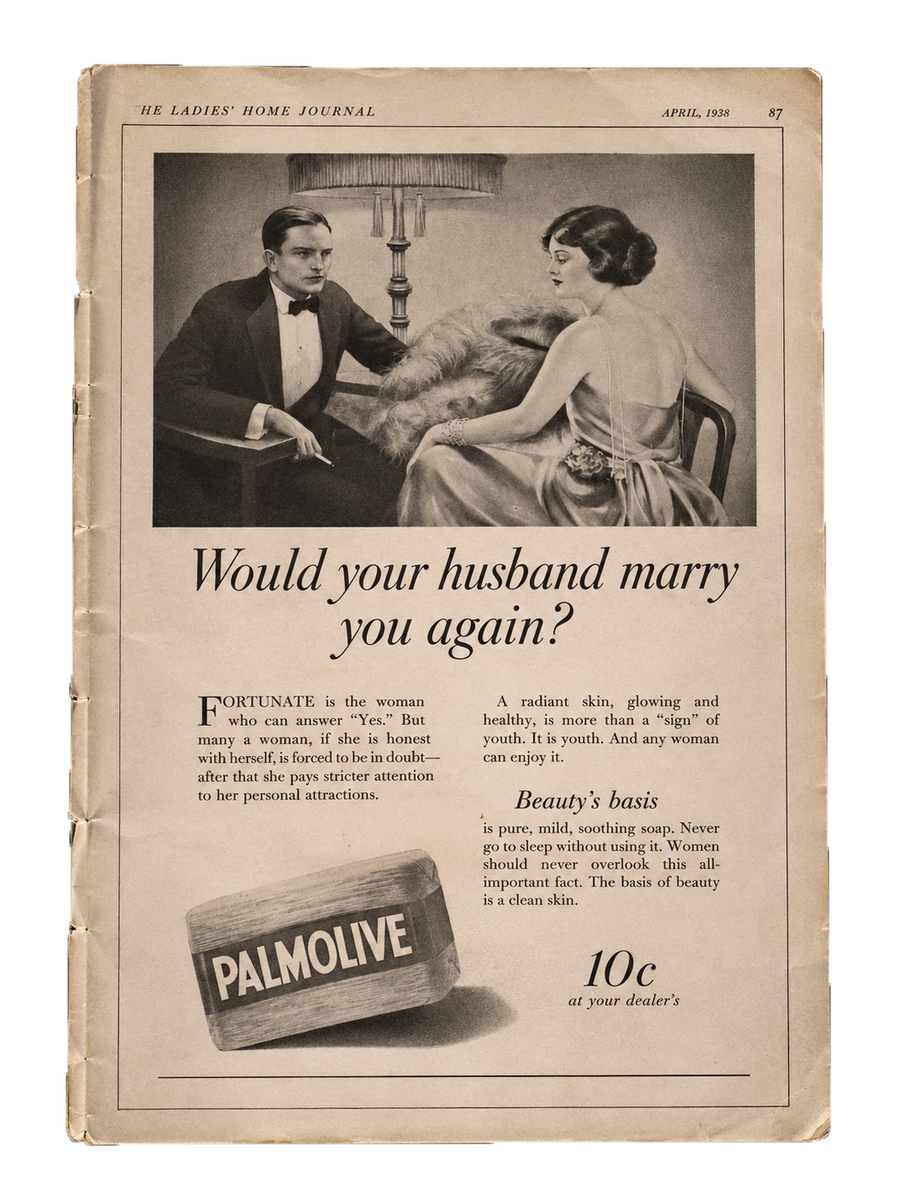
Palmolive Company. Would your husband marry you again? Palmolive soap advertisement. Harper’s Bazaar, 1921. Illustrator unknown. Free Re-Use and No Copyright — United States.
When love becomes a woman’s responsibility
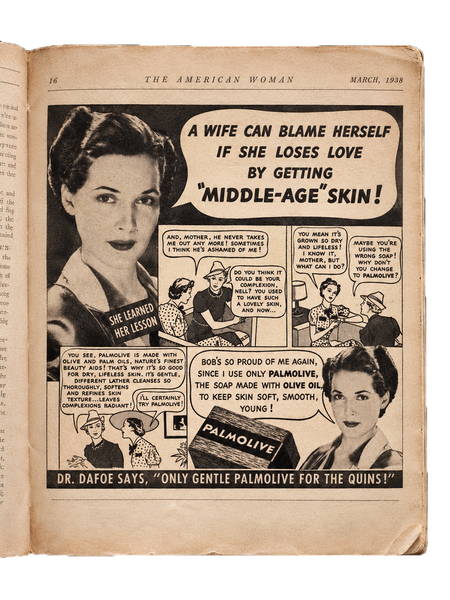
In 1938, Palmolive advertising directly asserted that a wife could blame herself for losing love if she allowed signs of skin aging to appear.
A commonplace cosmetic issue here takes on the weight of a marital threat. The advertisement suggests that the woman should not simply maintain her skin’s youth, but prevent the potential cooling of her husband. Thus, personal grooming becomes a condition for retaining his attention.
Palmolive Company. A Wife Can Blame Herself If She Loses Love By Getting «Middle-Age» Skin!. Palmolive soap advertisement. The New York Times, 1938. Illustrator not known.
Doubt as a Marketing Device