
Eros and Taboo: How the Ancient Greeks Portrayed Desire
A visual exploration of the images of love, power, and societal constraints in ancient Greek art.Primary period: 5th–3rd centuries BCE.
When we look at ancient Greek depictions of love, many details seem clear even without explanation. Winged Eros is associated with infatuation, Aphrodite with beauty, and the image of a bride with the beginning of a happy family life. However, upon closer examination, it becomes apparent that these images did not always carry such a singular meaning.
I was intrigued by the contradiction between desire as a divine force and desire as an experience that society sought to regulate. Why does Eros appear both next to the bride and in the scene of Persephone’s abduction? Can his presence be considered a symbol of love if the depicted action does not imply reciprocity? And how did artists convey feelings that cannot be seen directly?
In my research, I examine ancient Greek vase painting, sculpture, and jewelry, primarily from the 5th to 3rd centuries BCE. To understand the origin of mythical imagery, I also refer to earlier literary sources, beginning with the Archaic period.
In my work, I employ a comparative approach. First, I examine the image as a whole to capture the initial impression. Then, I isolate individual details and consult museum descriptions and ancient literary sources. Following that, I compare the pieces against each other to understand which visual characteristics recur and which ones change.
My hypothesis is that the meaning of Eros is determined not only by the mythological character himself but by the entire visual system of the work: gestures, poses, direction of movement, surrounding objects, and the image’s purpose. Therefore, the presence of Eros does not always signify mutual love.
It’s not just about assembling beautiful ancient images for me; I want to try to understand how they are constructed. I’m not setting out to determine what ancient Greeks truly felt in personal relationships. A work of art doesn’t allow for such a conclusion. But it does help explore conceptions of desire that existed within a specific culture.
Ultimately, I want to demonstrate that ancient Greek art did not present a single, universal image of love. Desire could be depicted as a component of marriage, as a yearning for beauty, as divine influence, or as a force that transgresses another person’s boundaries. It is this diversity of meaning that makes the image of Eros particularly compelling for visual inquiry.
We are accustomed to perceiving Eros as a symbol of love. However, in ancient Greek art, he appears in very diverse scenarios: from wedding preparations to mythological scenes involving abduction.
It turns out that the presence of the god of desire does not always signify mutual love.
This very contradiction became the starting point of my research.
How did ancient Greek artists depict desire through gesture, figure positioning, movement, and mythological characters?And why could the same image of Eros appear in scenes related to marriage as in narratives about the transgression of established boundaries?
I hypothesize that the meaning of Eros in ancient Greek art depended not only on the presence of the deity itself. The perception of the image was influenced by the arrangement of the figures, their gestures, movement, surrounding objects, and the work’s intended purpose. Therefore, the same image could acquire different meanings depending on the artistic context.
The goal of this research is to understand the visual techniques used to depict desire and how the meaning of these techniques changed across different narratives. To achieve this, I am selecting artworks, analyzing compositions, studying museum descriptions, cross-referencing images, and testing my hypothesis. Particular attention is paid to the differences between Attic and South Italian vase painting.
The subject of study is ancient Greek artwork from the 5th–3rd centuries BCE depicting Eros, Aphrodite, and mythological themes related to desire. The object of study is the visual methods used to convey desire: gestures, poses, distance between figures, direction of movement, symbolic objects, and compositional relationships.
Ancient Greece was not a unified state. Different poleis and regions possessed their own traditions, societal norms, and artistic workshops.
I examine Attica, Boeotia, and Southern Italy as the primary territories for visual comparison. Sparta, Corinth, and Lesbos are utilized primarily for historical and cultural context.
This division is necessary so as not to ascribe identical understandings of love to all ancient Greeks.
In Hesiod’s «Theogony,» Eros emerges among the primordial divine forces. This contrasts with the familiar image of a small, winged deity. In the early mythological text, desire is linked to the emergence and structure of the world. I find it interesting that Eros was not initially limited to romantic relationships between humans. Source: Hesiod, «Theogony,» lines 116–122.
In ancient art, emotions could be depicted as independent divine figures. Eros is one of the most recognizable examples. By presenting a human form, the artist could incorporate an invisible experience into a specific scene. However, his presence does not always fully explain the relationships between the characters. To understand the image, one must consider the entire composition.
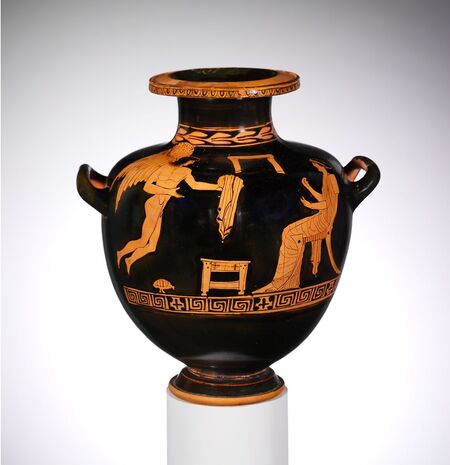
The wings immediately distinguish Eros from human characters. In vase painting, he can hover above or approach figures. Because of this, the artist conveys his presence without depicting typical human interaction.
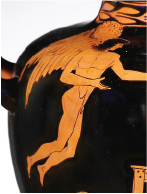
I view wings as a visual signifier of a divine character, allowing the scene to connect with the theme of desire.
In Attic depictions, Eros is often shown in flight. This creates a sense of motion even within a relatively calm composition. Interestingly, the surrounding figures may remain still while Eros moves toward one of the characters. As a result, the viewer’s attention is focused not only on the god himself but also on the person he is approaching.
In classical art, Eros often appears alongside Aphrodite. This pairing connects desire with beauty, allure, and the divine impact on human relationships. However, the presence of both characters does not mean that every scene is dedicated to romantic love. Their role must be determined by the surrounding figures, objects, and narrative.
In ancient Greek culture, there were various concepts related to desire. Eros denoted attraction, Himeros signified passionate longing, Thumos represented a yearning or melancholy for what is absent, and Pito related to conviction. In some works, these concepts were given human form. To me, this is an important example of how artists transformed complex experiences into recognizable figures.
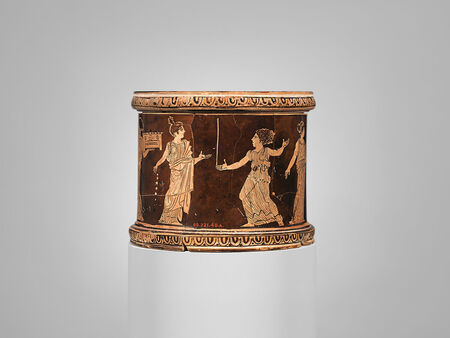
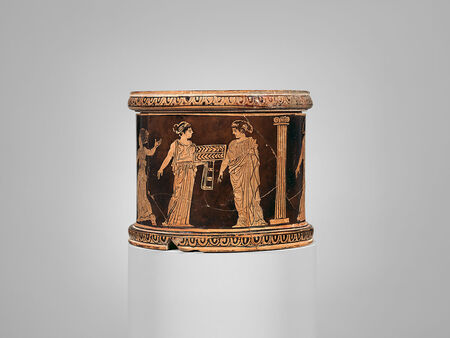
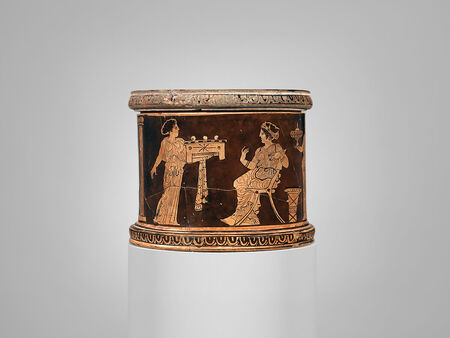
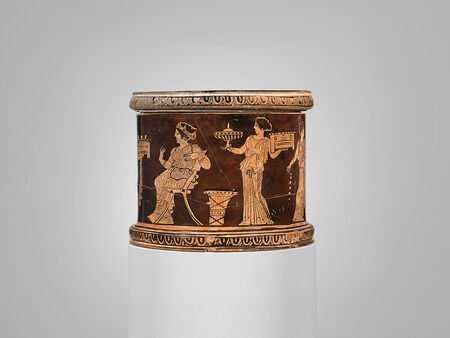
The seated central figure is the goddess Aphrodite, while the surrounding companions personify virtues and desires: Psyche (Persuasion), Hygieia (Health), Eudaimonia (Happiness/Well-being), Eukleia (Good Fame), Eunoia (Good Will), and Paidea (Play/Joy).
In classical art, Eros was often depicted as a winged youth. His figure could be slender and dynamic, and his movements light. This image differs from the modern portrayal of Cupid as a small child. In my opinion, this distinction is important: young Eros is perceived as an independent participant in the action, not merely a decorative character.
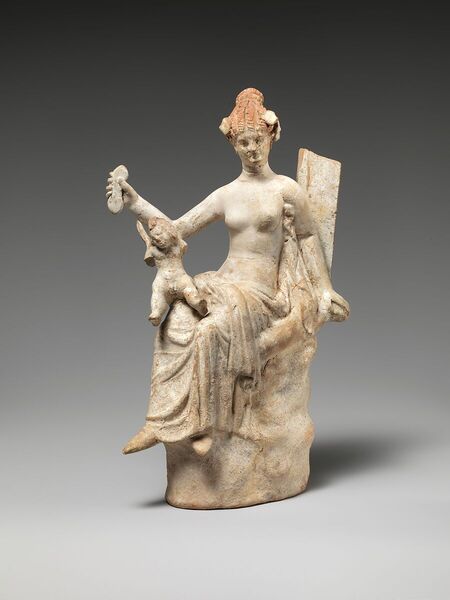
In later Greek art, childlike depictions of Eros become popular. They may appear playful and outwardly harmless. However, a change in appearance does not mean that desire ceases to be a powerful and sometimes dangerous experience. This creates an interesting contradiction between the deity’s appearance and the influence attributed to it in myths.
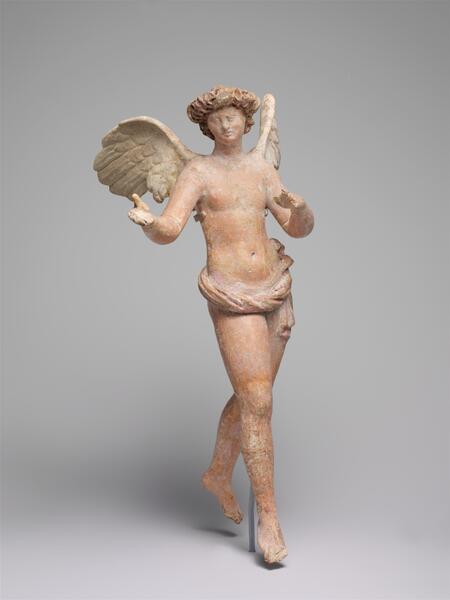
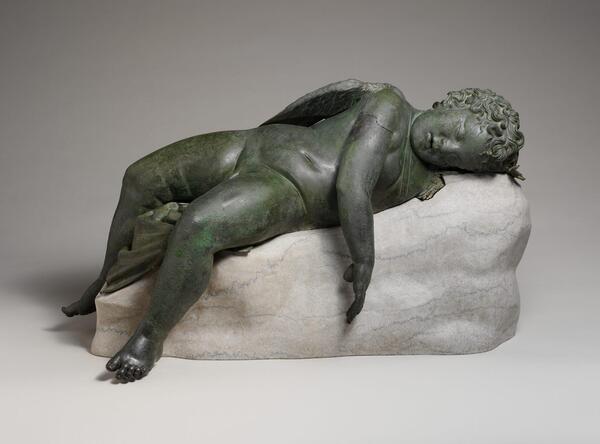
Comparing images of Eros across different periods reveals changes in body proportions, character age, and compositional style. However, the wings and connection to desire remain consistent. This indicates that the mythological character could be recognizable even amidst significant changes in physical appearance.
Eros did not possess one unchanging artistic depiction. In different periods, he could be portrayed as a youth or a child, accompanying Aphrodite or appearing on his own. However, his presence always demanded attention to the surrounding narrative. The first conclusion: the image of Eros points to the theme of desire, but in itself, it does not reveal the nature of the relationship between the characters.