Navigation Menu
chapters sections and other
Concept
Green—a color paradox that unites incompatible symbolic concepts: vitality and toxicity.
Green is truly dualistic. It is the color of fresh vegetables and spoiled meat. Perhaps this duality dates back to ancient times, when green signified both sustenance and danger to humankind.
Patty notes that the connection to the plant world associates green with the color of life and flourishing, which stands out especially against the backdrop of stillness, death, and loss. Conversely, green also appears in the forms of dragons, monsters, and demons, marking poisonous substances and corrupt society, and acts as an ominous symbol of death and decay.In essence, green can have diametrically opposing effects on the viewer: positive in one context, it instantly becomes frightening and dangerous if it colors liquids, surfaces, or beings that nature dictates should not be that hue. In such instances, the color signals to the viewer that the natural order has been disrupted—that something is amiss.
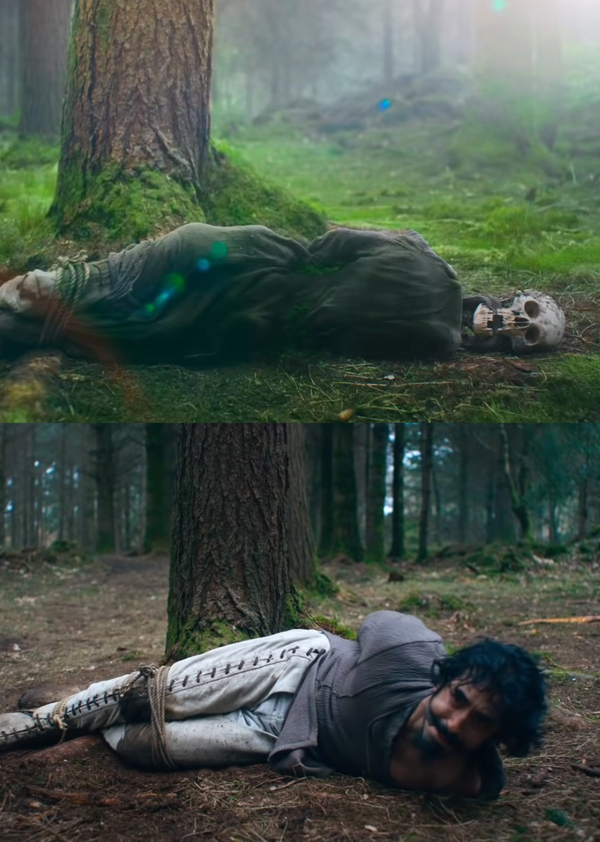
For my research, I selected «The Legend of the Green Knight, ” in which this ambivalence is utilized to its fullest extent: not only is green an important characteristic of the appearance of Irish mythological figures (specify which ones?), but it is also interesting that the color is used in both of its meanings—as a symbol of life and as a symbol of death—around which the plot of the legend and the film based on it are constructed (I am unsure if the legend has been adapted; this needs verification?).
Sources
The Color Green in D. Lowry’s Film «The Green Knight,» Presented by Aleksandra Vyacheslavovna Ulanova, a 2nd Year Master’s Student at St. Petersburg State University, at the 27th Open Conference for Philology Students https://www.conference-spbu.ru/en/conference/54/reports/20951/
ooo
ooo