
introduction
Crumbl is an American bakery chain founded in 2017 in Utah by two cousins, Sawyer Hemsley and Jason McGowan. They had no baking experience: they bought equipment, rented a space, and only then came up with the recipe for their world-famous chocolate chip cookie.
In 2020, there were 100 locations, and by the summer of 2022, there were already more than 400. Today, there are over 862 locations in the US and Canada.

Sawyer Hemsley and Jason McGowan, Ohio University on LinkedIn, 2022
The brand does not just sell baked goods. It sells scarcity, anticipation, and a sense of belonging to something limited and therefore valuable. The rotation system was introduced in the summer of 2018. Every week, Crumbl sells 8 types of cookies, after which the menu is completely renewed. Flavors may repeat, but no one knows when exactly a favorite will return to the shelves. For example, the «Churro» flavor was absent from sale for over a year — from December 18, 2021, to February 4, 2023. And some flavors appeared only once, like «Chocolate Swiss Roll» in November 2023.
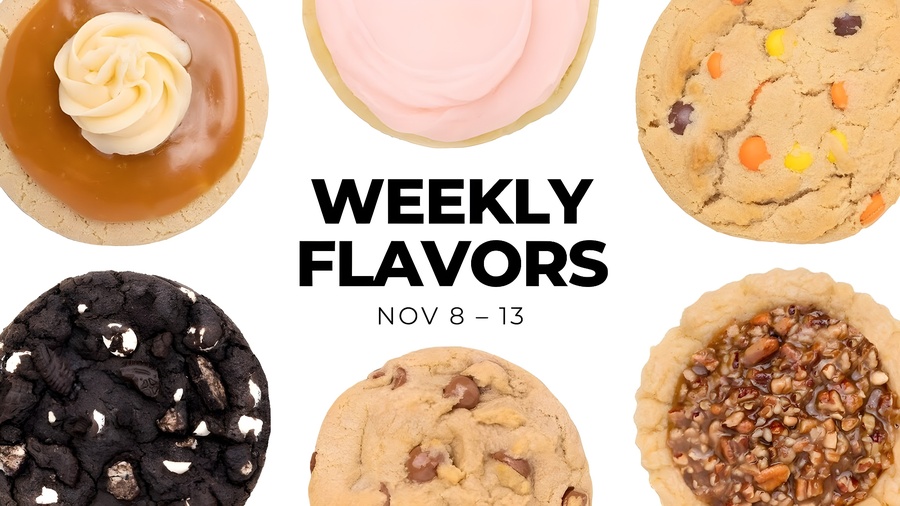
Pecan Pie, Dulce de Leche, Chocolate Cookies & Cream, & More! | Crumbl Weekly Flavors Nov 8 — 13
Crumbl’s audience is young people and adults, Generation Z and Millennials, active users of TikTok and Instagram*. They value visual aesthetics, follow trends, and are susceptible to the fear of missing out. For them, the weekly rotation becomes not just a marketing tactic but an emotional swing on which engagement rests. Artificial uncertainty creates ideal conditions for FOMO (Fear Of Missing Out). The customer does not know whether their favorite cookie will return and is forced to constantly check Crumbl’s official pages so as not to miss the moment.
*belongs to Meta, recognized as an extremist organization, the activities of which are banned on the territory of the Russian Federation
communication channels

Crumbl, 2026
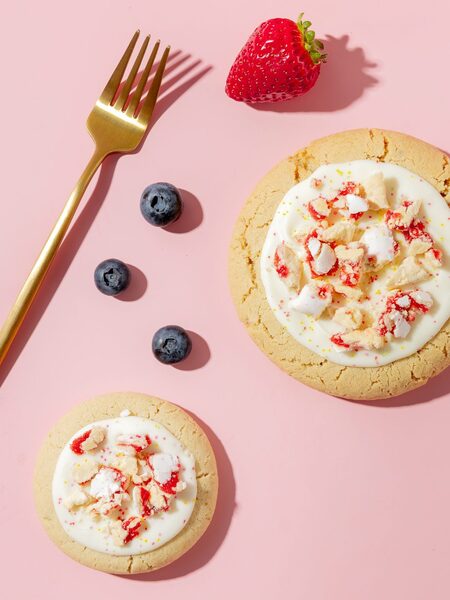
Crumbl builds its communication around one main principle: create hype and not let it fade. The main channels are TikTok with 10.8 million followers and *Instagram with 6.3 million followers. TikTok features announcements of new rotations, viral videos, and reactions to trends. Instagram serves as a visual showcase with aesthetic photos of cookies and stories about new flavors.
Crumbl’s main PR tool is a symbiosis with bloggers. The hashtag #CrumblReview has gathered over 128 thousand videos on TikTok. Every week, bloggers film reviews of the current rotation, rating each flavor from 1 to 10. For many bloggers, this has become a weekly ritual that their subscribers look forward to. Crumbl’s official account actively comments on these reviews, shares their content, and draws attention to them. Bloggers gain reach, and the brand gets free and regular advertising.
*belongs to Meta, recognized as an extremist organization, the activities of which are banned on the territory of the Russian Federation
How A Mediocre Cooke Crumbl’d The Competition, 2024
Crumbl, 2025
Why is this beneficial for bloggers? Crumbl is «Instagram food»: bright, ornate, unusual. It catches attention in the feed. The review format fits well into a regular column, and the topic of food consistently garners millions of views. The hashtag #foodtok has over 8.5 million posts.
Other PR tools include collaborations with celebrities. For example, a limited-edition flavor with Olivia Rodrigo in August 2024. This creates an exclusivity effect that may never be repeated.
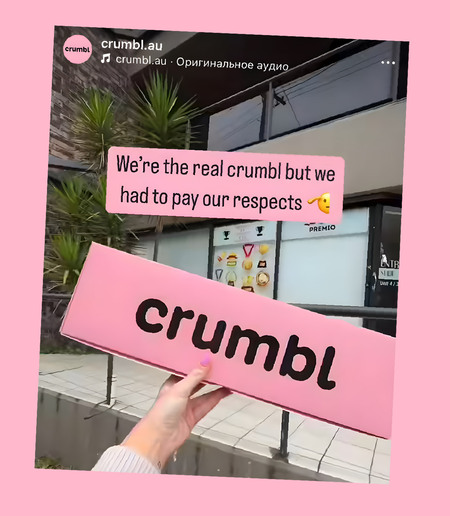
Crumbl also knows how to use even negative news stories. In September 2024, a fraudulent TikTok account announced a one-day pop-up sale at a fake Crumbl location in Australia. Hundreds of people showed up and paid $17.50 per cookie — four times the original price — only to receive low-quality products. Instead of warning fans about the fraud, Crumbl used the situation as a marketing opportunity. When the brand later announced its official expansion into Australia, it posted a video paying «tribute» to the scam site by leaving a branded box at the exact location, turning a scandal into free publicity for its market entry.
But the company does not always manage to maintain a positive image. In 2022, a state investigation revealed that some Crumbl franchises had violated child labor laws, allowing minors to work longer hours than legally permitted, resulting in a $60.000 fine. Additionally, customers have repeatedly criticized the brand for misleading nutritional labeling, as Crumbl displays calorie counts for only a quarter of a cookie rather than the full product, meaning a single cookie can contain upwards of 740 calories while being marketed as a 120-calorie treat.
lens 1: the audience is active. uses and gratifications theory
Uses and Gratifications Theory, developed by Blumler and McQuail, states that the audience does not passively consume information but actively chooses media to satisfy their needs. Crumbl has become an ideal provider of such content.
Crumbl, 2025

Need for entertainment The weekly rotation is perceived as a new episode of a favorite TV series. Subscribers eagerly await Monday to find out which flavors have appeared this week. Bloggers who film reviews under the hashtag #CrumblReview turn the process of rating cookies into a ritual.
Need for social interaction FOMO simultaneously creates a fear of missing out on a flavor and a fear of being left out of the conversation. If a cookie turns out to be a failure or, conversely, brilliant, the user wants to be in the know to participate in the discussion. Comments, exchanges of opinions, and comparisons of ratings — all of this creates a sense of belonging to a community.
Need for personal identity By rating cookies on a scale of 1 to 10, the viewer involuntarily compares their tastes with the opinions of the blogger and other subscribers. Their own position is formed: «I like sweets more than this blogger», «this cookie is overrated», «this flavor is very good». As a result, content consumption becomes a form of self-expression.
Thus, the audience actively chooses Crumbl and the bloggers who review it to satisfy their needs for excitement, belonging to a community, and regular entertainment.
lens 2: selective exposure as a way to reduce cognitive dissonance
Leon Festinger’s theory of cognitive dissonance explains that people strive for consistency in their thoughts and actions. When a contradiction arises between two cognitions, a person experiences psychological discomfort and seeks a way to reduce it. According to the Wiley Encyclopedia of Personality and Individual Differences, FOMO can be considered a cognitive dissonance. When a buyer consciously refuses to buy a cookie, they may experience discomfort due to the fear of missing out on a unique flavor.
Crumbl, 2024
The brand deliberately puts the buyer in a position of choice: «This cookie might disappear forever. If you don’t try it now, you’ll miss a unique opportunity.»

Changing behavior and buying the cookie is the easiest way to relieve anxiety. Most people choose this option. At the same time, if the current flavors do not meet the customer’s expectations, there is a risk of experiencing strong post-purchase dissonance.
It is also possible to rationalize the refusal: «I’m on a diet», «I don’t like chocolate,» and «next week’s flavors will be better.» This is what those who do not fall for the marketing do.
The role of rare returns amplifies the effect. When a favorite flavor returns after a long absence, like «Churro» after a year-long hiatus, dissonance reaches its peak. The past experience of «I didn’t buy it then and I regretted it» clashes with the current opportunity. This almost guarantees a purchase.
conclusions and recommendations
What works Crumbl effectively satisfies the audience’s needs for entertainment and social interaction, creating a stable ecosystem of bloggers and fans. The brand masterfully uses the mechanism of cognitive dissonance through FOMO, rotation, and scarcity to stimulate impulse purchases.
What doesn’t work Crumbl’s strategy may create a certain sense of belonging for its audience, but it does not build genuine relationships with the audience, instead manipulating their fears. The company faces criticism regarding calorie content and working conditions, leading to scandals.
Crumbl, 2025
How Crumbl can improve its communication strategy?
Reduce post-purchase dissonance After a purchase, offer a small discount on the next visit. Even if the customer didn’t particularly like the flavors that week, this will reassure them that they made the right choice and reduce the risk of regret, because next time there might be something better.
Show empathy in crisis situations Instead of capitalizing on the scandal, as with the Australian scam, the brand should have warned fans about the fraudsters. This would have strengthened its reputation. In general, when a brand communicates so intensively with its audience, it makes sense to build trusting relationships, for example, following the principles of dialogic theory.
Thus, FOMO is a key and, so far, reliable tool for Crumbl. But in the long term, a strategy built solely on anxiety and manipulation risks facing audience fatigue and a crisis of trust. And even the most beautiful cookies won’t fix that.
Crumbl, 2023
Uses and Gratifications Theory [Electronic resource]: Lecture 5.7 / Communication Theory: Bridging Academia and Practice. — Access mode: [https://edu.hse.ru/course/view.php?id=133853] (accessed: 06/08/2026).
Cognitive Dissonance Theory [Electronic resource]: lecture 5.6 / Communication Theory: Bridging Academia and Practice. — Access mode: [https://edu.hse.ru/course/view.php?id=133853] (accessed: 06/08/2026).
Crumbl Cookies // Wikipedia. (accessed: 06/08/2026).
Gupta A. Crumbl Cookies Net Worth 2024 | Decoding Success! // DrFranchises [Electronic resource]. URL: https://drfranchises.com/2023/08/21/crumbl-cookies-net-worth/ (accessed: 06/08/2026).
James C. Signs Crumbl Cookies Won’t Be Around Much Longer // Mashed [Electronic resource]. URL: https://www.mashed.com/1624109/signs-crumbl-cookies-wont-be-around-much-longer/ (accessed: 06/08/2026).
owner-admin Crumbl Cookies — история компании, которая создала вирусный бренд печенья // Owner — Сообщество бизнеса | Клуб бизнеса | Нетворкинги | Платформа для бизнеса | Бизнес-завтраки | Бизнес-форумы [Electronic resource]. URL: https://owner.by/crumbl-cookies-istoriya-kompanii-kotoraya-sozdala-virusnyj-brend-pechenya/ (accessed: 06/08/2026).
Shustack C. Crumbl Cookies May Have Violated Child Labor Laws // The Daily Meal [Electronic resource]. URL: https://www.thedailymeal.com/1146665/crumbl-cookies-may-have-violated-child-labor-laws/ (accessed: 06/08/2026).
Crumbl Cookies Franchise Cost, Fees & Earning Stats [2024] [Electronic resource]. URL: https://wolfoffranchises.com/crumbl-cookies-franchise/ (accessed: 06/08/2026).
Crumbl Cookies Marketing Strategy 2024: A Case Study — Latterly.org [Electronic resource]. URL: https://www.latterly.org/crumbl-cookies-marketing-strategy/ (accessed: 06/08/2026).
(20) CRUMBL COOKIE Review By Lana Rae…🍪😋 — YouTube [Electronic resource]. URL: https://www.youtube.com/ (accessed: 06/08/2026).
Crumbl Cookies: Revenue, Competitors, Alternatives [Electronic resource]. URL: https://growjo.com/company/Crumbl_Cookies#revenue-financials (accessed: 06/08/2026).
Crumbl — Freshly Baked & Delivered Desserts [Electronic resource]. URL: https://crumblcookies.com (accessed: 06/08/2026).
#crumblreview // TikTok [Electronic resource]. URL: https://www.tiktok.com/tag/crumblreview?ysclid=m3nkpmqqc679505068 (accessed: 06/08/2026).
Neumann D. Fear of Missing Out (FOMO) [Electronic resource] / D. Neumann // The Wiley Encyclopedia of Personality and Individual Differences: in 4 vol. / ed. by B. J. Carducci, C. S. Nave, A. Di Fabio [et al.]. — Hoboken: Wiley-Blackwell, 2020. — Vol. 3: Personality Processes and Individuals Differences. — P. 169–174. — Access mode: https://onlinelibrary.wiley.com/doi/10.1002/9781119547174 (accessed: 06/08/2026). — DOI: 10.1002/9781119547174.