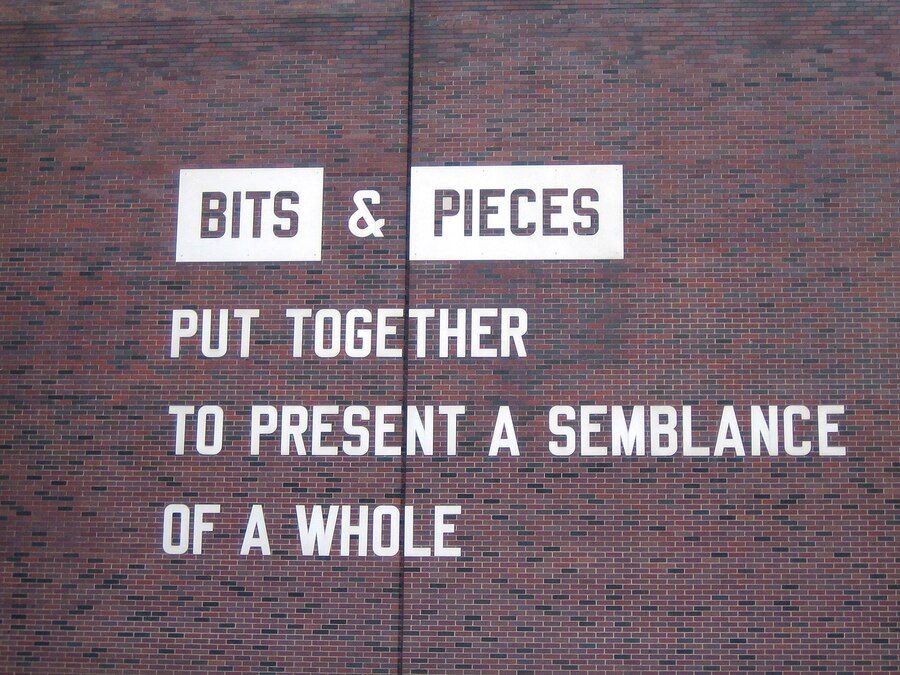
«Bits & Pieces Put Together to Present a Semblance of a Whole», Lawrence Weiner, 1991
Conceptual art emerged in the mid‑1960s as a radical break from formalist orthodoxy. While minimalism reduced sculpture to geometric objects and abstract expressionism celebrated emotional gesture, conceptualism declared that the physical object is not the final purpose of art at all. The idea, the concept, the proposition — these become the artwork itself, while any material manifestation remains secondary and provisional. Borrowing from analytic philosophy, especially Ludwig Wittgenstein, conceptual artists treated art as a tautology: a work of art is art simply because the artist says it is. Sol LeWitt, who coined the term, described the idea as a machine that makes the art, with execution being merely a perfunctory affair. The movement rejected traditional craft, beauty, and the very notion that art must produce a unique physical object. A conceptual work can be a written instruction, a photograph, a dictionary definition, a conversation, or even a thought that never leaves the artist’s mind.
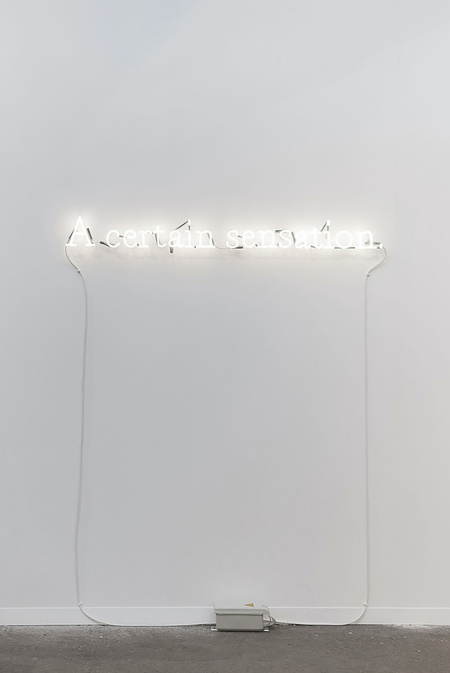
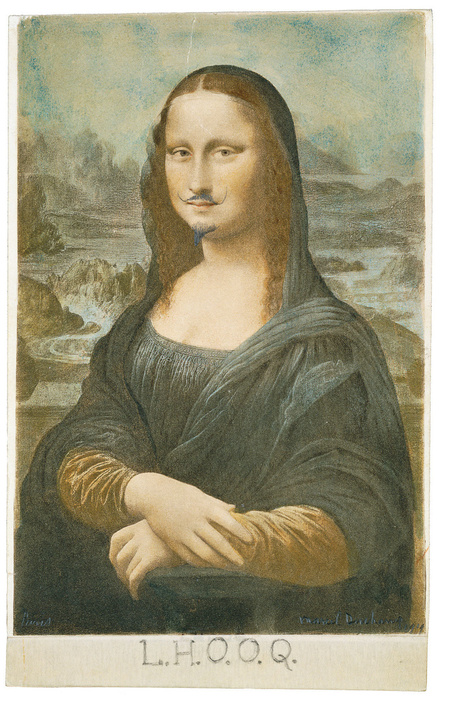
Joseph Kosuth, Private Language I (P.I)’ [White], 1991 / Henri Robert Marcel Duchamp, L.H.O.O.Q, 1919
Among the most emblematic works of this tendency are Joseph Kosuth’s One and Three Chairs (1965), which juxtaposes a wooden chair, its photograph, and a dictionary definition of the word «chair», thereby transforming the gallery into a laboratory of linguistic enquiry.
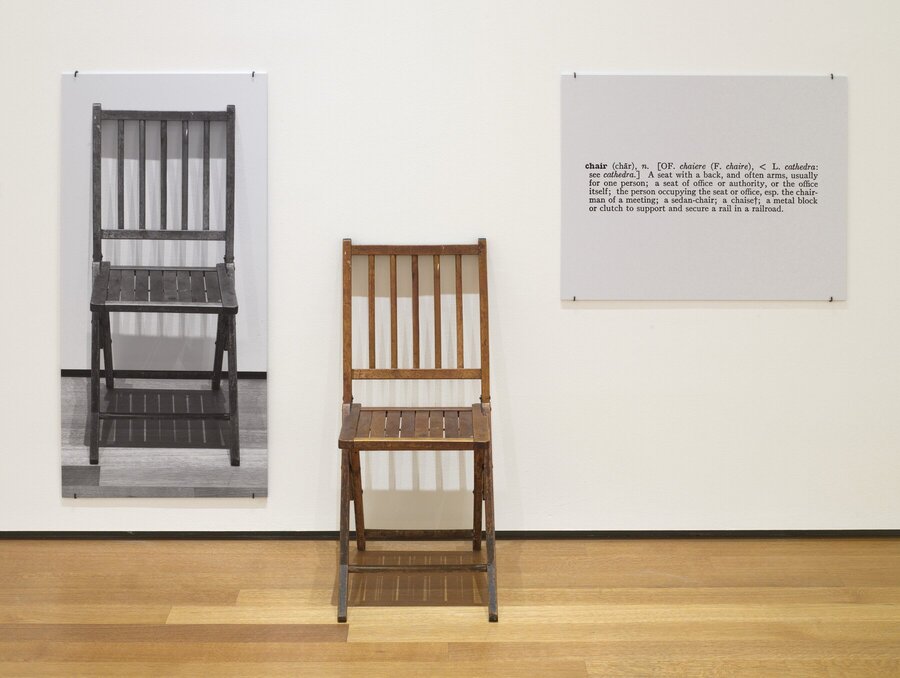
«One and Three Chairs», Joseph Kosuth, 1965
Sol LeWitt’s Wall Drawing #16 (1969) consists of nothing but a set of written instructions for drawing bands of lines on a wall; the work can be executed by anyone, anywhere, and its physical appearance changes each time while the idea remains intact.
«Wall Drawing #16», Sol LeWitt, 1969
Art & Language’s Index 01 (1972) goes even further: a simple filing cabinet filled with photocopied texts, diagrams, and notes, it abandons painting and sculpture altogether in favour of pure theoretical conversation.
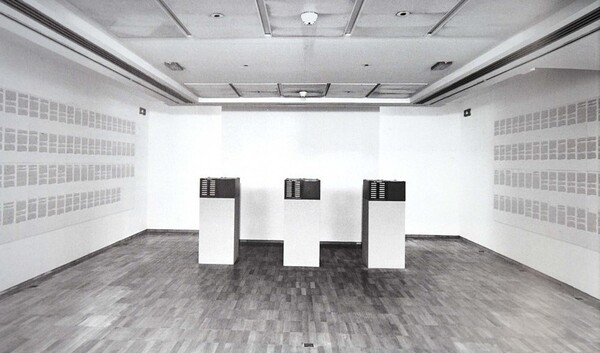
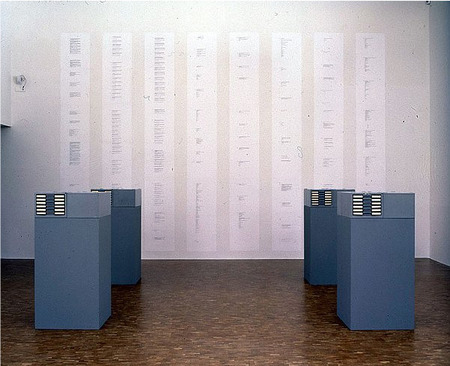
«Index 001», John Hill, 1972
The main artists
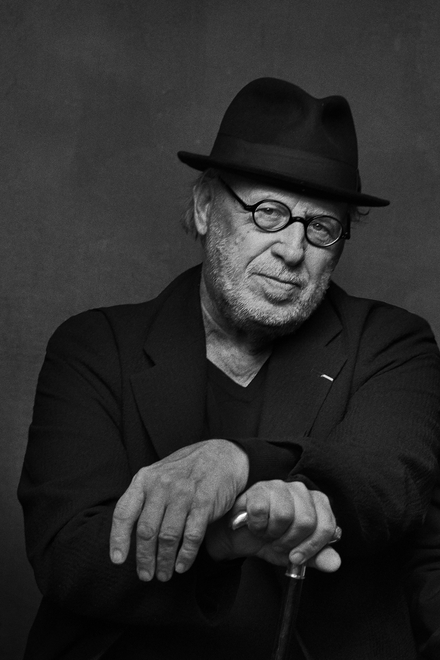
Joseph Kosuth (b. 1945) argued that art after Duchamp must become an analytic proposition. His works often feature dictionary entries, neon signs, or tautologies such as «art is art».
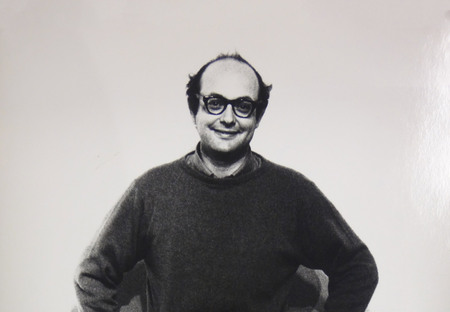
Sol LeWitt (1928–2007) developed hundreds of wall drawings based on impersonal instructions, deliberately avoiding expressive gesture.
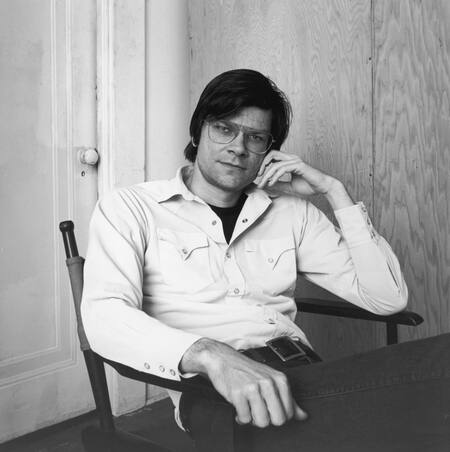
Robert Smithson (1938–1973), best known for Spiral Jetty, introduced concepts of entropy and non‑site, treating both language and raw matter as geological sediments.
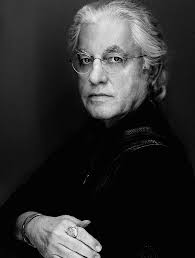
Germano Celant (b. 1940) coined Arte Povera, celebrating humble materials like earth and rags to dismantle commercial art.
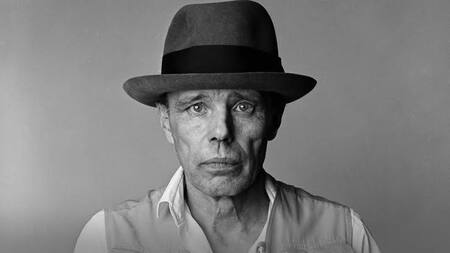
Joseph Beuys (1921–1986) expanded conceptualism into social sculpture, declaring that every human being is an artist.
Theoretics
Beyond the artist-writers, several critics and philosophers shaped our understanding of Conceptual Art. Lucy R. Lippard, in her seminal anthology Six Years: The Dematerialization of the Art Object (1973), coined the term «dematerialization» to describe the movement’s shift from physical objects to language and ideas. Her work remains the essential documentary history. Benjamin H. D. Buchloh offered a different lens in his essay Conceptual Art 1962–1969: From the Aesthetic of Administration to the Critique of Institutions (1990), arguing that Conceptual Art replaced visual aesthetics with legal and institutional definitions, turning art into a set of administrative procedures. Finally, the philosopher Peter Osborne, in Conceptual Art (2002) and later writings, claimed that after the 1960s all significant contemporary art is inherently post‑conceptual, meaning the movement’s legacy has become the universal condition of art itself.
Three major forces shaped conceptual art.
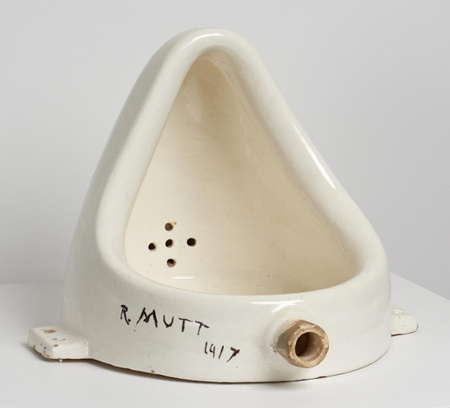
Marcel Duchamp’s readymades, especially Fountain (1917), first demonstrated that choosing an object and declaring it art makes the concept sovereign. Ludwig Wittgenstein’s linguistic philosophy shifted attention from things to the use of words, providing a model for treating art as a logical proposition. Minimalism, practiced by Donald Judd and Robert Morris, offered a language of serial, anti‑expressive forms that conceptualism then dematerialised into pure instructions.
Conceptual art’s legacy
Institutional critique (Hans Haacke, Daniel Buren) inherited its suspicion of museums, turning analysis of art’s conditions into the work itself. Postmodern theories of authorship, from Michel Foucault to Rosalind Krauss, were shaped by conceptualist practices that erased the artist’s hand. Digital and net.art extended dematerialisation into the screen. And social practice, including relational aesthetics, owes a clear debt to Beuys’s proclamation that everyone is an artist.
Art in Theory 1900–1990: An Anthology of Changing Ideas / ed. by C. Harrison, P. Wood. — Oxford: Blackwell, 1992. — 1112 p.
Lucy R. Lippard Six Years: The Dematerialization of the Art Object from 1966 to 1972. — Berkeley, Los Angeles, London: University of California Press, 1973. — 272 p.
Benjamin H. D. Buchloh, Conceptual Art 1962–1969: From the Aesthetic of Administration to the Critique of Institutions, 1990.