

Rubricator
- Introduction
- Communication Channels
- Theoretical Framework
- Analysis 4.1 Dialogic Theory in Action 4.2 Uses and Gratifications Theory
- Conclusion and Recommendations
- References
- List of literature
- Sources of images
1. Introduction
For this project, our team chose the Russian bookstore chain «Bukvoed», which is also spelled «Bookvoed». The brand was founded in 2000 in Saint Petersburg and has grown into one of the largest book retailers in Northwestern Russia, currently operating 136 stores according to Wikipedia. Unlike purely online retailers or cold, massive book supermarkets, «Bukvoed» positions itself as a cultural space rather than just a place to buy books. The brand’s core positioning revolves around being a local intellectual hub with a touch of St. Petersburg irony.



The target audience is broad, ranging from schoolchildren buying stationery to adults seeking literature or attending free events. However, the brand’s communication is heavily focused on urban, culturally active residents aged twenty to forty-five who value live events, book clubs, and a sense of community. In this analysis, we will explore how «Bukvoed» builds its communication using two specific theories from our course, which are Dialogic Theory and Uses and Gratifications Theory.
2. Communication Channels
«Bukvoed» uses a classic mix of online and offline channels. First, the official website at bookvoed.ru serves as a functional e‑commerce platform and a hub for their Reader’s Challenge, which is a yearly reading tracker. Second, regarding social media, «VK» which is «Vkontakte» is their primary platform where they post book recommendations, event announcements, and memes related to reading culture, and they also engage with comments actively. Third, offline events are their most distinctive channel because the flagship store on Nevsky Prospect hosts free lectures, open mic nights, and meetings with authors, and they also run a unique inclusive book club for hearing‑impaired children and adults which was created together with the St. Petersburg Society of the Deaf. Fourth, they use email newsletters for promotions, new arrivals, event reminders. Fifth, regarding PR and partnerships, in 2025 they announced writer Alexander Tsypkin as their ambassador with the tagline «Blame Bukvoed for my books» according to Wikipedia, and they also installed a monument to a smelt fish in their courtyard, which is a typical example of playful city PR.
3. Theoretical Framework
To analyse Bukvoed’s communication, our team applies two theories from our course. The first is Dialogic Theory by Kent and Taylor from 1998. This theory argues that effective public relations is based on dialogue rather than monologue, and it includes principles such as generation of return visits, usefulness of information, generation of return visits, ease of interface, conservation of visitors, and the dialogic loop which means the ability to actually respond. «Bukvoed» is a perfect case for this theory because they actively try to talk with their audience instead of just talking at them, and their live events, comment replies, and book clubs create actual conversations.
The second theory is the Uses and Gratifications Theory by Katz, Blumler and Gurevitch from 1973. This theory shifts the focus from what media do to people to what people do with media. It assumes that audiences are active and choose media to satisfy four specific needs, which are information, personal identity, integration and social interaction, and entertainment. We will use this theory to understand why people engage with Bukvoed’s content, because they are not just looking for discounts but are instead looking for cultural identity, a sense of achievement and community, for example through the Reader’s Challenge.
4.1 Analysis. Dialogic Theory in Action
The first example from Dialogic Theory is the inclusive book club for the deaf and hard‑of‑hearing. «Bukvoed» did not simply put up a sign saying «we are inclusive». Instead, they partnered with a specialized non‑governmental organization and created a recurring, accessible physical space where participants can comfortably communicate in Russian Sign Language. From a theoretical standpoint, this represents a high level of the dialogic loop, which is the fifth principle. The brand listens to a marginalized audience, adapts its communication by using sign language, and creates a genuine two‑way exchange. It also follows the principle of conservation of visitors, meaning that people return because they feel heard.
The second example is the smelt fish monument. This monument to a local fish wearing a top hat is absurd, local, and extremely St. Petersburg in its sense of humor. The monument is located in the courtyard of the «Bukvoed» store on Nevsky Prospect. From a theoretical perspective, this exemplifies the principle of usefulness of information combined with generation of return visits. The monument is not a sales advertisement at all. It is a cultural joke that creates a reason for people to visit the store, take a photo, and post it online. The monument acts as a physical dialogic invitation that makes people want to come back.
4.2 Analysis. Uses and Gratifications Theory
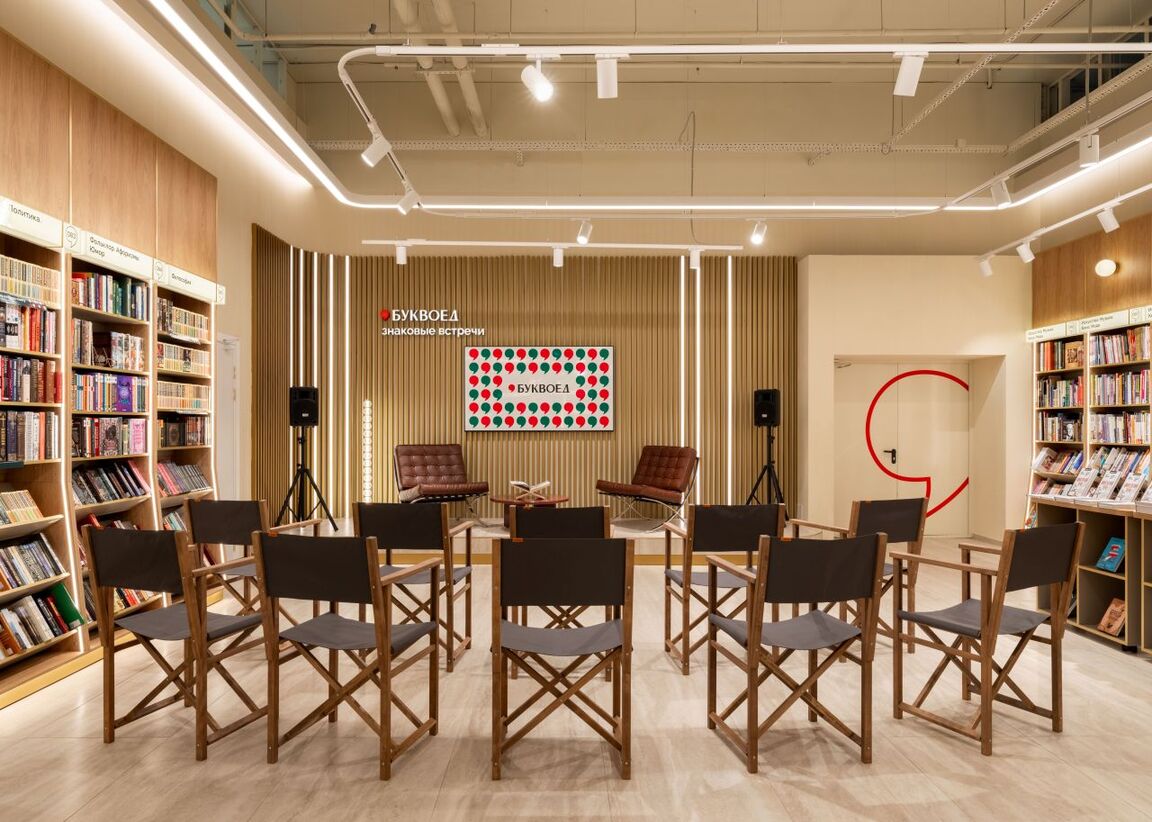



Now let us see what needs «Bukvoed» fulfills according to the Uses and Gratifications Theory. Regarding the need for information, «Bukvoed» satisfies this through book recommendations and news about literary events, as seen in their «VK» feed with daily posts about new releases. Regarding personal identity, the Reader’s Challenge allows users to set a goal such as «read thirty books» and see their progress throughout the year, which reinforces their self‑image as a real reader. Regarding social integration, the free lectures, inclusive book club, and open mic nights all serve this need. The Cultural Environment project has existed since 2005 with seating for up to one hundred twenty people, and the inclusive book club specifically helps hearing‑impaired people feel part of a larger literary family. Regarding entertainment, «Bukvoed» uses quirky PR campaigns and memes. Their slogan «Blame Bukvoed for my books» is humorous and highly shareable, which makes it effective entertainment content.
The key finding here is that Bukvoed understands that buying a book can be purely transactional, which would only satisfy the information need. However, they invest heavily in social and entertainment gratifications, and this investment is what creates loyalty. A person might come to the store for a textbook, but stay because of the book club, which promotes social integration, and later take a photo with a smelt monument, which serves as entertainment.
5. Conclusion and Recommendations
In conclusion, «Bukvoed» is not simply selling paper and ink. They are selling belonging to a cultural tribe of St. Petersburg readers. Their communication is effective for two main reasons. Firstly, it is genuinely dialogic because they respond to their audience and create physical spaces for interaction.
Secondly, it satisfies higher‑order needs from the Uses and Gratifications Theory, specifically social integration and personal identity. The brand’s biggest asset is its offline presence used as a public relations tool rather than just a sales floor.




Our team has recommendations for improvement. Firstly, regarding the online feedback loop, on their website the Reader’s Challenge is a great feature, but there is no community leaderboard or discussion forum. We recommend adding a simple comment section under each user’s challenge page so that people can encourage each other, which would increase social integration. Secondly, we recommend launching a user‑generated content campaign using a hashtag like #mybukvoed where people post photos of themselves reading in unusual places in St. Petersburg. The best photos could win a gift card, and this would give the audience more active participation, strengthening the dialogic loop, while also providing the brand with free visual content.