Table of Contents
- Concept
- Space
- Material
- Composition
- Perception
- Comparison
- Conclusion
[01] Concept
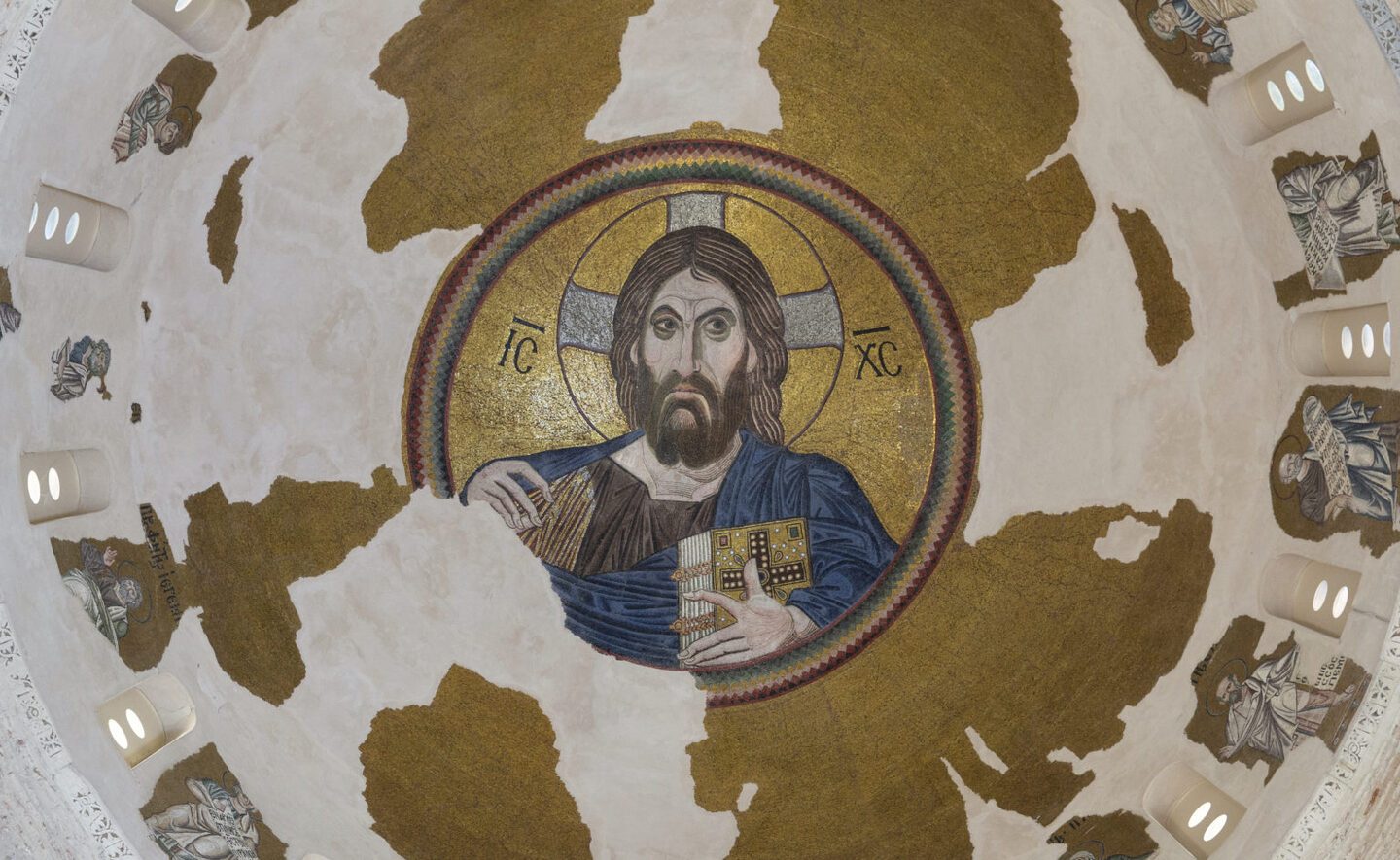
The Byzantine church was not merely an architectural structure adorned with images. Its interior functioned as a deliberate visual system, in which every depiction was assigned a specific place according to its religious significance. The dome, walls, pendentives, and apse became distinct levels within a symbolic world. The gold background, the scale of the figures, the light, and the placement height of the images helped create a sense of space separate from everyday reality.
The golden mosaic was more than just a decorative material. It functioned as a tool for visual communication: it guided the viewer’s gaze, established an hierarchy of images, and shaped the sense of presence within the sacred space.
Mosaics and Microcosm: The Monasteries of Hosios Loukas, Nea Moni, and Dafni — https://smarthistory.org/mosaics-and-microcosm/?utm_source=chatgpt.com
Mosaic of Christ Pantocrator, dome, Daphni Monastery, Chaidari — https://smarthistory.org/wp-content/uploads/2022/03/796A9677-copy-1536x944.jpg