This project is a student project at the School of Design or a research project at the School of Design. This project is not commercial and serves educational purposes

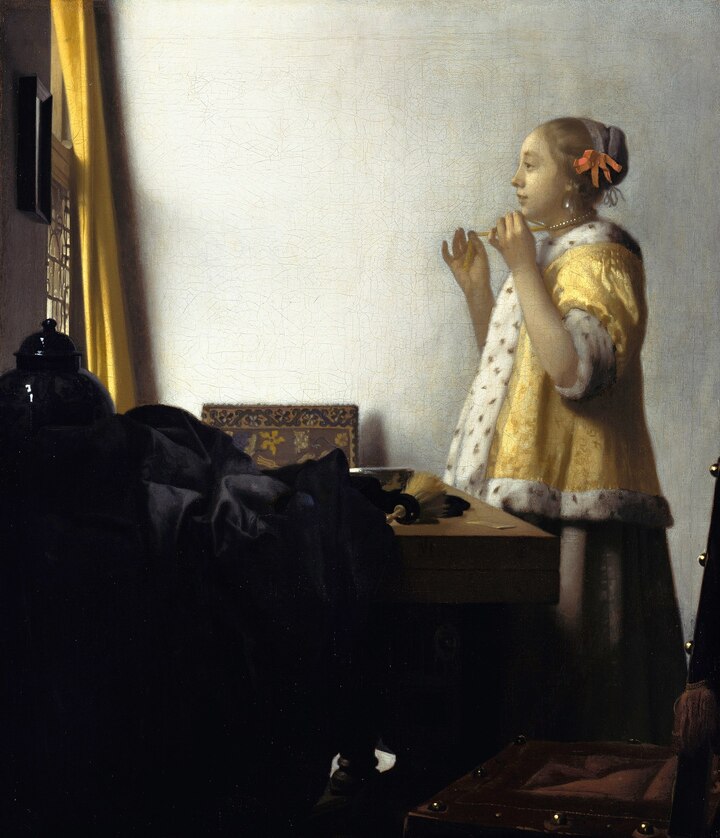
This book explores why Vermeer, who painted scenes seemingly far removed from our modern experience, remains so popular today. His work intrigues, captivates, and inspires. His technical, compositional, and conceptual innovations continue to resonate within the logic of contemporary art.
Original size 1600x625

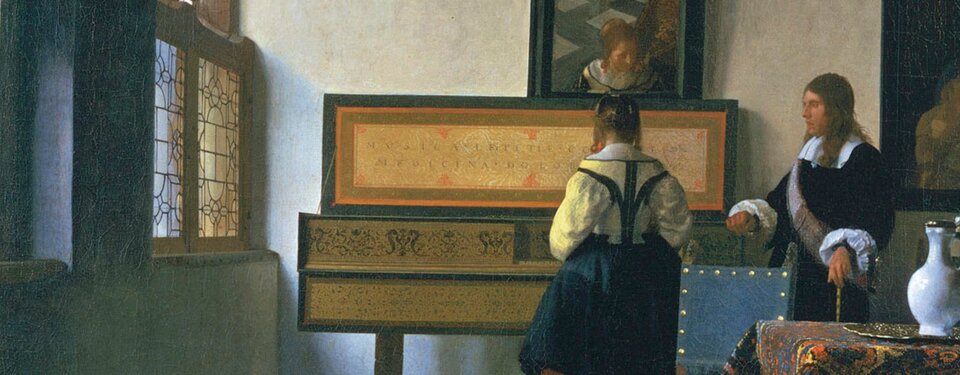
Jan Vermeer lived for 43 years and left behind only about 30 small paintings. These are not epic battle scenes; they do not depict famous people or momentous events. There is no Rembrandtian drama or Rubensian boisterous festivity here. These are subtle, intimate works, breathing tranquility. It is the soft light spilling from a window. It is ordinary people immersed in their own worlds, engaged in daily tasks. Here, a woman reads a letter. Here, another plays a lute. A lace-maker bends over her work. An artist paints a picture.

Why is it that these few, seemingly unassuming works continue to capture our attention and hold so many mysteries? Why do debates about their provenance, the multitude of forgeries and imitations, persist? Why does every Vermeer painting draw crowds of viewers, no matter which exhibition it is in, and why does every museum fortunate enough to own even one of the master’s works cherish it like a true treasure?
Original size 480x230

This book not only tells the story of Jan Vermeer’s painting but also serves as a guide for the reader into the world of 17th-century Dutch art. The author paints a vivid picture of an era in which the foundations for what makes modernity possible were being formed: science, rational thought, international trade, and the free art market. It becomes clear what context shaped Vermeer’s creative work and why it became precisely what we know it to be.

Alexandra Persheva’s book was featured in the HSE University Competition supporting scientific and popular science publications in Russian.
A. Persheva’s book, «The Vermeer Era»
Книга Александры Першеевой «Эпоха Вермеера» рассказывает о популярности и загадочности творчества Яна Вермеера, его технических и концептуальных особенностях. Эта книга, отмеченная на Конкурсе НИУ ВШЭ, погружает читателя в контекст голландского искусства XVII века и связывает его с современностью.
Project description created with AI
Project created at 21.09.2021
More projects in visual research
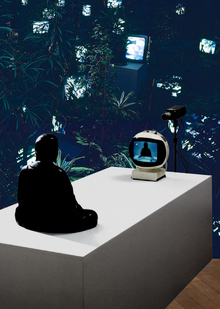
Александра Першеева написала книгу «Видеоарт. Монтаж зрителя», которая анализирует особенности восприятия видеоарта и его отличие от кино и телевидения. Книга включает более 50 кадров из видео и 10 иллюстраций, подготовленных студенткой Школы дизайна Марией Романовой.
София Байбакова создала видеоэссе о развитии джаза в Японии и его культурном влиянии на местное общество. Проект подробно описывает, как джаз прижился в Японии после Второй мировой войны через взаимодействие с американскими музыкантами и лайнерами.
Олегс Радомисленскис исследует эволюцию образа Красного Черепа в комиксах Marvel с Золотого по Бронзовый век. Работа основана на анализе визуального материала из личной цифровой коллекции, включая оригинальные выпуски и переиздания с 1940 по 1980-е годы.
Софья Мамкина исследует символическое значение природных мотивов в архитектуре русского модерна. Проект включает анализ архитектурных объектов и исторических источников, раскрывающих связь между символизмом и эстетикой модерна.
hseanimation
HSE Animation is a platform where animation projects become visible to studios, production companies, media, partners, and audiences. It brings together animators’ portfolios, educational programs, specialized contests, and key events from the professional community. The platform was created in partnership with HSE Art and Design School and is developing a... Show more
best of the best
news and interviews
author's animation
for children
applied animation
information video
playlist