INTRODUCTION
Brand identity
Red Bull is a global brand that operates not only as an energy drink company, but also as a media production system. Its communication is based on symbolic meaning rather than product explanation.
Red Bull logo
«Red Bull gives you wings» = energy, performance, and extreme lifestyle.
Positioning
Red Bull positions itself as a lifestyle and cultural brand associated with:
extreme sports risk and adrenaline high performance culture creativity and youth identity
The product is secondary; the experience is primary.
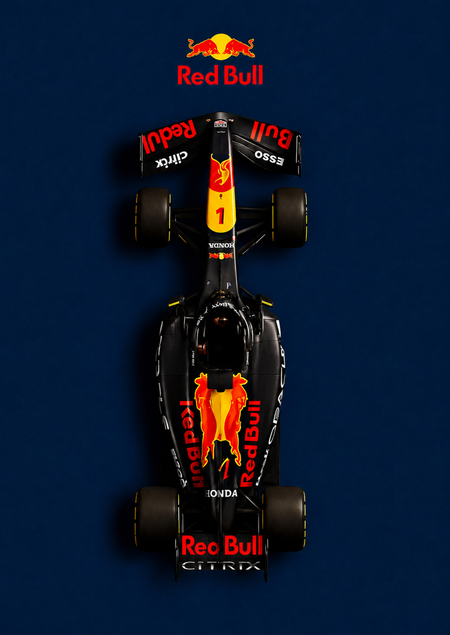
Red Bull Racing (F1)
Target audience
The primary audience is:
16–35 years old students and young professionals extreme sports and gaming communities individuals oriented toward productivity and performance
Audience motivation is emotional rather than rational.
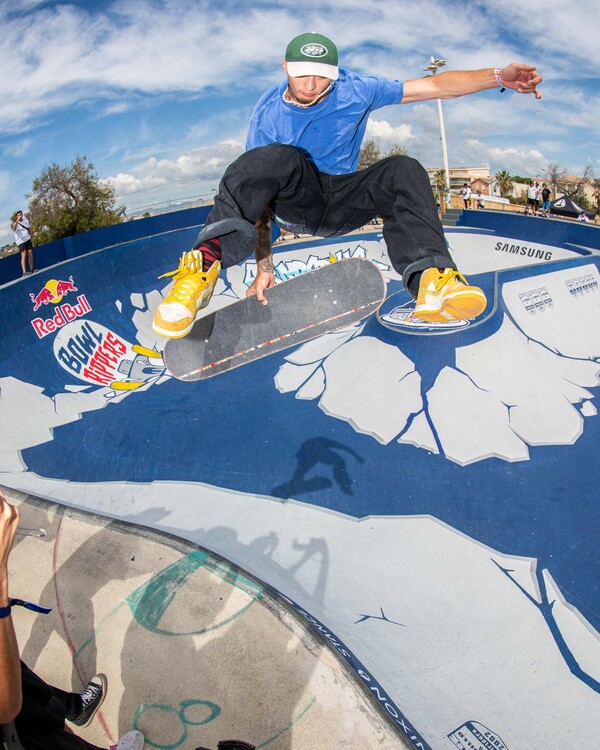
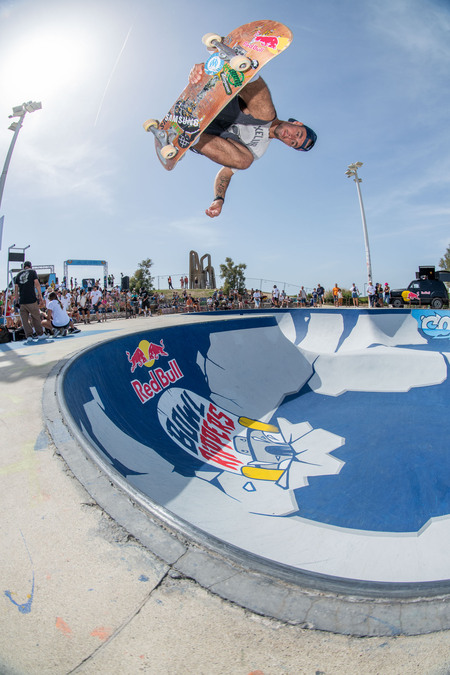
Cultural communication context
Red Bull communication reflects:
low-context communication style (clear visual meaning, minimal ambiguity) individualism (self-performance, achievement, competition) high stimulation culture (speed, intensity, risk).
COMMUNICATION CHANNELS
Media ecosystem
Red Bull operates as a multi-platform media ecosystem:
Instagram (visual identity) TikTok (viral short-form content) YouTube / Red Bull TV (long-form storytelling) live sports events global sponsorships
The brand functions like a hybrid of media company and sports institution.
Red Bull TV homepage
Social media strategy
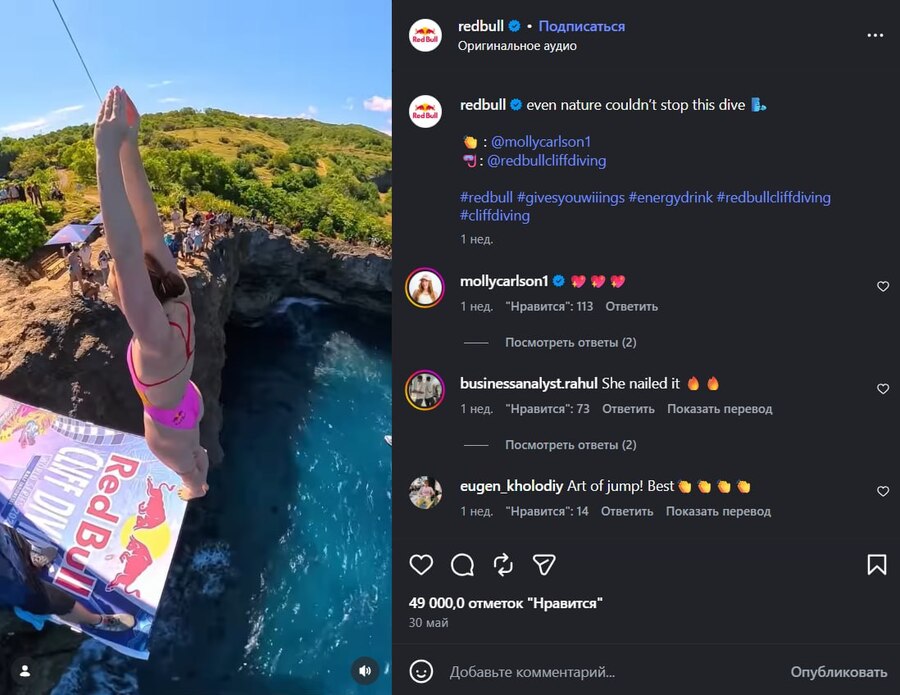
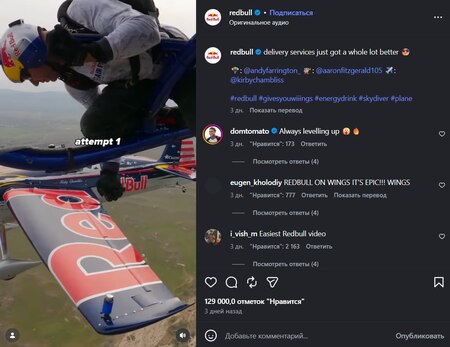
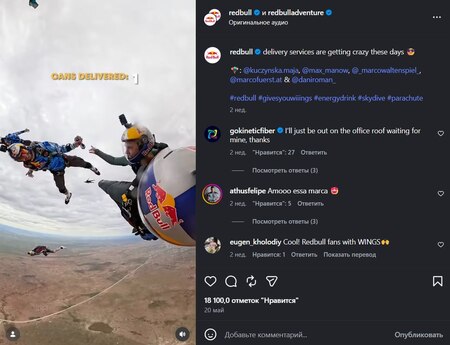
Red Bull’s social media communication is highly visual and emotion-driven. Posts rely on:
extreme action imagery minimal textual explanation high aesthetic and cinematic quality
This creates immediate emotional engagement rather than rational interpretation.
YouTube / Red Bull TV
Red Bull TV functions as a full-scale media platform producing:
documentaries live sports coverage athlete-focused storytelling branded entertainment content
This positions Red Bull as a content creator rather than an advertiser.
PR strategy
Red Bull uses strategic public relations through:
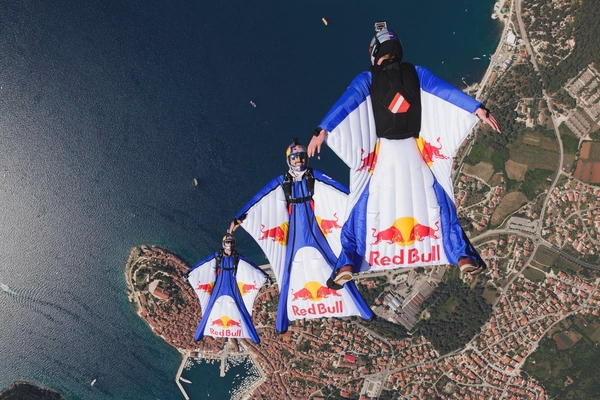
global sports sponsorships (F1, extreme sports, esports) branded events (Air Race, Rampage, Cliff Diving) athlete partnerships and long-term storytelling
PR here is relationship-building rather than direct persuasion.
Red Bull Air Race
Cliff Diving event page
Communication style summary
Overall communication is:
one-directional (brand → audience) visually dominant emotionally driven low in direct dialogue or conversational interaction.
THEORETICAL FRAMEWORK
Elaboration Likelihood Model (ELM)
ELM explains how persuasion occurs through:
central route (logical argument, high involvement) peripheral route (emotion, visuals, low cognitive effort)
Red Bull mainly uses the peripheral route of persuasion.
Media Logic Theory
Media Logic Theory (Altheide & Snow) explains how media formats shape perception of reality. Red Bull operates as a media system where:
format is more important than product entertainment replaces advertising lifestyle becomes the message
ANALYSIS
Peripheral persuasion
Red Bull communication does not rely on logical arguments or product explanations. Instead, it uses:
extreme visuals emotional stimulation fast-paced editing
This activates peripheral processing rather than rational decision-making.