Concept
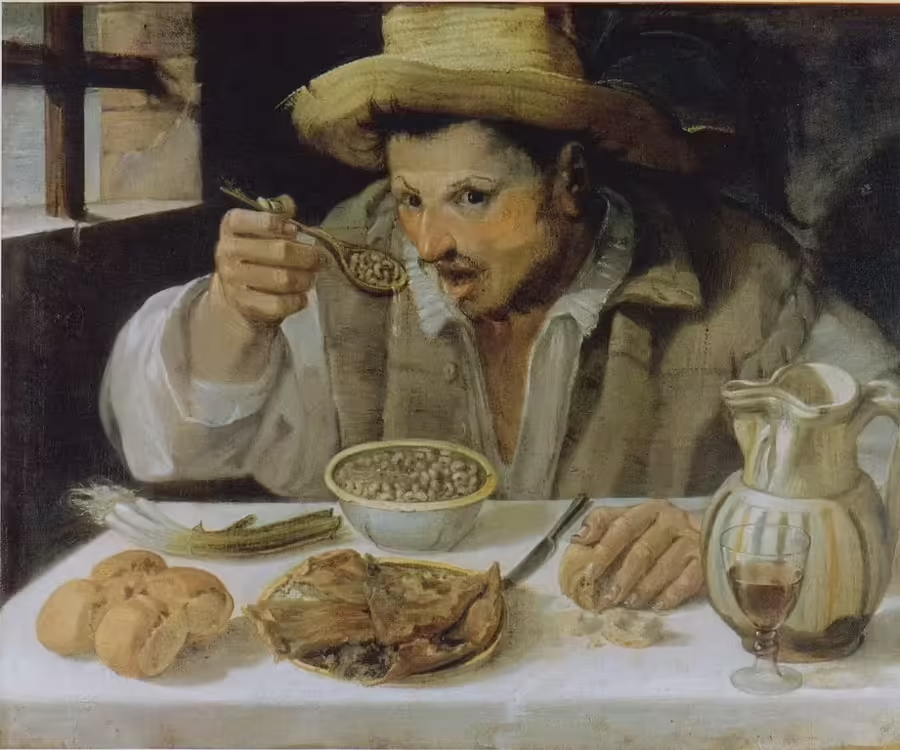
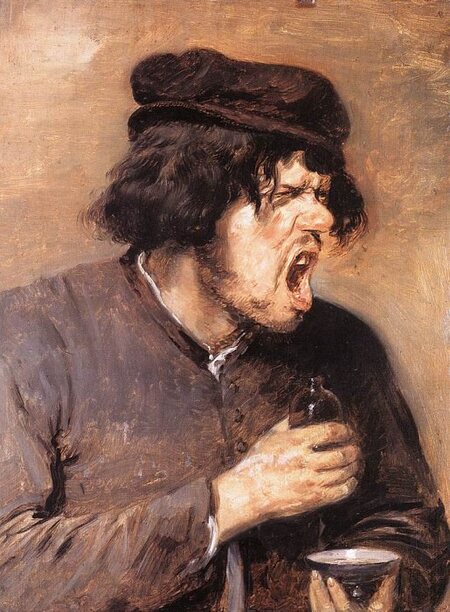
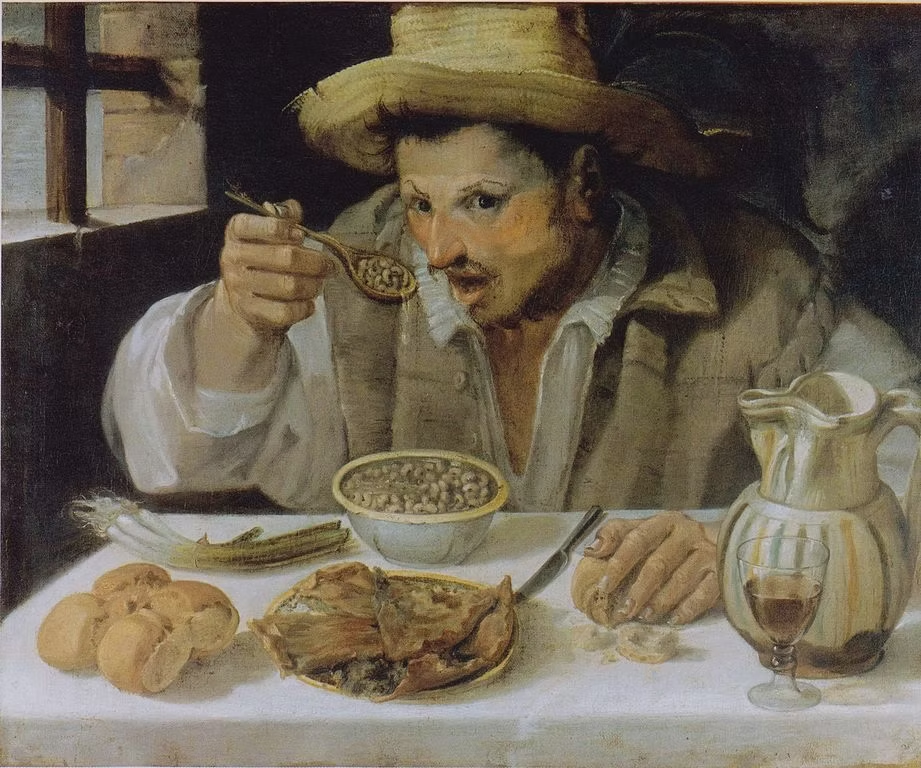
Humans perceive the surrounding world through five primary senses: sight, hearing, smell, taste, and touch. Through these senses, we experience space, distinguish sounds, perceive odors, feel touch, and taste food. These sensations seem so natural that we rarely consider the profound role they play in our lives. Yet, it is through them that our perception of the world is formed, and memories, emotions, and associations emerge.
I chose the theme of the five senses because I became curious about how artists depicted what a person feels but cannot always see. For instance, sound cannot be directly shown, and scent cannot be conveyed through color. Nevertheless, by looking at certain works of art, we can imagine what the depicted characters hear, feel, or taste. I wanted to understand how this happens and what artistic techniques help the viewer recognize different sensations.
It is particularly interesting to examine this theme through the lens of art from different historical periods, spanning from antiquity through the end of the 16th century. During this time, artistic styles, conceptions of humanity, and methods of representing the surrounding world evolved. In medieval art, artists often employed allegories and symbols, whereas Renaissance works placed great emphasis on the human body, emotions, and everyday life. This broad timeframe allows one to trace not only the various ways the five senses were depicted but also how artists' attitudes toward sensory experience itself changed. Comparing these works demonstrates how differently artists could approach a single theme.
The goal of this project is to explore ways of depicting sight, hearing, smell, taste, and touch—to compare these sensory experiences and determine what artistic means have been employed to convey that sensory experience across different historical periods. The research will be divided into five main chapters, each dedicated to a specific sense.
The foundation of this work will be visual analysis. I will examine the artworks both as complete pieces and in detail: focusing on hands, faces, objects, the positioning of figures, and their interactions. Comparing similar elements across different works will reveal common conventions and divergences. For instance, the same gesture of touch can signify entirely different things depending on the subject matter and composition.
I particularly wish to focus on comparing works from different centuries. I am interested in discovering which ways of representing the senses have remained constant over long periods and which have evolved along with artistic traditions. To achieve this, I plan to compare pieces not only chronologically but also based on shared visual characteristics: gestures, objects, symbols, and compositional choices.
The research hypothesis posits that artists conveyed the five senses through a combination of recognizable actions, gestures, objects, and symbols, but the methods used to render sensory experience depended on the time of the artwork’s creation and its artistic context. Furthermore, the depiction of a sensation could serve various functions: narrating everyday life, conveying emotional relationships between people, or expressing ideas about humanity and one’s place in the world.
I hypothesize that some senses are easier to convey through characters' actions—for example, taste or touch—while depicting others, such as hearing and smell, may rely more heavily on auxiliary objects and symbolic imagery. I am also interested in investigating whether, in later works, sensations were indeed more often communicated through human behavior and the details of the surrounding environment, rather than solely through conventional symbols.
Main Issue
How did artists depict the five human senses up to the end of the 16th century, what visual techniques did they use to make those sensations understandable to the viewer, and how did these methods change over time?
Introduction. Humans perceive the world through their senses.
Allegory of the Five Senses. Yang Lives
Sight, hearing, smell, taste, and touch—these are the five senses through which we perceive the world around us. They help us learn new things, interact with people, experience emotions, and form memories.We primarily perceive art with our eyes. However, while looking at a painting, we can imagine the sounds of music, the aroma of flowers, the taste of fruit, or the feeling of touch. Artists are able to convey even what cannot be seen directly.How exactly did artists make invisible sensations visible, and how have these depictions changed over time? This is what we are going to explore.
Part 1. Sight. Seeing and Knowing.
Simone Wué. Psyche gazes upon the sleeping Cupid. 1626. Lyon, Museum of Fine Arts

Vision allows humans to perceive form, color, movement, and the distance between objects. In art, however, it can signify not just the ability to see, but also the desire to recognize, study the world around us, and understand oneself.The mirror has become one of the most recognizable symbols of sight. It appears frequently in works from various eras, yet its role can shift.In a miniature from a 13th-century manuscript of Aristotle’s treatises, the five senses are depicted through human actions. Here, the artist only needs a single glance to illustrate the process of visual perception. At the same time, sight is presented as just one of several senses through which humans interact with the world.
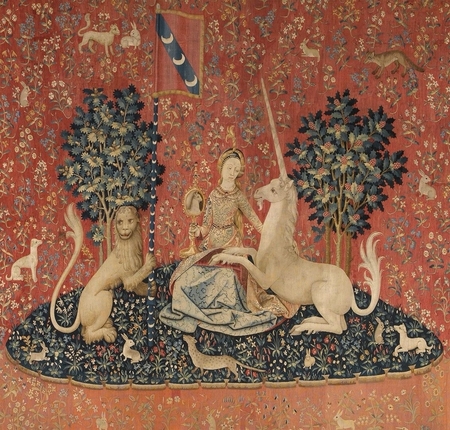
In the altarpiece created around 1500, the mirror also becomes a central attribute. A woman holds it before a unicorn, which has placed its front legs on her lap, as she examines her reflection. At the center of the composition is not just the mirror, but the act itself—the moment a living being sees itself. The unicorn’s gaze directs our attention to the small object in the woman’s hand, despite the numerous bright details surrounding it.Another example is the engraving from 1561. Here, sight is represented by a female figure holding a mirror. Nearby is an eagle, known for its sharp vision, and above the figure, the sun shines. The artist combines several symbols that clarify the image’s meaning. Interestingly, the Latin inscription beneath the engraving mentions not only the eyes but also the nerves connecting them to the brain.Comparing these three works, one can observe that the mirror remains a recognizable symbol of sight throughout several centuries. However, in one case, it helps depict an ordinary action; in another, it becomes part of an entire scene; and in a third, it functions as an element of a complex allegory.Thus, sight in art is conveyed not only through the depiction of eyes. Artists use the direction of gaze, the positioning of figures, reflections, light, and symbolic objects to illustrate the perception process itself and its significance to humanity.
Cornelis Cort «Vision»
Part 2. Hearing. How an image conveys sound.
Hendrik Terbruggen. Lutenist.

Hearing enables a person to perceive sounds, music, and human speech. But how can an artist represent what cannot be seen? Unlike sight, which can be conveyed through the direction of gaze, hearing is often depicted through the source of the sound—musical instruments or human actions.
In a miniature from an Aristotelian manuscript dating to the late 13th century, characters with musical instruments are shown among the five senses. The artist depicts actions that allow the viewer to imagine the sound of the music. To convey hearing, only a few small figures and recognizable objects are sufficient.
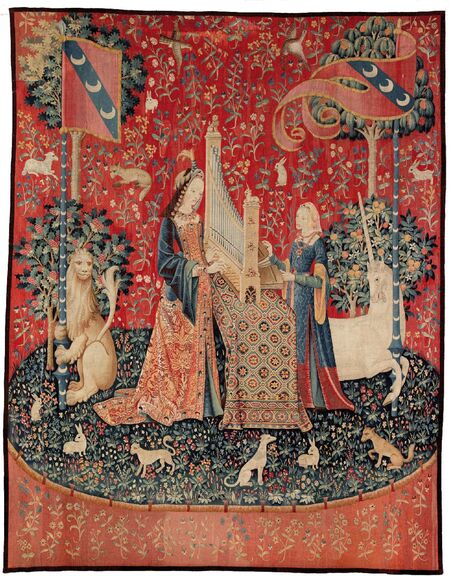
In the panel painting «Hearing» from the series «Lady with the Unicorn, ” created around 1500, a woman plays a small organ while her maid pumps the instrument’s bellows. Both figures are placed in the center of the composition, and their hands direct our attention toward the organ. Despite the multitude of colors, animals, and decorative details surrounding them, the musical instrument itself becomes the central element of the image. We feel as if we are witnessing a moment of musical performance, even though we cannot hear it.A different approach can be seen in Cornelis Cort’s engraving „Hearing, ” based on a drawing by Frans Floris, created in 1561. In the center is a female figure playing a lute. Surrounding her are other musical instruments, and a deer lies nearby. Its presence holds symbolic meaning: in Christian tradition, the deer could represent the soul striving toward God; thus, in this work, hearing is linked not only to music but also to spiritual perception.It is interesting that beneath the engraving is a Latin inscription mentioning the ear and the nerves connecting it to the brain. In this way, the artist merges musical, symbolic, and anatomical representations of hearing.Comparing these works, one can notice that artists more often depict not the act of hearing itself, but what creates the sound. Furthermore, the musical instruments can serve as simple attributes of the sense or as part of a more complex allegorical composition.Thus, hearing in art becomes visible through music, gesture, and symbol. Although the viewer cannot hear the depicted sounds, the familiar actions and objects allow them to imagine them and grasp the meaning of the scene.
Cornelis Cort. «Hearing»
Part 3. Olfaction. How to Depict an Invisible Scent.

Smell cannot be seen or touched, yet it has the power to evoke emotions and memories. Conveying olfaction in art is particularly challenging because the artist cannot depict the scent itself. Therefore, flowers, gestures, and animals with a highly developed sense of smell are used to represent this sensation. In a miniature from a 13th-century manuscript of Aristotle’s writings, one character brings a flower to their nose. This simple action immediately communicates the feeling being portrayed. The artist does not show the scent directly, but rather conveys it through the person’s movement and a familiar object.
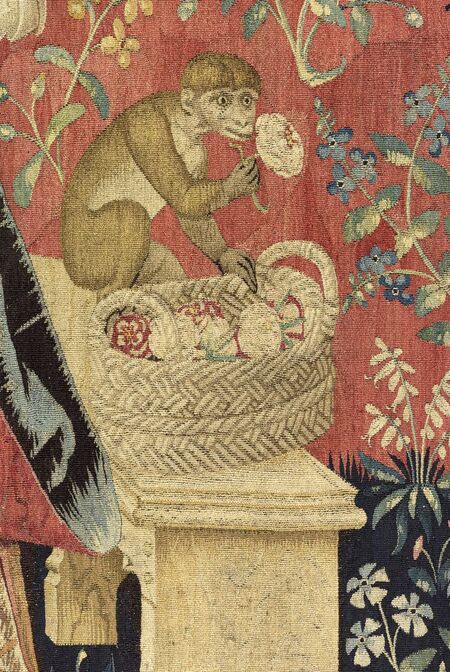
In the panel titled «Olfaction» from the «Lady with the Unicorn» series, created around 1500, a woman is weaving a wreath of carnations offered to her by a servant. Flowers and animals are arranged around her, and in the background, a monkey brings a rose to its nose. It is this small detail that helps reveal the meaning of the entire composition. Interestingly, the main character does not smell the flowers, even though the image is dedicated to olfaction. The artist conveys this sensation through the surrounding objects and the actions of the secondary character.