About Me
I am a narrative designer and 2D artist. I contribute to game development projects at the intersection of narrative and visual design. I develop game worlds, narrative structures, and characters—along with their stories—while also creating a game’s visual content, including concepts for characters, environments, props, and UI elements.
My Approach
I work at the intersection of narrative design, worldbuilding, and visual development. My goal isn’t simply to come up with a story, but to establish connections between its various elements so that the narrative, visuals, and gameplay mechanics complement one another and remain consistent. For example, a character’s personality and backstory can be reflected in their visual design, while the story can evolve based on the player’s decisions and actions.
Skills
— I work with dramatic structure, storytelling, character psychology, and backstories. I draw on mythology and folklore in both narrative and visual development. — I develop the structure of game worlds, including their symbolism and atmosphere. — I collaborate with team members, adapt narrative documentation to the needs of different departments, and provide colleagues with the materials they require. — I create connections between visuals, narrative, and game design.
Target Audience & B2B Collaboration
Text required
Selected Projects
Patelfall
Project Overview and Team
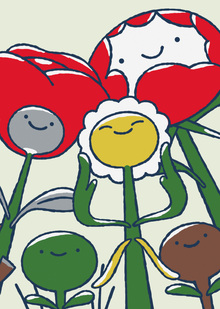
Patelfall is a student team project—a 2D computer game in the flower shop simulation genre. Players select flowers and arrange bouquets for customers. As each day passes, they uncover the story of the flower shop, the owner’s family, and the clientele.
The project was developed by a team of students. My primary role was narrative designer. I also took on some 2D art tasks, creating in-game objects and UI elements.
Project Goals The objective was to create compelling characters and narratives that would draw players in, while simultaneously building a cohesive world around the flower shop. For each character, I was required to develop a backstory, define their fears and secrets, establish relationships with other characters, and map out potential endings. A separate storyline was developed for the protagonist and their family. The narrative was intentionally designed to support the gameplay: the selection of flowers in a bouquet would influence story progression and character conclusions, while an in-game newspaper provided insights into the world and additional details about the characters.
My Role As a narrative designer, I developed character profiles, individual storylines, endings, and the relationship system between characters. I also gathered information and references for a team member responsible for writing the in-game newspaper. As a 2D artist, I created game assets, including the newspaper, UI elements, flowers, scissors, wrapping paper, and other props.
Process Starting with the game’s central theme, I developed the characters' backstories. Building on those, I established their personalities, fears, and speech patterns. I then utilized these traits to craft their individual storylines and conclusions. For the newspaper and character monologues, I gathered narrative details, references, and worldbuilding information to ensure the texts presented a cohesive story, avoided contradictions, and supported the characters' arcs. On the visual side of the project, I created props while adhering to the game’s overall aesthetic. The flowers needed to be expressive and stylized yet remain recognizable. I also designed interactive objects and UI elements.
Project Overview and Team Patelfall is a student team project: a 2D computer game in the flower shop simulation genre. Players select flowers and arrange bouquets for customers. As each day passes, they uncover the story of the flower shop, the owner’s family, and the customers. The project was developed by a team of students. My primary role was narrative designer. I also took on some 2D art tasks, creating in-game objects and UI elements.
Results
As a narrative designer, I developed the characters, their relational system, interconnected storylines, endings, and in-game text. This helped weave together the bouquet-making and selling mechanics with the game’s narrative.
As an artist, I created the prop, flower, and UI assets that supported the game’s overall visual aesthetic. My visual assets were instrumental in establishing the atmosphere and shaping the look of the interface.
Blood of Bracken
Project Overview and Team Blood of Bracken is a personal concept art project in the dark folk fantasy genre. Its setting is inspired by the legend of the Beast of Gévaudan and the atmosphere of 18th-century Flanders. The project was completed individually as part of a student assignment, focusing on world lore, setting development, and character and environment concept art.
Project Goals The initial goal was to establish the world’s foundational elements—its atmosphere, historical period, potential inhabitants and creatures, along with its governing rules and defining characteristics. The primary objective was to create four character concepts and three environment concepts that would feel like components of a single, cohesive world. Two characters required further refinement: one needed a finished render, while the other necessitated a technical drawing.
My Role Since this was an individual project, I combined the roles of narrative designer and artist. As a narrative designer, I developed the lore and setting. As an artist, I created character and environment concept art for the world. Additionally, I produced a render of one character and a technical drawing of another, detailing the design’s construction, features, and visual characteristics.
Process The project began with worldbuilding. I identified historical and folkloric sources and references for the narrative and visual elements, established the world’s overall tone, and defined the role of supernatural elements. I then wrote brief character notes and began developing their visual designs based on the lore and setting. For each character, I considered their clothing, equipment, silhouette, color palette, and details. When designing the environments, I focused on atmosphere, scale, and visual details that reinforced the setting’s folkloric foundations.
Results
The project culminated in a foundational outline of the world’s lore and setting, four character concepts, three environmental concepts, one character render, and one technical drawing.
Through this project, I translated narrative ideas into concrete visual decisions and linked the visual development to the world’s underlying lore. I also drew upon mythology, folklore, and historical motifs in the worldbuilding and concept art.