Данный проект является учебной работой студента Школы дизайна или исследовательской работой преподавателя Школы дизайна. Данный проект не является коммерческим и служит образовательным целям
Проект принимает участие в конкурсе

Introduction and Context
Исходный размер 2090x448

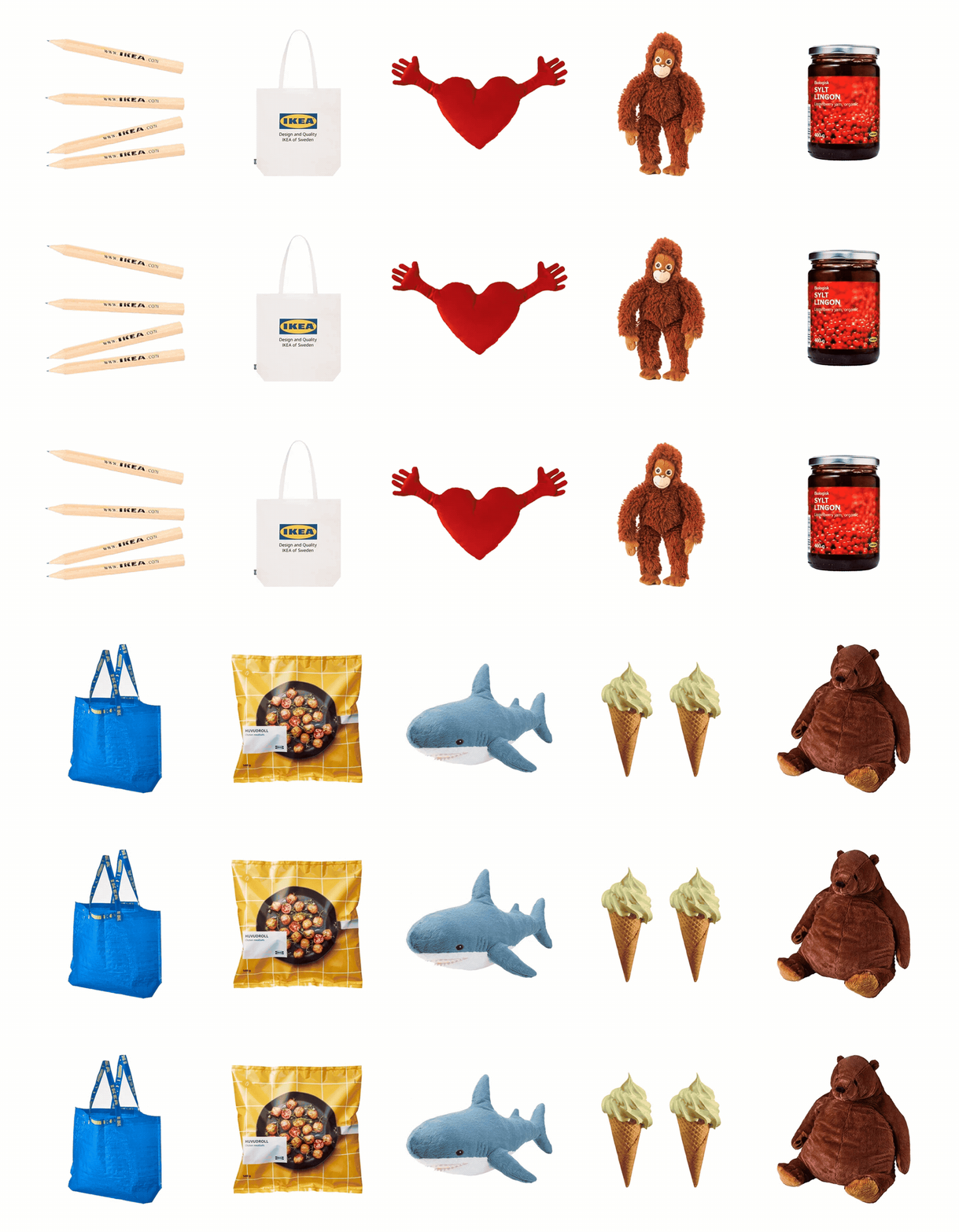
Items that are associated with IKEA

Few brands have managed to transform everyday household objects into symbols of identity, belonging, and lifestyle as successfully as IKEA. What appears to be a furniture retailer is, in reality, a complex communication system that continuously constructs meanings around home, family, sustainability, affordability, and self-expression. Consumers do not simply purchase IKEA products; they engage with a broader narrative about what contemporary domestic life should look like.

Honest IKEA! That’s perhaps the very best message we have created in our communication with our customers.

— I. Kamprad, «The Testament of a Furniture Dealer»

post

Communication theory provides a useful framework for understanding this process. As the course defines it, theory functions as «a lens or a framework through which we see and interpret the world and our everyday practices.» Robert T. Craig argues that communication theories can be understood as different lenses through which communication becomes visible and meaningful. Applying these theoretical perspectives to IKEA allows us to move beyond a purely marketing-oriented interpretation of the brand and examine how communication shapes relationships, identities, values, and consumer behavior.

Founded in Sweden in 1943, IKEA has grown into one of the most recognizable global brands in the home-furnishing industry. Its positioning is built around the concept of democratic design, according to which good design should combine form, function, quality, sustainability, and affordability while remaining accessible to a broad audience. This positioning enables IKEA to communicate not only practical value but also social and cultural meanings associated with modern living.
Исходный размер 1600x725

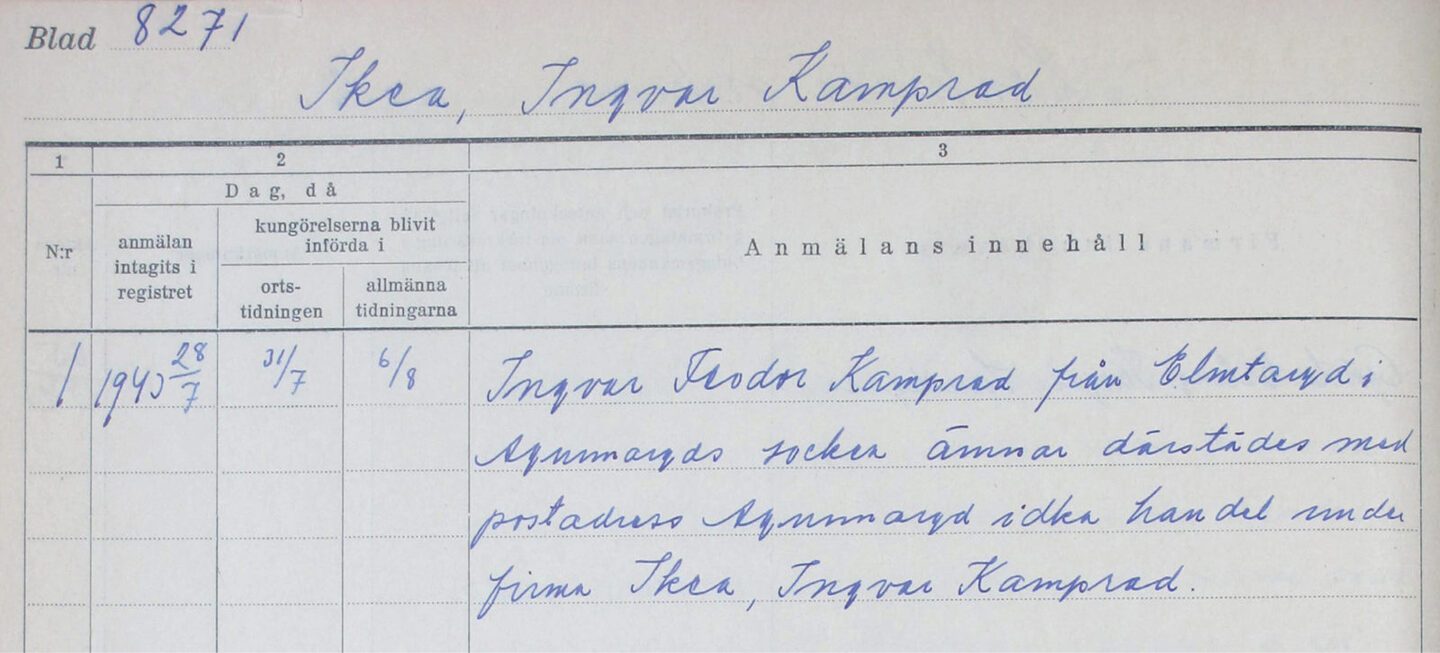
Registration of the IKEA trademark on July 28, 1943

The brand primarily targets young adults, students, families, and urban consumers seeking affordable and aesthetically pleasing solutions for everyday life. However, IKEA’s communication extends beyond functional needs. Through advertising campaigns, social media content, digital tools, and in-store experiences, the company promotes aspirations related to comfort, organization, creativity, and sustainability.

This project examines IKEA’s communication through five theoretical perspectives discussed during the course: the Elaboration Likelihood Model, Dialogic Theory of Public Relations, Uses and Gratifications Theory, Framing Theory, and the concept of Social Media Affordances. Together, these theories demonstrate how IKEA persuades audiences, encourages participation, constructs meanings, and maintains long-term relationships with consumers.

IKEA’s Communication Ecosystem

Исходный размер 700x394

IKEA website

IKEA operates within a highly integrated communication ecosystem that combines digital media, loyalty programs, online tools, and physical retail experiences. Rather than treating communication channels separately, the brand creates a connected environment in which users can move from inspiration to planning and purchasing with minimal friction.

Исходный размер 700x394

IKEA website

Social media platforms and visual networks are primarily used for visual storytelling and emotional engagement. Video platforms provide longer-form content, including tutorials and home inspiration videos, while visual bookmarking sites support idea collection and interior planning. The official website and mobile app serve as practical hubs where consumers can explore products, use room planners, create wishlists, and complete purchases.

Исходный размер 700x394

Example of showrooms in IKEA stores

Crucially, the physical store layout itself acts as a powerful non-verbal communication channel. By guiding visitors through fully furnished room sets, IKEA allows them to physically experience and «try on» everyday life scenarios, transforming a simple retail space into an immersive narrative environment.

An important element of this ecosystem is IKEA Family, the brand’s loyalty program. It functions not only as a discount system but also as a communication platform that encourages repeat interaction, personalized offers, and a sense of membership within the IKEA community. Across all channels, communication revolves around everyday situations: small apartments, family dinners, storage problems, and sustainable living.
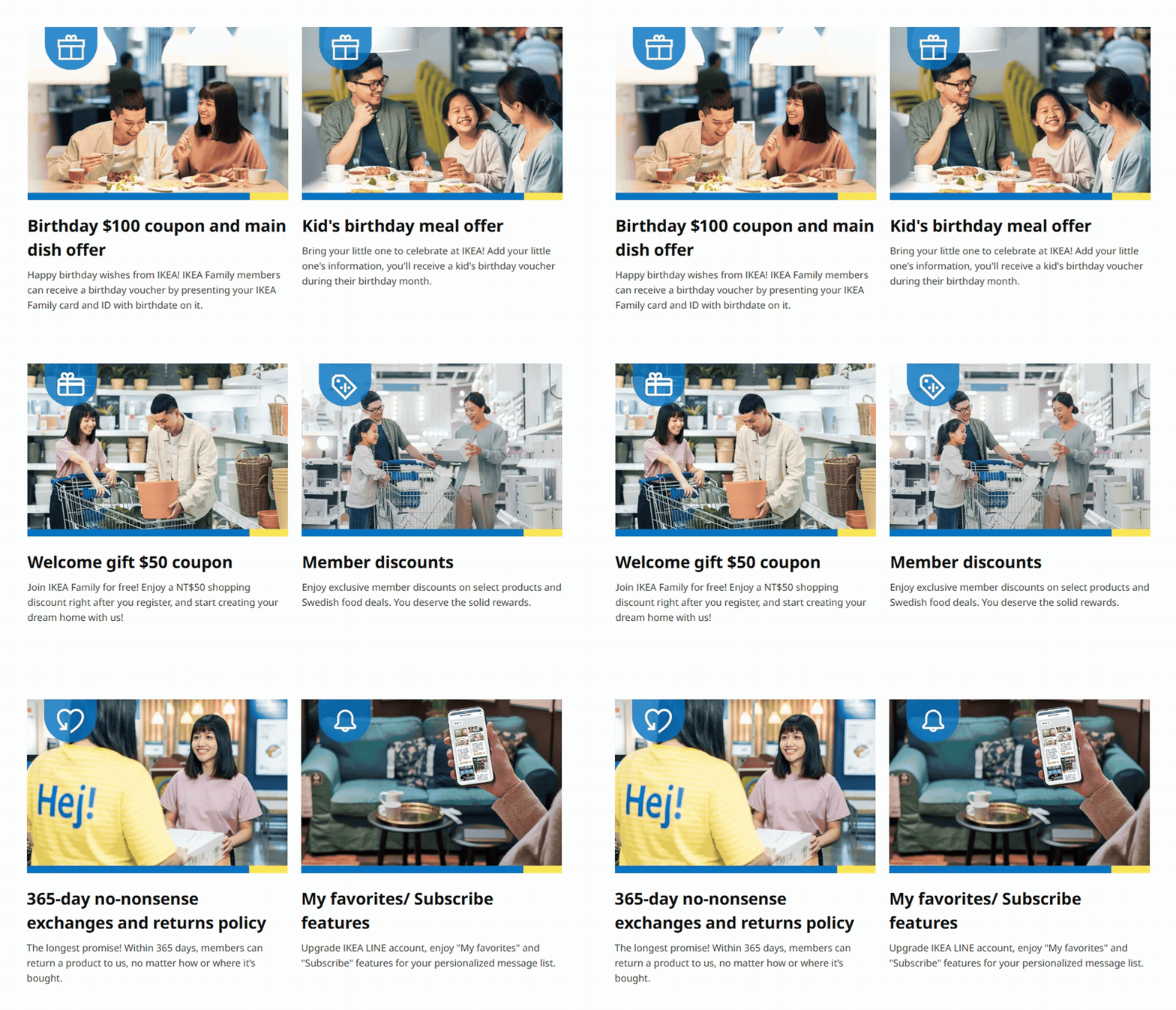
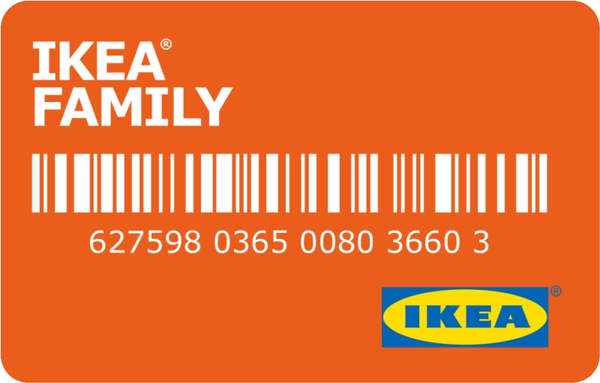
IKEA Family Exclusive benefits // IKEA Family Card

Theoretical Analysis of the Communication Strategy

The Elaboration Likelihood Model, developed by Richard Petty and John Cacioppo in the 1980s, explains how persuasive messages change the attitudes of receivers. According to the model, persuasion occurs through two different routes of cognitive processing: the central route and the peripheral route. The central route is «the path of cognitive processing that involves very big interest and very big cognitive effort in order to process the message,» while the peripheral route functions as «a mental shortcut process that accepts or rejects a message based on some irrelevant cues, as opposed to actively thinking about the issue.» IKEA’s strategy systematically combines both, addressing audiences with different levels of motivation and ability.

0

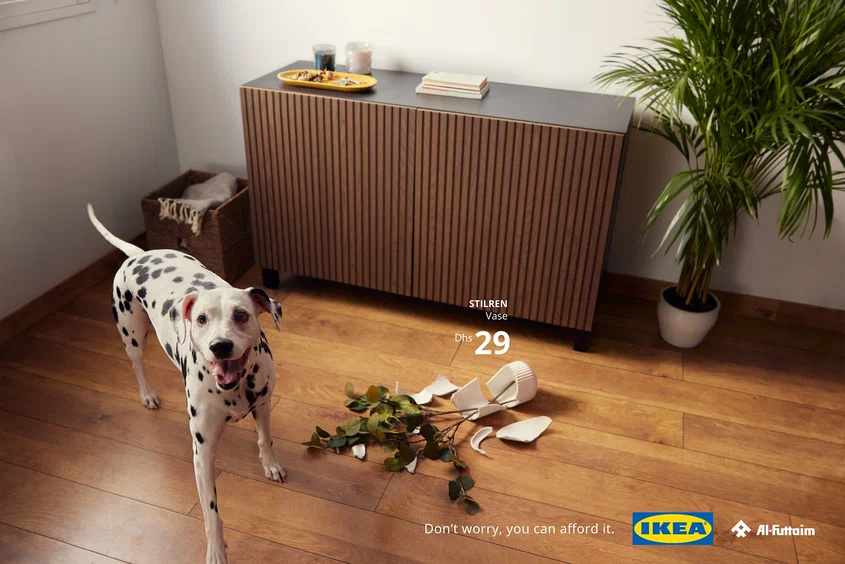
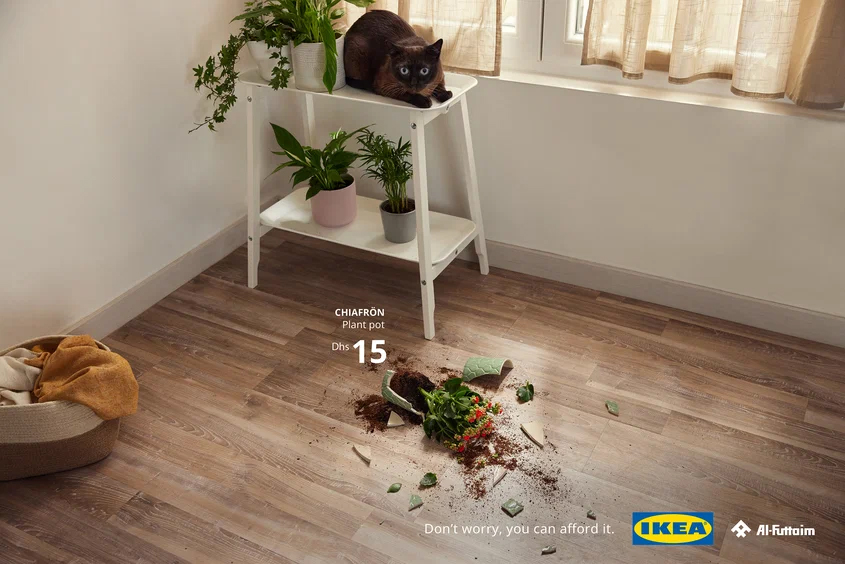
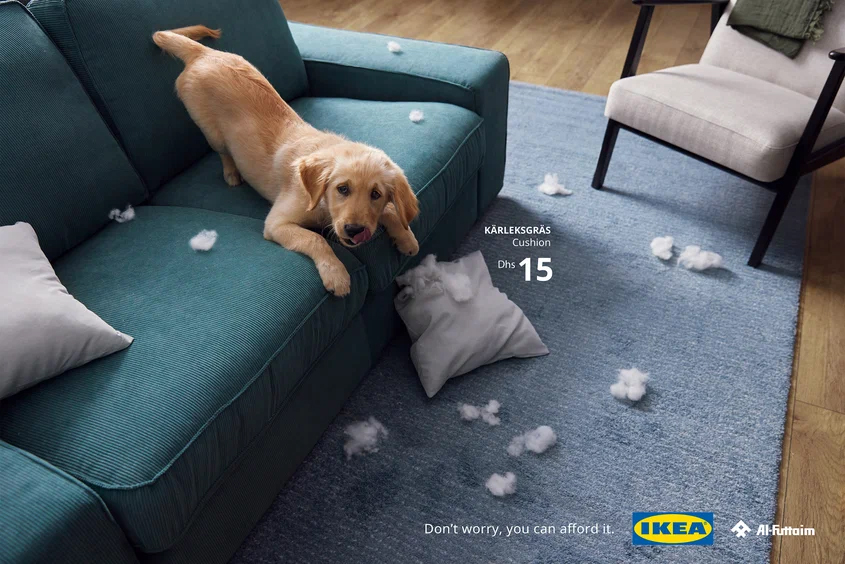
«Don’t Worry, You Can Afford It» by IKEA

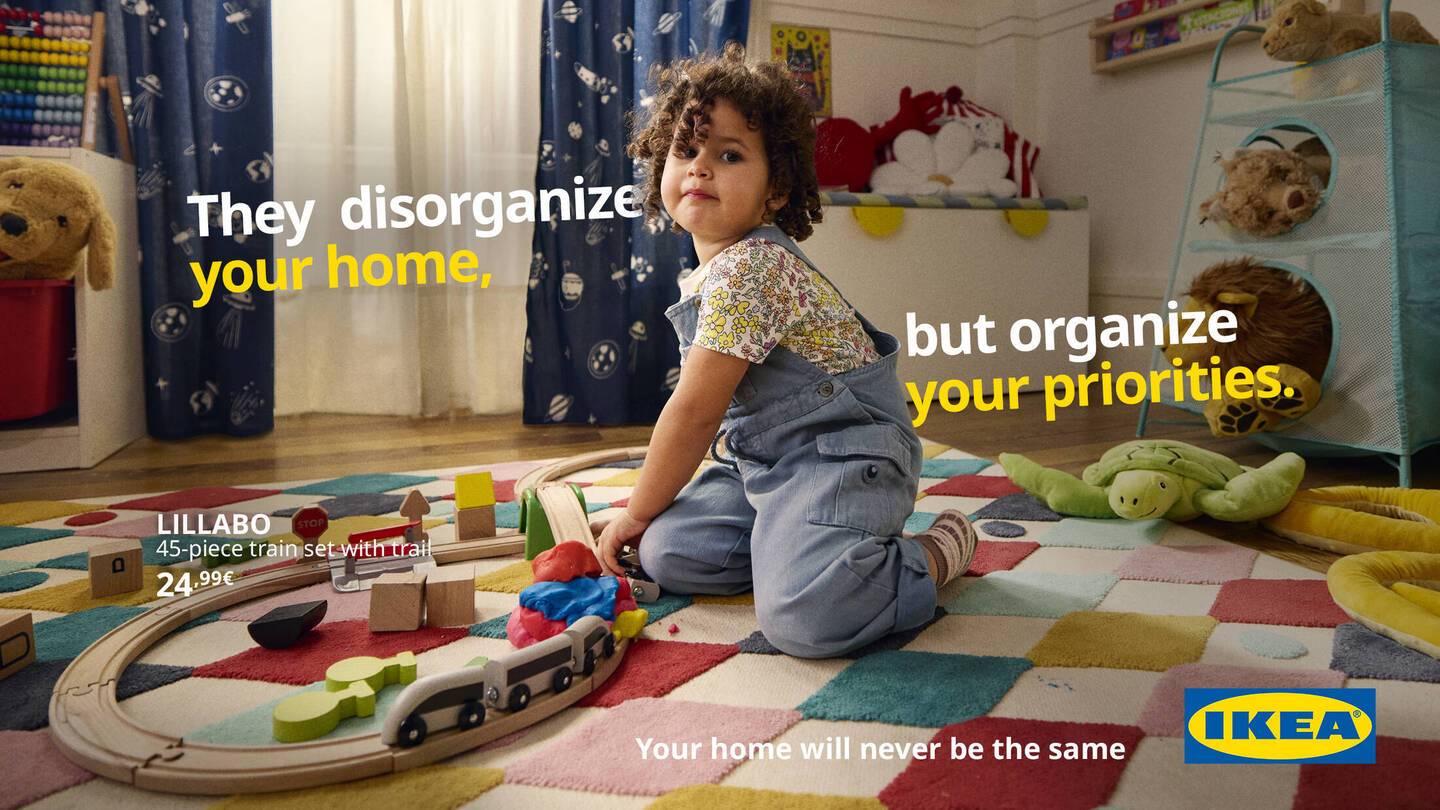
One of the strongest peripheral cues used by IKEA is liking. Social media posts and advertising campaigns frequently feature warm lighting, carefully styled interiors, and aesthetically pleasing living spaces. Rather than persuading through logical arguments, these visuals create positive emotional associations. Consumers are attracted to the atmosphere of comfort before evaluating the actual products. Designer collaborations amplify this effect: limited collections with figures such as Virgil Abloh, Marimekko, and Sabine Marcelis transfer the cultural status of recognized creators onto everyday objects, encouraging persuasion through emotional cues rather than rational evaluation.
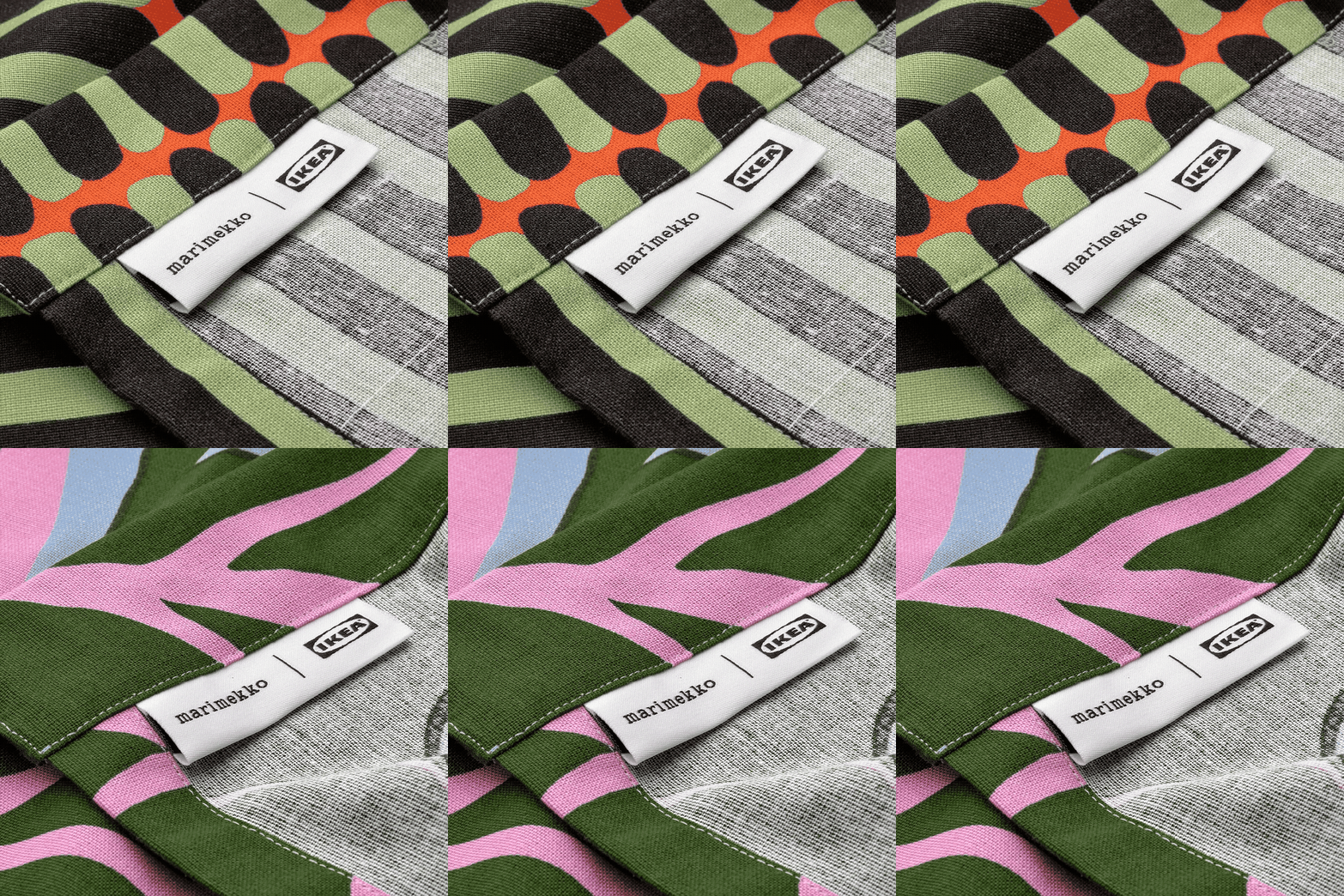
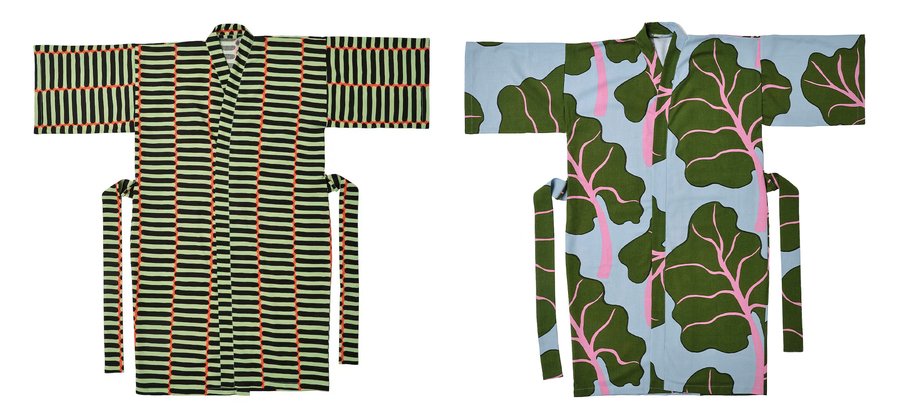
«BASTUA» by Marimekko × IKEA

IKEA’s communication is shaped by social proof — the peripheral cue that operates because «people, as we’re living in the community, we go under some sort of norms, social norms and expectations.» Through initiatives such as IKEAHack and MyIKEA, the audience actively participates in creating content. Customers share DIY projects and creative reuses of IKEA products, while independent platforms have built entire communities around customizing the brand’s furniture. Seeing thousands of users engage with the brand reduces uncertainty and increases trust, as people are more likely to adopt behaviors that appear socially validated.
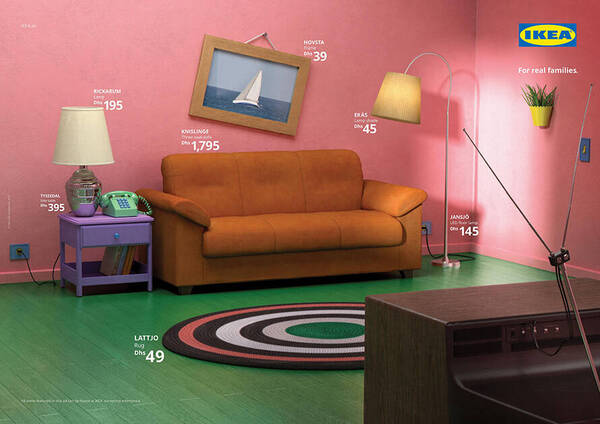
«Ikea Real Life» by IKEA // Animated series «The Simpsons»

The principle of reciprocity is another important part of IKEA’s strategy. As the course defines it, reciprocation is the cue of «you owe me» — «if person will already done a favor for us, we would probably do something just in exchange.» The company offers free room planners, design tools, augmented reality applications, and online guides without requiring immediate purchases. By providing practical assistance first, IKEA generates goodwill that subtly motivates future purchase decisions, even when consumers do not consciously analyze the exchange.

Closely related to reciprocity is the cue of consistency — «we’ve always done this way, so this is the way how you need to do something.» For over eighty years, IKEA has maintained a recognizable visual identity rooted in Scandinavian design, blue-and-yellow branding, and the language of accessible domesticity. This long-term consistency itself functions as a peripheral cue: audiences trust the brand not because they evaluate each campaign, but because IKEA’s communication has remained stylistically coherent across generations.

Исходный размер 1790x974

Instructions by IKEA

Authority cues increase perceived credibility. IKEA frequently references in-house designers, sustainability experts, and partnerships with environmental organizations. Although many consumers may not analyze the full documentation behind sustainability claims, the very presence of expert voices influences attitudes through the peripheral route by enhancing credibility.

IKEA occasionally uses scarcity through limited collections and designer collaborations. The temporary availability creates urgency and increases perceived value. Limited drops with various partners motivate faster decisions without requiring extensive cognitive evaluation, demonstrating how peripheral cues can drive behavior even for non-essential purchases.
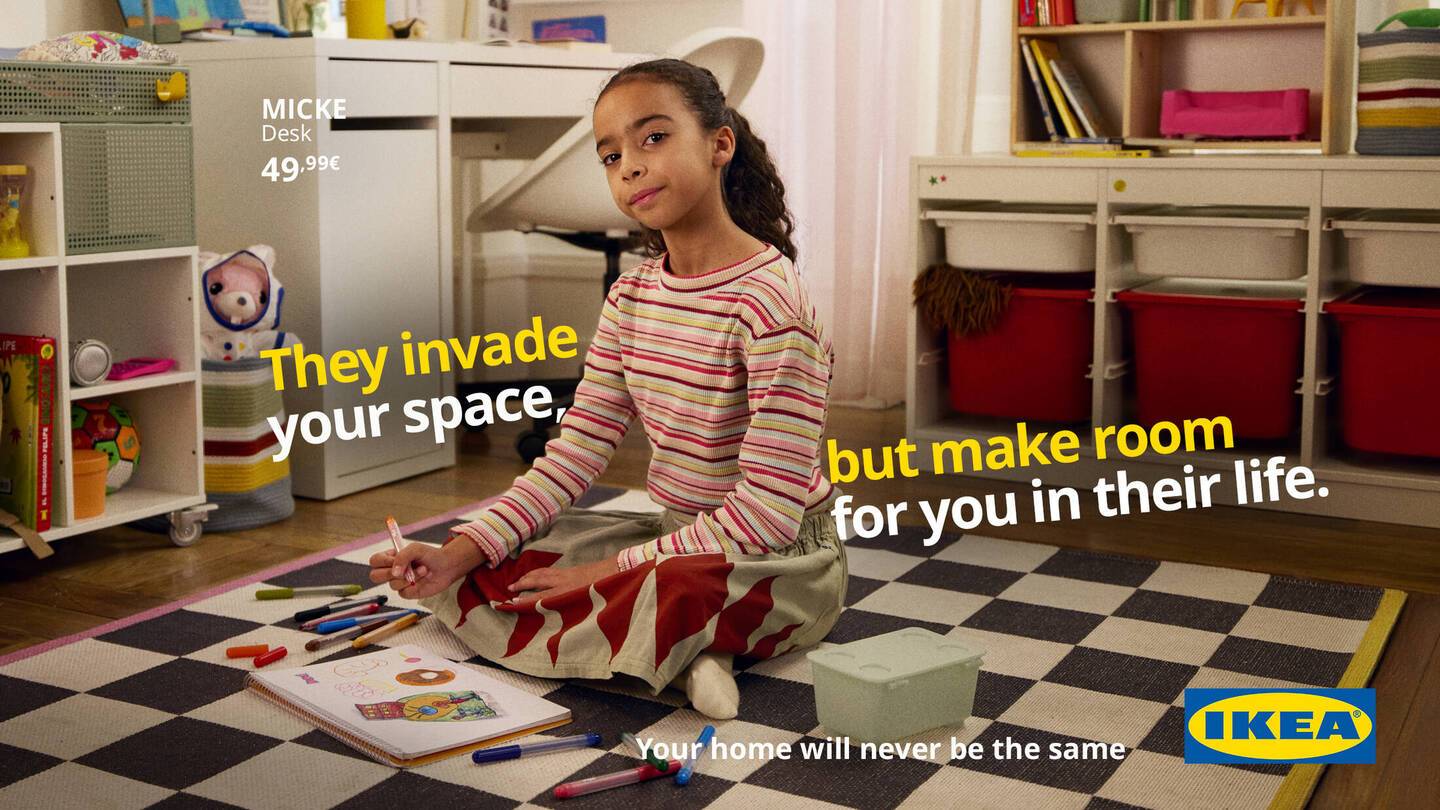
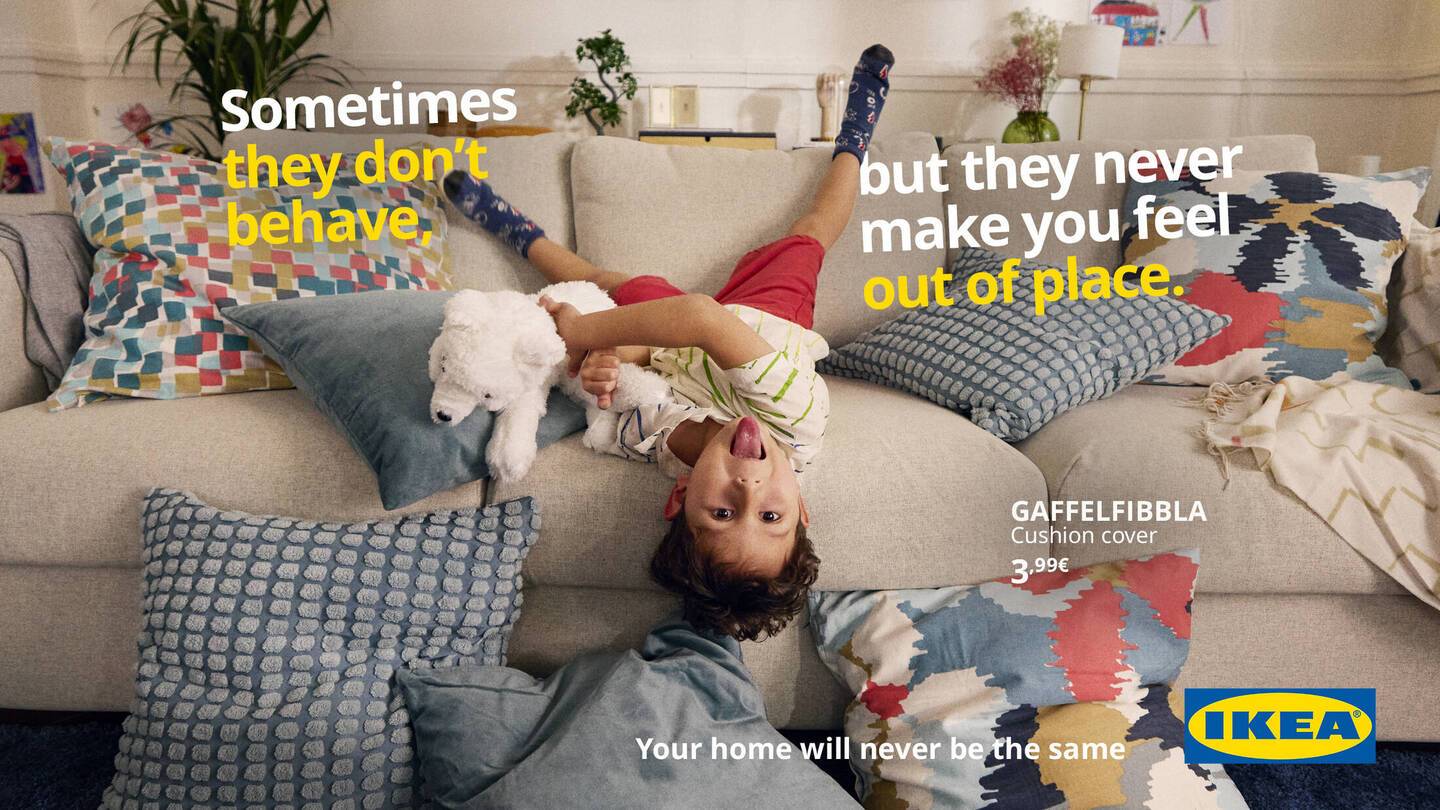
0

«This is Libre» by IKEA

While peripheral cues dominate emotional and aspirational content, IKEA also strongly supports central-route processing. Product pages provide detailed information regarding dimensions, materials, assembly instructions, and environmental impact. Sustainability reports, designer interviews on video platforms, and the historical IKEA catalog function as central-route resources for consumers highly involved in their purchase decisions. This dual structure is consistent with the findings of recent ELM research on persuasion in digital environments: as funding commitment increases — or, in IKEA’s case, as the price and significance of a purchase grow — issue-relevant information gains influence, while peripheral cues become more decisive for low-commitment items such as candles, textiles, or seasonal decorations.

Исходный размер 1600x900

«Actually, it’s IKEA» by IKEA

Dialogic Theory, developed by Kent and Taylor, argues that successful public relations should be based on dialogue rather than one-way transmission. As the course defines it, public relations is «a two-way communication process» in which «the organization changes as well as the society changes.» Rather than treating audiences as passive receivers of messages, dialogic communication treats them as participants in an ongoing conversation. IKEA’s digital and physical communication demonstrates each of the five principles of online dialogue identified by Kent and Taylor.

The dialogic loop refers to the requirement that «web sites should allow publics to query organizations to allow organizations to respond to questions and concerns.» IKEA actively maintains this loop across multiple channels. Customer service teams respond to comments and direct messages on social networks, while regional IKEA accounts often engage in playful exchanges with users. The brand also provides chat support on its official website and dedicates parts of the IKEA Family platform to user feedback. This systematic responsiveness treats consumers as participants rather than recipients of corporate messaging.

Исходный размер 1920x1081

IKEA Support Page

The principle of usefulness states that organizational websites should provide «information with general value for all publics, including the statement of the organization’s philosophy or mission.» IKEA’s communication is built around practical resources: detailed assembly manuals, AR-based room planners, recipe content from IKEA restaurants, video tutorials on online platforms, and transparent sustainability reports. These materials serve functional consumer needs rather than direct sales objectives, which strengthens credibility and reinforces the sense that the brand offers value beyond the purchase itself.

According to the theory, dialogic websites must «include features to make attractive for repeat visits.» IKEA addresses this through continuously refreshed seasonal collections, weekly content on short-form video platforms, IKEA Family member benefits, and design inspiration updates on visual networks and the official site. By creating ongoing reasons to return, the brand maintains long-term audience engagement rather than transactional one-time interactions.

Исходный размер 700x394

The «Ideas & Solutions» page on the IKEA website

The principle of intuitiveness emphasizes that «sites must be easy to use» — the course suggests that «if you click three times and you haven’t found what you want, it’s already too much.» The IKEA mobile application, the AR-based place tool, and the redesigned website prioritize clear navigation, visual guidance, and minimal friction. The room planner allows users to design entire interiors with limited cognitive effort, reducing barriers between inspiration and decision.

Finally, conservation of visitors requires that platforms keep users within the brand’s ecosystem rather than redirecting them elsewhere. IKEA’s communication architecture supports seamless movement from inspirational social media content to the website, from the website to the mobile application, and from the application to in-store experiences. This continuous environment supports what the course describes as the broader goal of dialogic communication: not persuasion in a single moment, but the construction of long-term mutually beneficial relationships.

Исходный размер 1920x947

IKEA on TikTok

Uses and Gratifications Theory

0

INVSBÅL collection by IKEA

Developed by Blumler and McQuail in the 1970s, Uses and Gratifications Theory shifts the focus from what media does to people to what active audiences do with media based on their specific needs. Applied to IKEA, this perspective explains why consumers voluntarily engage with the brand’s social media, videos, and catalogs long before making a purchase decision.

IKEA’s content effectively satisfies four key dimensions of media use. Beautifully styled interiors provide diversion, offering relaxation and escapism from daily routines. The brand’s Scandinavian design and sustainability focus serve as symbolic resources for personal identity, acting as a «prism» through which consumers define and express their lifestyle. Audiences also utilize IKEA content for surveillance, treating it as a form of «ethnography research» to discover interior trends and practical storage solutions. Finally, the brand’s friendly, often self-deprecating tone regarding everyday household challenges fosters parasocial personal relationships, fulfilling the need for emotional connection without requiring actual interpersonal contact.

0

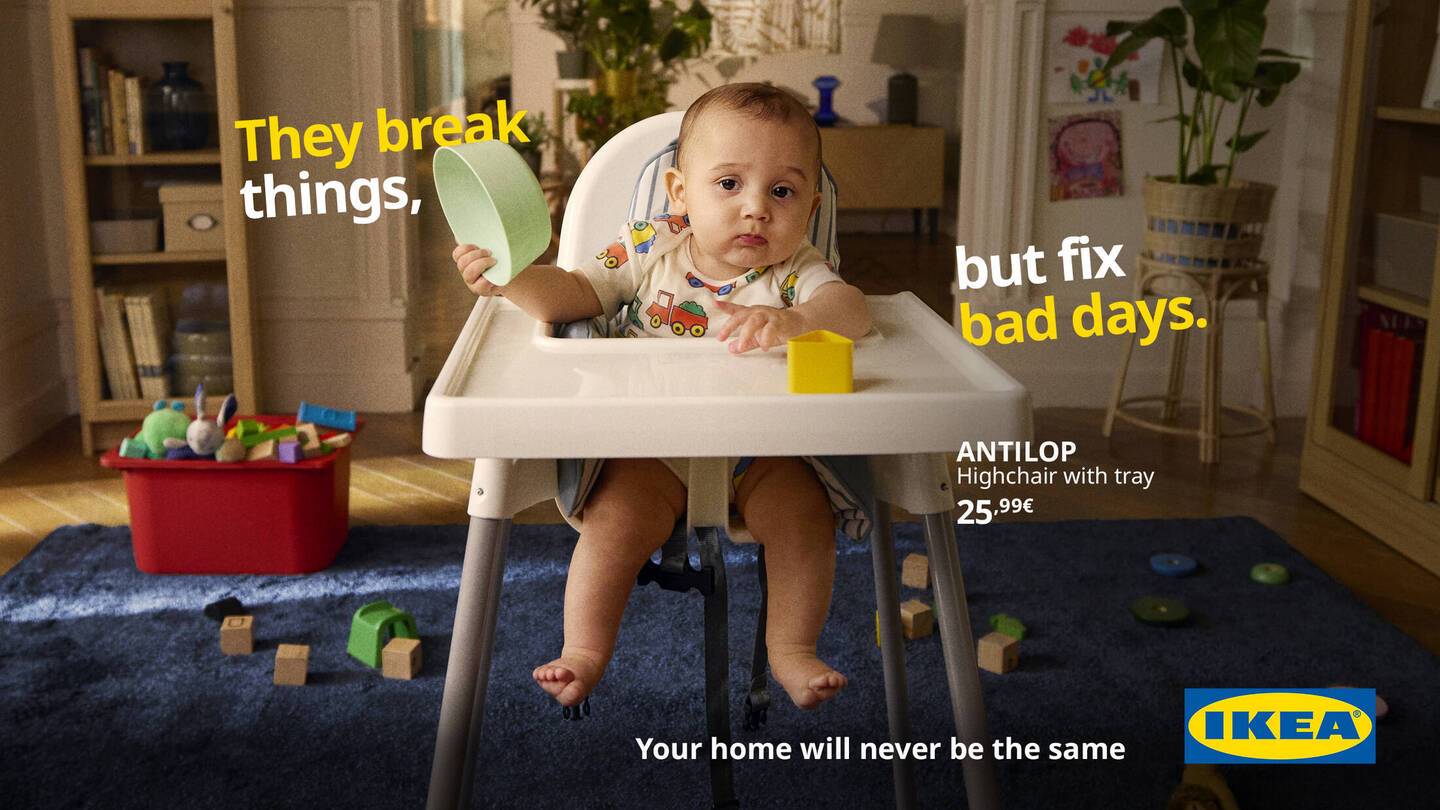
«If you saw the price, you wouldn’t believe it…» by IKEA

Framing Theory posits that communication shapes perception by selectively emphasizing certain aspects of reality while downplaying others. IKEA leverages this by employing four mutually reinforcing frames to address diverse audiences without contradiction. Through the democratic design frame, the brand positions good design as a universal right rather than a luxury. Its sustainability frame highlights environmental responsibility via renewable materials and circular-economy initiatives like furniture buy-back programs.

Meanwhile, the family and togetherness frame portrays homes primarily as spaces for relationships and shared social experiences, rendering the physical furniture secondary. Finally, the smart living frame appeals to urban and younger demographics by presenting small apartments not as limitations, but as opportunities for creative, intelligent design.

The concept of affordances, originating in Gibson’s ecological psychology and later adapted by Donald Norman for human-computer interaction, refers to the perceived clues that guide how people use technology in everyday life. Norman emphasized that an affordance only exists if the user perceives it and can act upon it. IKEA’s digital platforms are strategically designed around these perceived affordances to encourage immediate and intuitive user action. For instance, augmented reality tools afford visualization, allowing consumers to virtually «try on» furniture and transforming abstract browsing into an embodied experience.

Исходный размер 1280x808

IKEA promotional materials

Features like wishlists and room planners afford planning and organizing, shifting users from passive consumers to active co-designers of their future spaces. Furthermore, branded hashtags like #IKEAHack afford co-creation, empowering customers to participate in shaping the brand’s meaning and fostering long-term community engagement. Finally, short-form videos afford quick consumption, delivering rapid, bite-sized insights into assembly hacks and storage solutions tailored to mobile attention spans. Together, these affordances seamlessly transform IKEA’s digital ecosystem from a simple retail channel into a highly participatory environment.

Critical Reflection and Practical Recommendations

Although IKEA’s communication strategy is highly effective, it contains tensions. While the company strongly promotes sustainability, its business model relies on large-scale mass consumption. This creates a contrast between the Sustainability frame and the realities of global retail. Similarly, the emphasis on affordability can sometimes conflict with long-term durability. Recognizing these tensions demonstrates that communication is always a process of framing and negotiation of meaning.

Исходный размер 1600x1049

«Take a box. Have a great move» by IKEA

Based on the theoretical analysis, we recommend two key improvements to address the inherent tensions in IKEA’s communication strategy. First, to resolve the conflict between mass consumption and eco-friendly framing, IKEA should strengthen the dialogic loop by fostering genuine two-way communication around circular initiatives. This involves encouraging customers to actively share their own recycling experiences rather than passively consuming corporate reports.

Second, while peripheral cues effectively drive aesthetic appeal, IKEA should leverage the central route of processing for eco-education. By providing detailed, transparent infographics about the actual lifecycle of their products, the brand can transform the «sustainability paradox» into a meaningful, trust-building dialogue with its audience.

Conclusion

Исходный размер 1280x686

IKEA Shopping centre Sweden

The case of IKEA demonstrates that contemporary brands operate as communicative institutions shaping cultural meanings. Through emotional persuasion, dialogue, audience participation, framing strategies, and digital affordances, IKEA constructs an ecosystem that extends far beyond the sale of furniture. The application of multiple theoretical perspectives reveals that IKEA’s success emerges from its ability to connect functional needs with symbolic meanings. As the course frames it, communication is fundamentally «a process of generating meaning by sending and receiving verbal and nonverbal symbols and signs that are influenced by multiple contexts».

IKEA exemplifies this definition: every channel, frame, and affordance participates in the continuous co-construction of what «home» and «good design» mean for contemporary audiences. Ultimately, IKEA demonstrates how communication functions not merely as a tool for transmitting information, but as a process through which social reality is constructed and negotiated.

Библиография
1.

Kamprad, Ingvar. The Testament of a Furniture Dealer: Including a Little IKEA Dictionary. Inter IKEA Systems B.V., 2018.

2.

IKEA Official Website & Digital Platforms: https://www.ikea.com (Accessed June 2026)

3.

IKEA Digital Ecosystem: Official accounts on visual networks, video hosting platforms, and other social media channels.

4.

Craig, R. T. (1999). Communication theory as a field. Communication Theory, 9(2), 119–161.

5.

Petty, R. E., & Cacioppo, J. T. (1986). Communication and persuasion: Central and peripheral routes to attitude change. Springer-Verlag.

6.

Kent, M. L., & Taylor, M. (1998). Building dialogic relationships through the World Wide Web. Public Relations Review, 24(3), 321–334.

7.

Blumler, J. G., & Katz, E. (1974). The uses of mass communications: Current perspectives on gratifications research. Sage Publications.

8.

Entman, R. M. (1993). Framing: Toward clarification of a fractured paradigm. Journal of Communication, 43(4), 51–58.

9.

Norman, D. A. (2013). The design of everyday things. MIT Press.

Источники изображений
1.2.3.

IKEA. BLÅHAJ (URL: https://www.ikea.com.tw/en/products/kids-toys/comfort-toys/blahaj-art-00540664) Дата обращения: 10.06.2026

4.

Нож. В Тайване IKEA выпустила мороженое с васаби (URL: https://knife.media/wasabi-ice-cream/) Дата обращения: 10.06.2026

5.

IKEA. DJUNGELSKOG (URL: https://www.ikea.com.tw/en/products/kids-toys/comfort-toys/djungelskog-art-20402831) Дата обращения: 10.06.2026

6.

iStock. Ikea-карандаш (URL: https://www.istockphoto.com/ru/фото/ikea-карандаш-gm508861840-85479497) Дата обращения: 10.06.2026

7.8.

IKEA. FAMNIG HJÄRTA (URL: https://www.ikea.com.tw/en/products/kids-toys/comfort-toys/famnig-hjarta-art-90136155) Дата обращения: 10.06.2026

9.

SimaLand. Мягкая игрушка ДЬЮНГЕЛЬСКОГ, МИКС (URL: https://www.sima-land.ru/7070205/myagkaya-igrushka-dyungelskog-miks/) Дата обращения: 10.06.2026

10.

Я.Маркет. Икеа SYLT HJORTRON, брусничное варенье (URL: https://market.yandex.ru/cc/9eRz2f) Дата обращения: 10.06.2026

11.

IKEA Museum. History of the logotype (URL: https://ikeamuseum.com/en/explore/the-story-of-ikea/history-of-the-logotype/) Дата обращения: 10.06.2026

12.13.14.

IKEA. Hej! Welcome to IKEA Global (URL: https://www.ikea.com/) Дата обращения: 10.06.2026

15.

IKEA. Let your home come out to play (URL: https://www.ikea.com/global/en/stories/design/grejsimojs-collection-260204/) Дата обращения: 10.06.2026

16.

YouTube. See Inside The IKEA Showroom: Store Tour (URL: https://www.youtube.com/watch?v=G4o48y49S-c) Дата обращения: 10.06.2026

17.

IKEA. IKEA Family member card (URL: https://www.ikea.com.tw/en/family/index) Дата обращения: 10.06.2026

18.

IKEA. IKEA Family member card (URL: https://www.ikea.com.tw/en/family/index) Дата обращения: 10.06.2026

19.

IKEA. IKEA Family member card (URL: https://www.ikea.com.tw/en/family/index) Дата обращения: 10.06.2026

20.

NicePNG. Ikea Family Card — Ikea Family (URL: https://nicepng.com/ourpic/u2q8i1q8a9i1w7y3_ikea-family-card-ikea-family/) Дата обращения: 10.06.2026

21.

Marketing Media Review. IKEA представила коллекцию невидимых товаров (URL: https://mmr.ua/ru/ikea-predstavila-kollekcziyu-nevidimyh-tovarov/?utm_medium=organic&utm_source=yandexsmartcamera) Дата обращения: 10.06.2026

22.

Marketing Media Review. IKEA представила коллекцию невидимых товаров (URL: https://mmr.ua/ru/ikea-predstavila-kollekcziyu-nevidimyh-tovarov/?utm_medium=organic&utm_source=yandexsmartcamera) Дата обращения: 10.06.2026

23.

Marketing Media Review. IKEA представила коллекцию невидимых товаров (URL: https://mmr.ua/ru/ikea-predstavila-kollekcziyu-nevidimyh-tovarov/?utm_medium=organic&utm_source=yandexsmartcamera) Дата обращения: 10.06.2026

24.

Я.Недвижимость.IKEA запустила самую милую рекламную кампанию (URL: https://realty.yandex.ru/journal/post/ikea-zapustila-miluyu-reklamnuyu-kampaniyu-pro-veshchi-isporchennye-zhivotnymi/?utm_medium=organic&utm_source=yandexsmartcamera) Дата обращения: 10.06.2026

25.

Я.Недвижимость.IKEA запустила самую милую рекламную кампанию (URL: https://realty.yandex.ru/journal/post/ikea-zapustila-miluyu-reklamnuyu-kampaniyu-pro-veshchi-isporchennye-zhivotnymi/?utm_medium=organic&utm_source=yandexsmartcamera) Дата обращения: 10.06.2026

26.

Я.Недвижимость.IKEA запустила самую милую рекламную кампанию (URL: https://realty.yandex.ru/journal/post/ikea-zapustila-miluyu-reklamnuyu-kampaniyu-pro-veshchi-isporchennye-zhivotnymi/?utm_medium=organic&utm_source=yandexsmartcamera) Дата обращения: 10.06.2026

27.

Я.Недвижимость. IKEA запустила самую милую рекламную кампанию (URL: https://realty.yandex.ru/journal/post/ikea-zapustila-miluyu-reklamnuyu-kampaniyu-pro-veshchi-isporchennye-zhivotnymi/?utm_medium=organic&utm_source=yandexsmartcamera) Дата обращения: 10.06.2026

28.

Creative Bloq. Ikea hides important detail in slick new ads (URL: https://www.creativebloq.com/design/advertising/ikea-hides-important-detail-in-slick-new-ads?utm_medium=organic&utm_source=yandexsmartcamera) Дата обращения: 10.06.2026

29.

Creative Bloq. Ikea hides important detail in slick new ads (URL: https://www.creativebloq.com/design/advertising/ikea-hides-important-detail-in-slick-new-ads?utm_medium=organic&utm_source=yandexsmartcamera) Дата обращения: 10.06.2026

30.

Creative Bloq. Ikea hides important detail in slick new ads (URL: https://www.creativebloq.com/design/advertising/ikea-hides-important-detail-in-slick-new-ads?utm_medium=organic&utm_source=yandexsmartcamera) Дата обращения: 10.06.2026

31.

Manuall. 説明書 イケア OSTAVALL コーヒーテーブル (URL: https://manuall.jp/ikea-ostavall-coffee-table/?utm_medium=organic&utm_source=yandexsmartcamera) Дата обращения: 10.06.2026

32.

Кіраўніцтвы+. Кіраўніцтва па ўстаноўцы насценнай паліцы IKEA LACK (URL: https://manuals.plus/be/IKEA/не-хапае-кіраўніцтва-па-насценнай-паліцы? utm_medium=organic&utm_source=yandexsmartcamera) Дата обращения: 10.06.2026

33.

MARKETPLACE. Instruction manuals tell us more than how to use a product (URL: https://www.marketplace.org/story/2018/05/29/history-instruction-manuals?noamp=mobile&utm_medium=organic&utm_source=yandexsmartcamera) Дата обращения: 10.06.2026

34.

Ads of the World™. Your Home Will Never Be the Same (URL: https://www.adsoftheworld.com/campaigns/your-home-will-never-be-the-same?utm_medium=organic&utm_source=yandexsmartcamera) Дата обращения: 10.06.2026

35.

Ads of the World™. Your Home Will Never Be the Same (URL: https://www.adsoftheworld.com/campaigns/your-home-will-never-be-the-same?utm_medium=organic&utm_source=yandexsmartcamera) Дата обращения: 10.06.2026

36.

Ads of the World™. Your Home Will Never Be the Same (URL: https://www.adsoftheworld.com/campaigns/your-home-will-never-be-the-same?utm_medium=organic&utm_source=yandexsmartcamera) Дата обращения: 10.06.2026

37.

Ads of the World™. Your Home Will Never Be the Same (URL: https://www.adsoftheworld.com/campaigns/your-home-will-never-be-the-same?utm_medium=organic&utm_source=yandexsmartcamera) Дата обращения: 10.06.2026

38.

IKEA. IKEA Canada invests an additional $50M to reduce prices on hundreds more products (URL: https://www.ikea.com/ca/en/newsroom/corporate-news/ikea-canada-invests-an-additional-usd50m-to-reduce-prices-on-hundreds-more-products-pub70d532d0/) Дата обращения: 10.06.2026

39.

Grassroots. 8 Tips To Creating An Engaging Outdoor Advertisement (URL: https://grassrootsadvertising.com/blog/outdoor-advertising/8-tips-to-creating-an-engaging-outdoor-advertisement/) Дата обращения: 10.06.2026

40.

IKEA. Contact Us (URL: https://www.ikea.com.tw/en/customerservice/contact-us) Дата обращения: 10.06.2026

41.

IKEA. Ideas & Solutions (URL: https://www.ikea.com.tw/en/inspirations) Дата обращения: 10.06.2026

42.

Wikipedia. IKEA (URL: https://ru.wikipedia.org/wiki/IKEA?ysclid=mqdtg4y3r884070344) Дата обращения: 10.06.2026