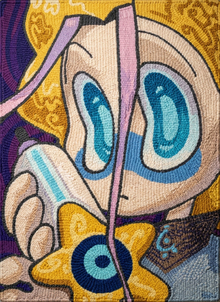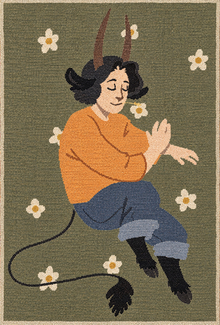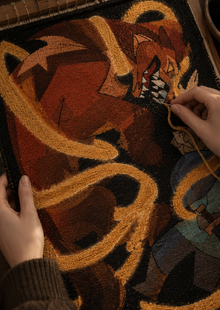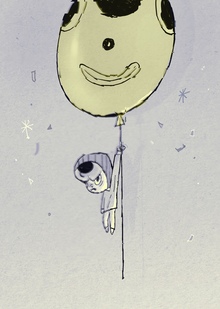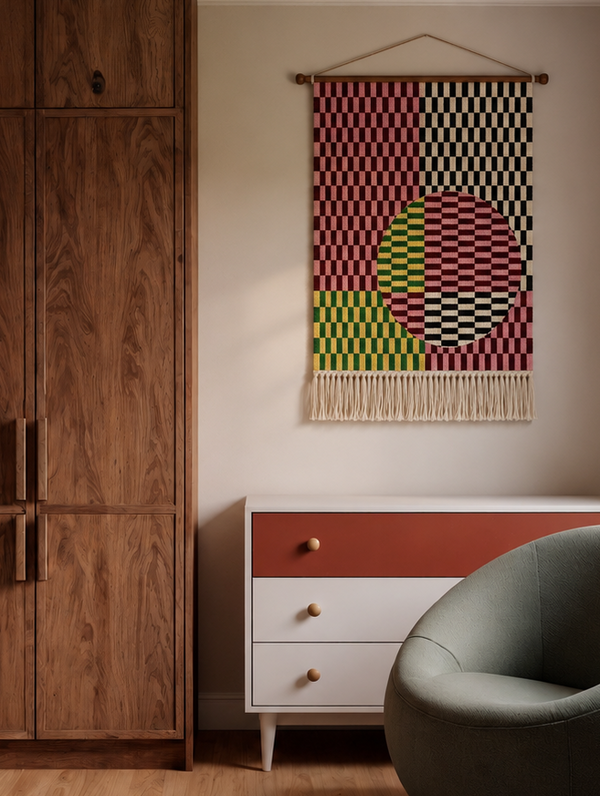
The tapestry «Illusion of Movement» explores the boundary between what we see and how our brain interprets what it sees. It is a static image that deceives the eye and creates illusory motion.
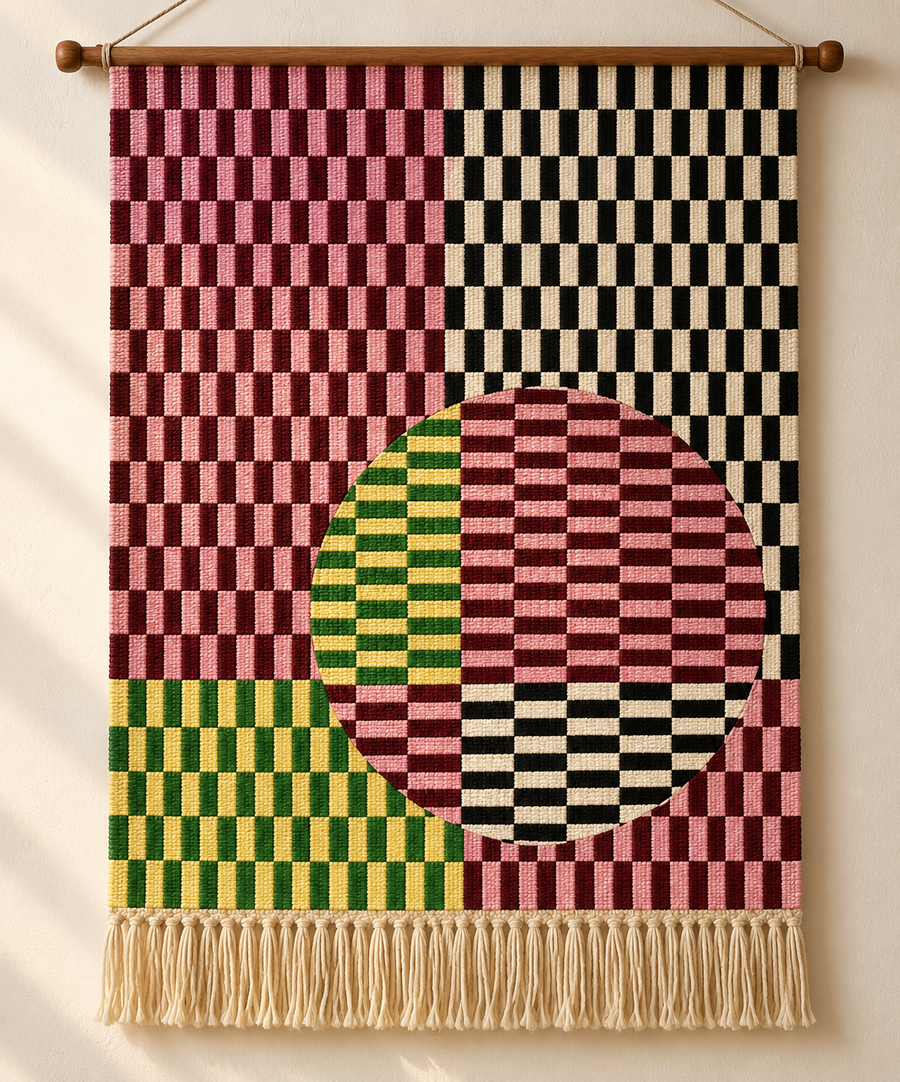
As merchandise, I chose a tapestry because geometric patterns based on optical illusions fit organically into flat-surfaced interior decor items (rugs, throws, paintings, etc.).
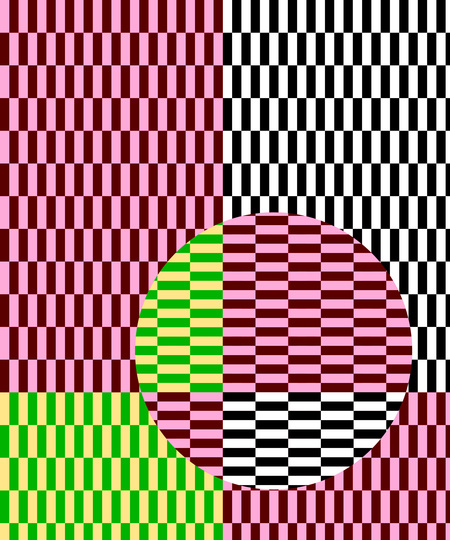
The tapestry concept, «Illusion of Movement,» was created for a multimedia special project about cognitive biases. The perceptual error is transferred onto the image as an optical illusion—which is essentially also a perceptual error, just a visual one.The tapestry pattern consists of geometric shapes formed by elongated rectangular cells. Through rhythm, contrast, and repetition of elements, the static image creates a sensation of movement. Thus, the work demonstrates how the characteristics of visual perception influence the interpretation of visual information.The size of the piece is 123 × 142 cm.

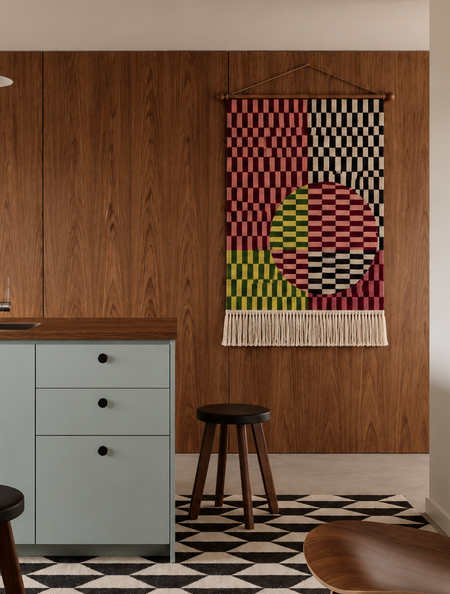

Visualizations were created using Chat GPT