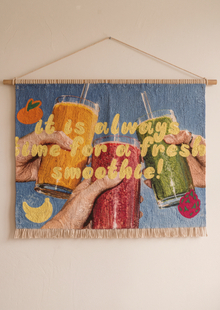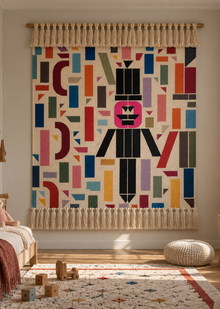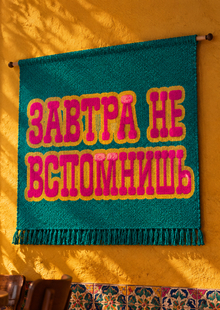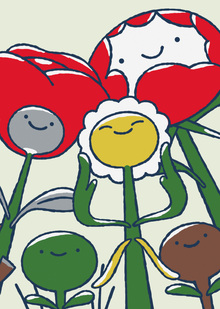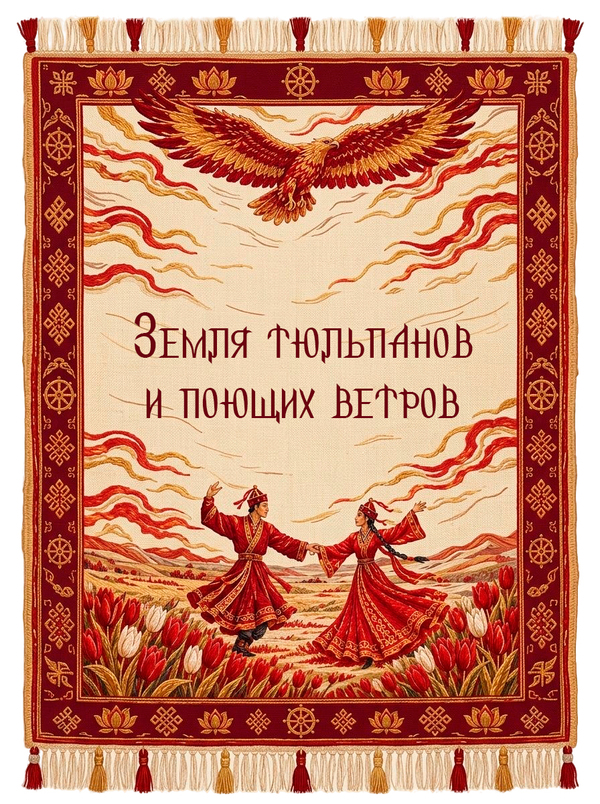
The tapestry concept «Land of Tulips and Singing Winds» (204 × 146 cm) is an art object that connects Oirat typography (the logic of vertical Todobichig script) with the fundamental historical and cultural codes of Kalmykia.
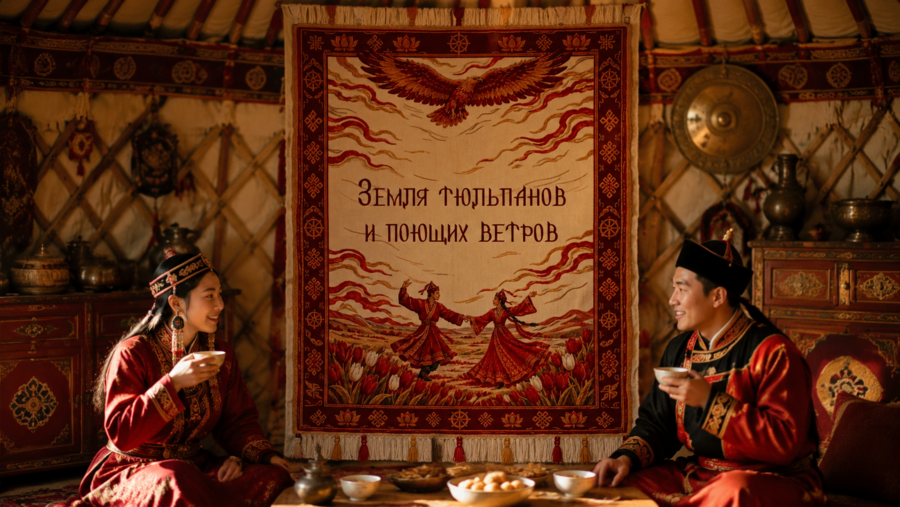
Symbolism of Elements
Tulips (Bombus cecg): In Kalmyk culture, the wild steppe tulip symbolizes sacred renewal, the fragility of existence, and the cyclical nature of life. Historically, the mass spring bloom represented life’s triumph over the harsh winter cold of the steppe. The red color embodies vital energy and ancestral blood, while white signifies purity of thought. On the tapestry, the carpet of tulips forms a solid, «earthly» foundation for the composition.
The Steppe: The primary existential space of the Kalmyks, a synonym for homeland and freedom. In the philosophy of nomads, the steppe is not emptiness, but a living organism embodying boundlessness (the boundless potential of the spirit) and resilience against trials. The horizontal lines of the steppe hills on the canvas balance the dominant verticality of the typeface.
Steppe Eagle: The supreme totemic symbol of martial valor, keen sight, freedom, and connection to the sky. In Kalmyk folklore, the eagle is attributed with nobility and patronage over the heroes of the epic «Jangar.» The bird soaring atop the tapestry holds the «celestial» axis of the composition and symbolizes the spiritual ascent of the people.National Dance: A sacred performance that historically replaced combat and psychological training for the Kalmyks. The dynamic movements of the man (a symbol of expression and the eagle’s swiftness) and the fluid, soaring movements of the woman (mimicking a tulip) translate the static graphics of the letters into living plasticity. The dancers' arm movements directly duplicate the curves of the Todo-bichig strokes.