Concept
In Hindu art, the depiction of a deity often takes a form that transcends the conventional human understanding of the body. Multiple arms and heads, unusual proportions, complex poses, and symbolic attributes transform the human figure into a distinct visual icon capable of conveying supernatural qualities and powers.
This research examines the depiction of the divine body in Chola bronze sculpture from South India (9th–13th centuries).
The Chol era is of particular interest due to the development of bronze temple sculpture, which is characterized by expressive plasticity, idealized proportions, and complex iconography.
Principles for selecting visual and textual material, structure:
The visual basis of the research will consist of bronze images of Hindu deities created in South India during the reign of the Chola dynasty. Preference will be given to objects from museum collections for which reliable information regarding their creation history and provenance is available. The textual basis will be composed of scholarly publications on the art history of South India, studies of Chola-era bronze sculpture, as well as museum catalogs and descriptions of individual works that contain information on the artistic features of the sculptures, their symbolism, and their religious function. The visual material will be structured around four main themes: multiplicity of body parts, plasticity and movement, gestures and symbolic attributes, and idealized proportions. This division will allow for a systematic examination of the different ways the divine image was created, followed by an identification of the interrelationships between these elements.
Multiplicity of the Body
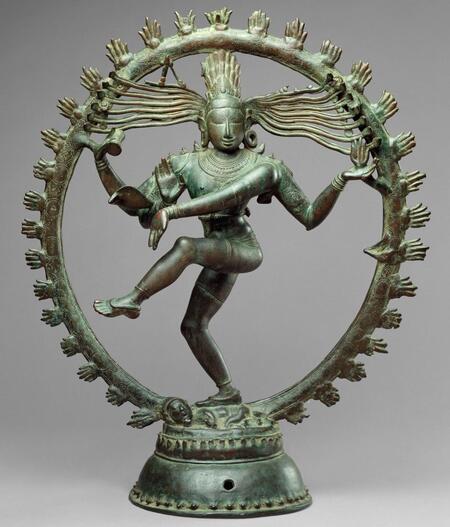
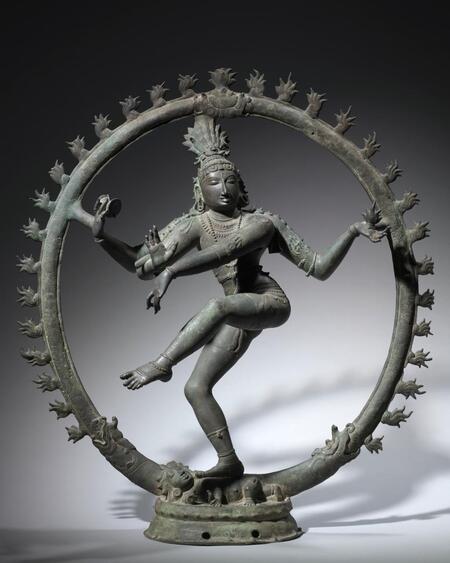
Shiva Nataraja, XI Gallery, Metropolitan Museum of Art / Cleveland Museum of Art
Shiva’s four arms allow for the simultaneous representation of different aspects of divine activity. The drum is associated with the creation of the world, fire with destruction, the Abhaya Mudra gesture with protection, and the pointing toward the raised leg with liberation. The multiplicity of arms here becomes a way to illustrate possibilities unattainable by humankind.
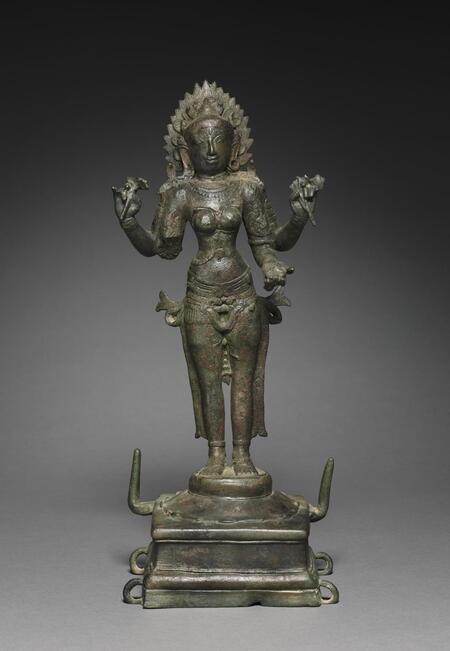
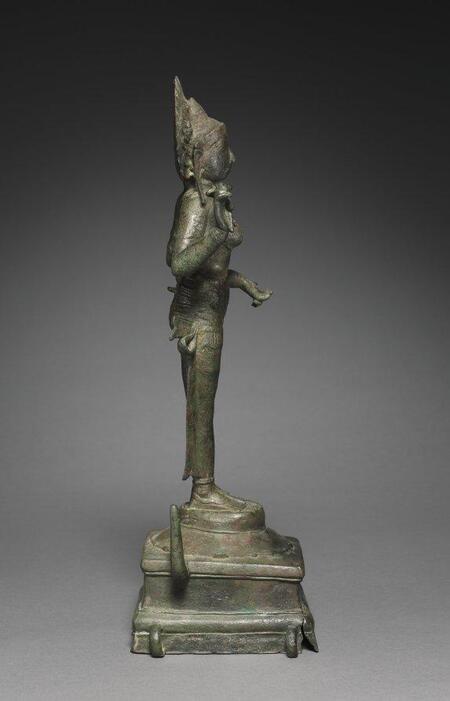
Kali, 10th–11th Centuries, Cleveland Museum of Art
The four-armed goddess is depicted in a formidable aspect. The upper hands hold lotus buds; the lower right hand is open with the palm facing upward, and the lower left hand is missing.
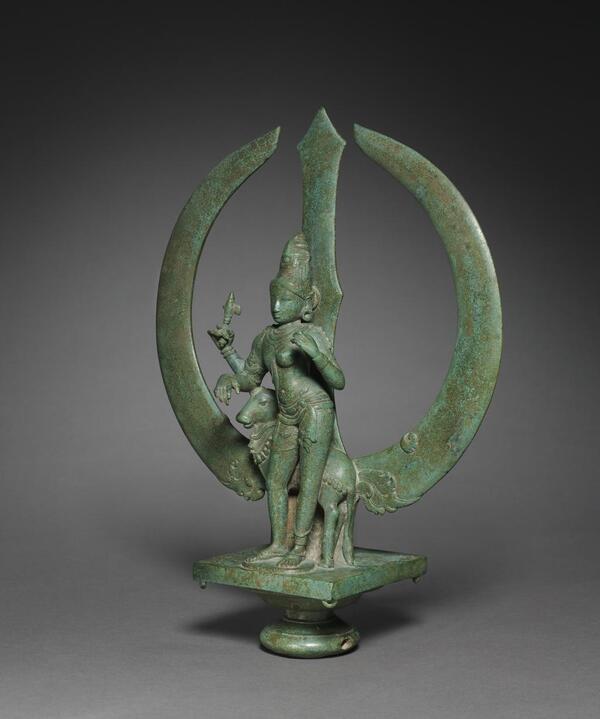
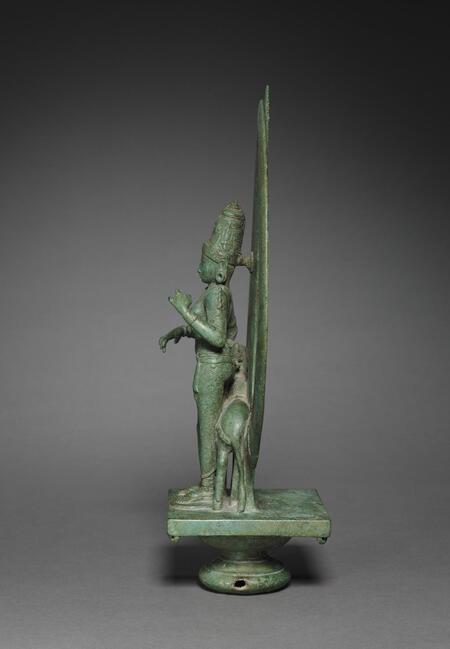
Ardhanareshvara, c. 1050, Cleveland Museum of Art
In a single figure, the male and female aspects of Shiva are united. The differences are highlighted through anatomy, hairstyle, adornments, and clothing. The masculine side is connected to the image of the yogi, while the feminine side is connected to the image of the goddess.
Sculpture and Movement
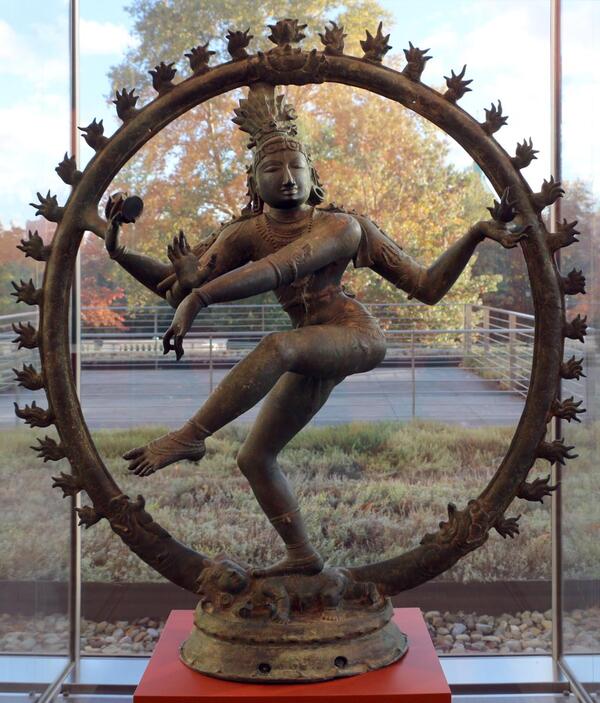
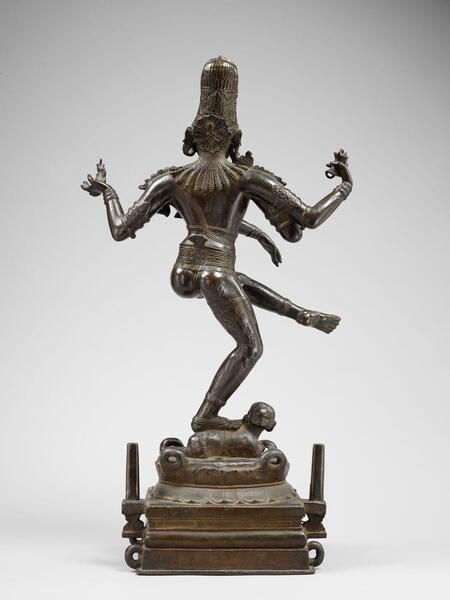
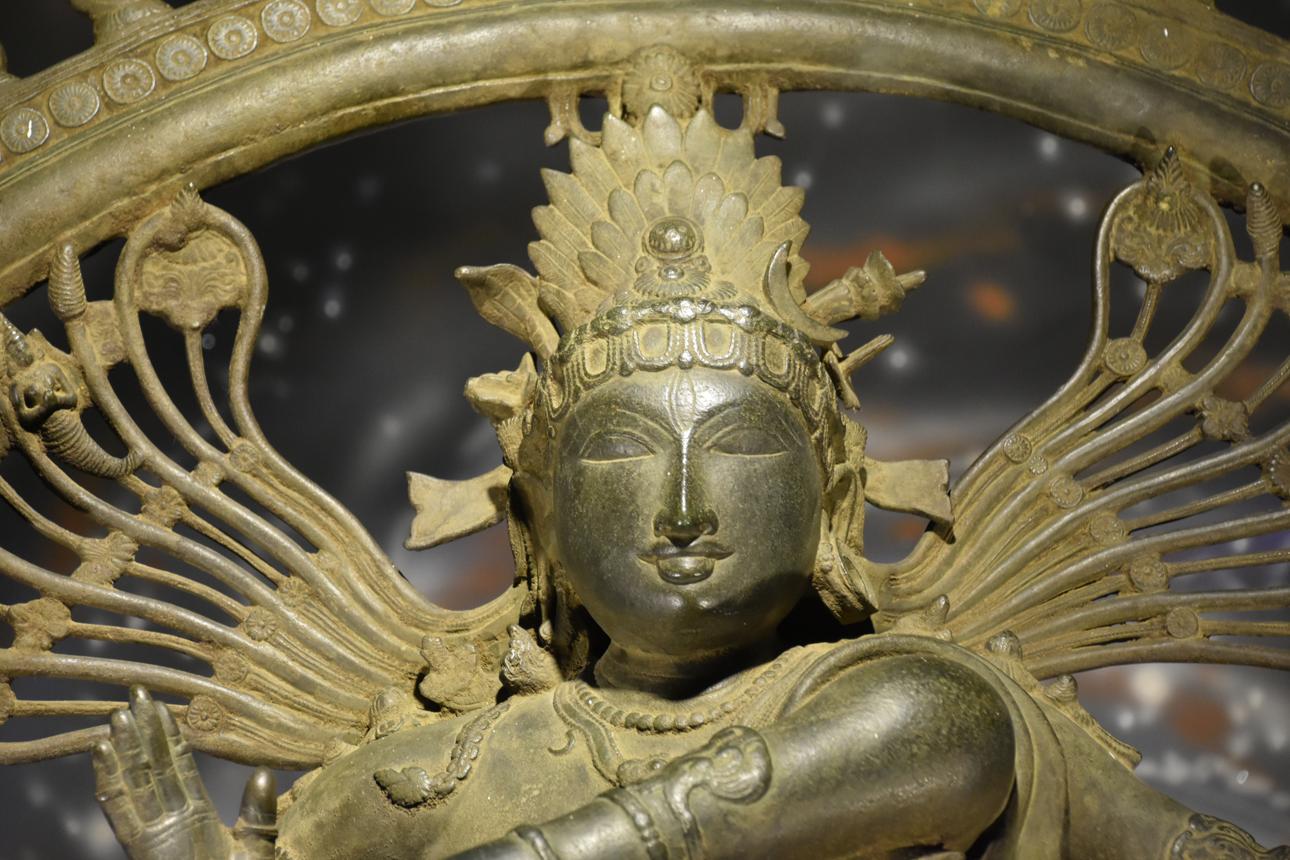
Shiva Nataraja, XI Wing, Cleveland Museum of Art/Louvre Abu Dhabi
The figure balances on one leg, the other raised and bent, while the torso forms a dramatic curve. The positioning of the arms and legs conveys a sense of continuous, dancing motion.
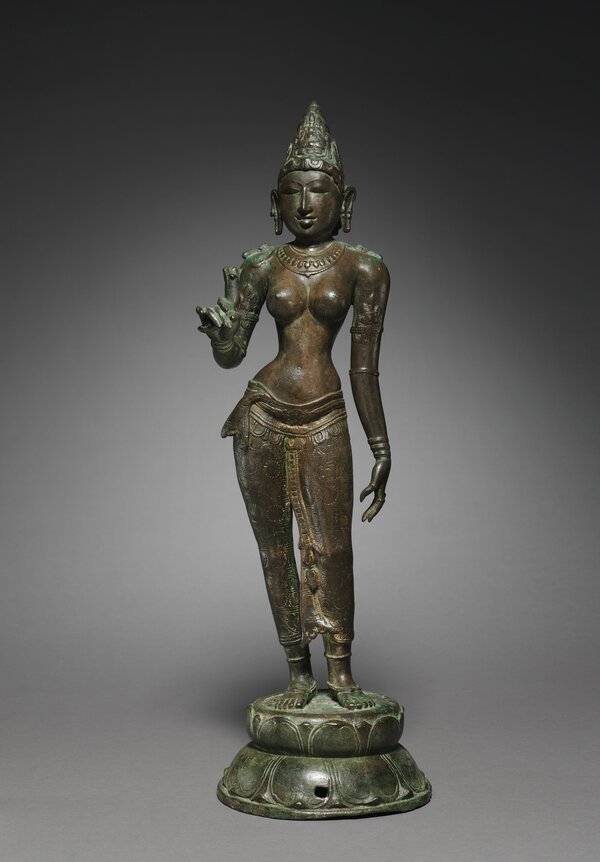
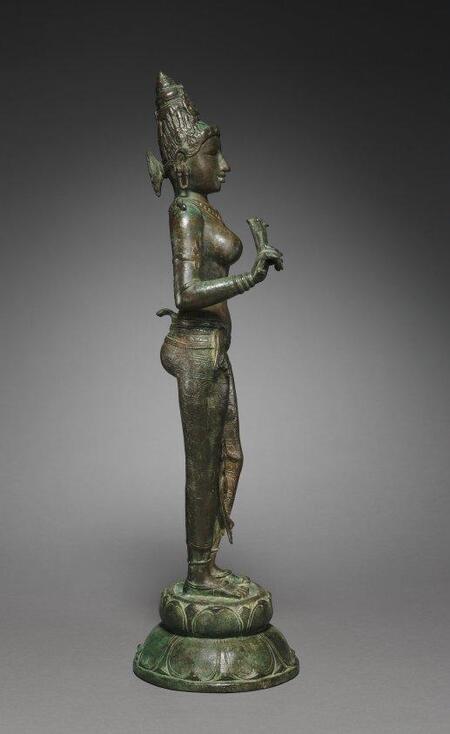
Parvati standing, X, Cleveland Museum of Art
The figure is built upon the smooth curve of the torso and the shifting of weight onto one leg. The position of the arms and hips creates a rhythmic line, and the pose lends plastic expressiveness to the body.
Gestures and Symbolic Attributes
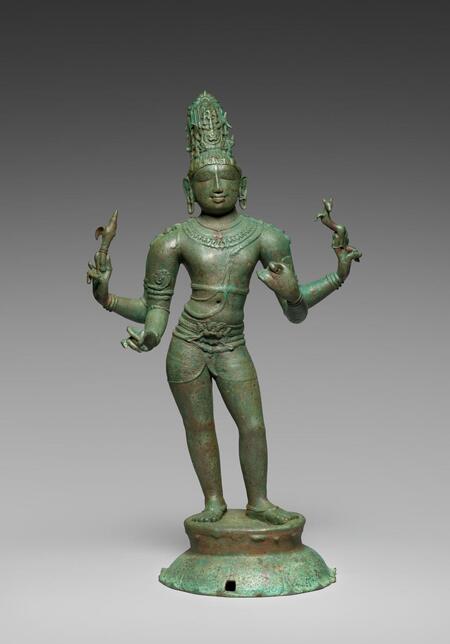
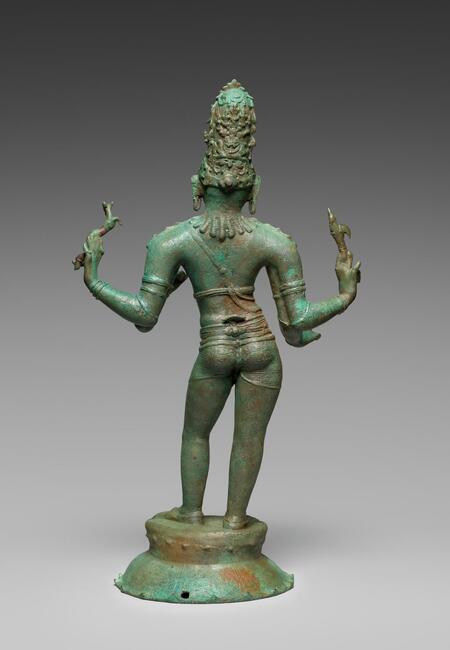
Shiva — Lord of Music, c. 1000 CE, Cleveland Museum of Art
Shiva is depicted with four arms. The upper arms hold a axe and an antelope, while the fingers of the lower arms are positioned as if the deity is playing a stringed instrument.
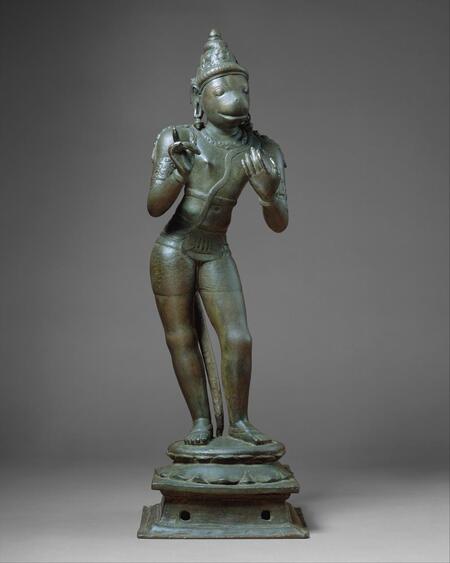
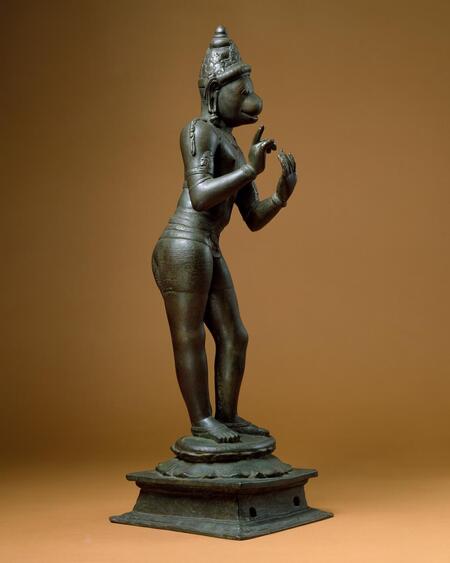
Hanuman conversing with Rama, 11th century, Metropolitan Museum of Art
Hanuman is depicted in a predominantly human form, yet he has a monkey face and tail. His raised left hand conveys reverence toward Rama, and his posture communicates a vivid interaction.
Idealized body
Shiva, Parvati, and Skand (Somaskandamurti), 11th century, Metropolitan Museum of Art
The composition depicts Shiva and Parvati with their son Skanda. All three figures form a unified group yet retain their own plastic expressiveness. The idealized bodies, adornments, poses, and gestures create the image of a divine family.
Dehejia V. The Thief Who Stole My Heart: The Material Life of Sacred Bronzes from Chola India, 855–1280. — Princeton: Princeton University Press, 2021.
Dehejia V. (ed.). The Sensuous and the Sacred: Chola Bronzes from South India. — New York: American Federation of Arts; Seattle: University of Washington Press, 2002.
Harle J. C. The Early Cola Period // The Art and Architecture of the Indian Subcontinent. — New Haven; London: Yale University Press, 1986.
Lippe A. Divine Images in Stone and Bronze: South India, Chola Dynasty (c. 850–1280) // Metropolitan Museum Journal. — 1971. — Vol. 4. — P. 29–79.
Dehejia V. Recognizing the Gods // Heilbrunn Timeline of Art History. — The Metropolitan Museum of Art, 2007. — URL: https://www.metmuseum.org/essays/recognizing-the-gods (Accessed: November 16, 2026).
MAP Academy. Chola Bronze Sculptures // Encyclopedia of Art. — 2022. — URL: https://imp-art.org/articles/chola-bronze-sculptures/ (Accessed: November 16, 2026).
Smithsonian National Museum of Asian Art. The Sensuous and the Sacred: Chola Bronzes from South India. — URL: https://asia-archive.si.edu/exhibition/the-sensuous-and-the-sacred-chola-bronzes-from-south-india/ (Accessed: November 16, 2026).
Smithsonian National Museum of Asian Art. Processional Images. — URL: https://asia-archive.si.edu/learn/india-shiva-nataraja-lord-of-the-dance/processional-images/ (Accessed: November 16, 2026).